


Views: 9902 Author: Site Editor Publish Time: 2026-11-25 Origin: Site


Content Menu
Why a Warehousing System Matters More in Cutlery Than in Most Factories
Zoning — Raw, Work in Progress, Finished
Temperature and Humidity, the Quiet Cause of Claims
A Trained Team, and a Team That Stays
Traceability: The Part of the Warehousing System Buyers Never See
How Insight Runs These Eight Controls
Yangjiang Insight Industry And Trade Co., Ltd. runs seven systems behind every knife it ships. The one buyers ask about least, and suffer from most, is the warehousing system: the part of the plant that decides whether a steel coil, a half-finished blade and a boxed knife are all in the right state on the day a container is loaded.
Insight has designed, produced and sold chef knives, santoku knives, bread knives, paring knives and kitchen tools for more than 23 years, in a 20,000 square metre plant shipping roughly five million pieces a month for OEM and ODM brands. This is how the warehouse side of that building actually works, written for a buyer who has to explain a delay or a rust spot to their own customer.
A knife is three materials pretending to be one product. Martensitic stainless in the blade, a polymer or hardwood handle, and paper, PET or board in the packing. Each of those fails differently in storage: steel stains, plastic yellows under the wrong light, paper softens in humid air, and a printed carton loses its colour before it loses its strength.
That is why a warehousing system in this industry is not a rack count. It is a set of controls over where things sit, what the air is doing to them, who can reach them, and what record proves it. Four failure modes account for most claims we see across the sector:
· Rust before assembly. Semi-finished blades held in humid air, then blamed on the steel grade.
· Colour drift. Handles from two moulding batches stored under different light, shipped as one set.
· Packaging collapse. Cartons stacked too high in a damp corner, arriving soft at the port.
· Wrong batch, right quantity. A full container of the version the buyer did not order.
Nothing in our warehouse is stored by convenience. The floor is divided into three zones that never share a rack: raw material (steel coils, handle bar stock, packing), work in progress (blanks, ground blades, moulded handles waiting for assembly), and finished goods (boxed sets and cartons waiting for the container).
The reason is contamination and confusion in equal measure. A steel coil sitting next to finished cartons means dust and oil where paper lives. A half-finished blade stored beside a packed set means someone, on a busy Friday, will pack the wrong one. Zoning is also what makes counting possible: each zone has its own location codes, and a warehousing system that cannot tell you which zone a pallet is in cannot tell you whether an order is complete.
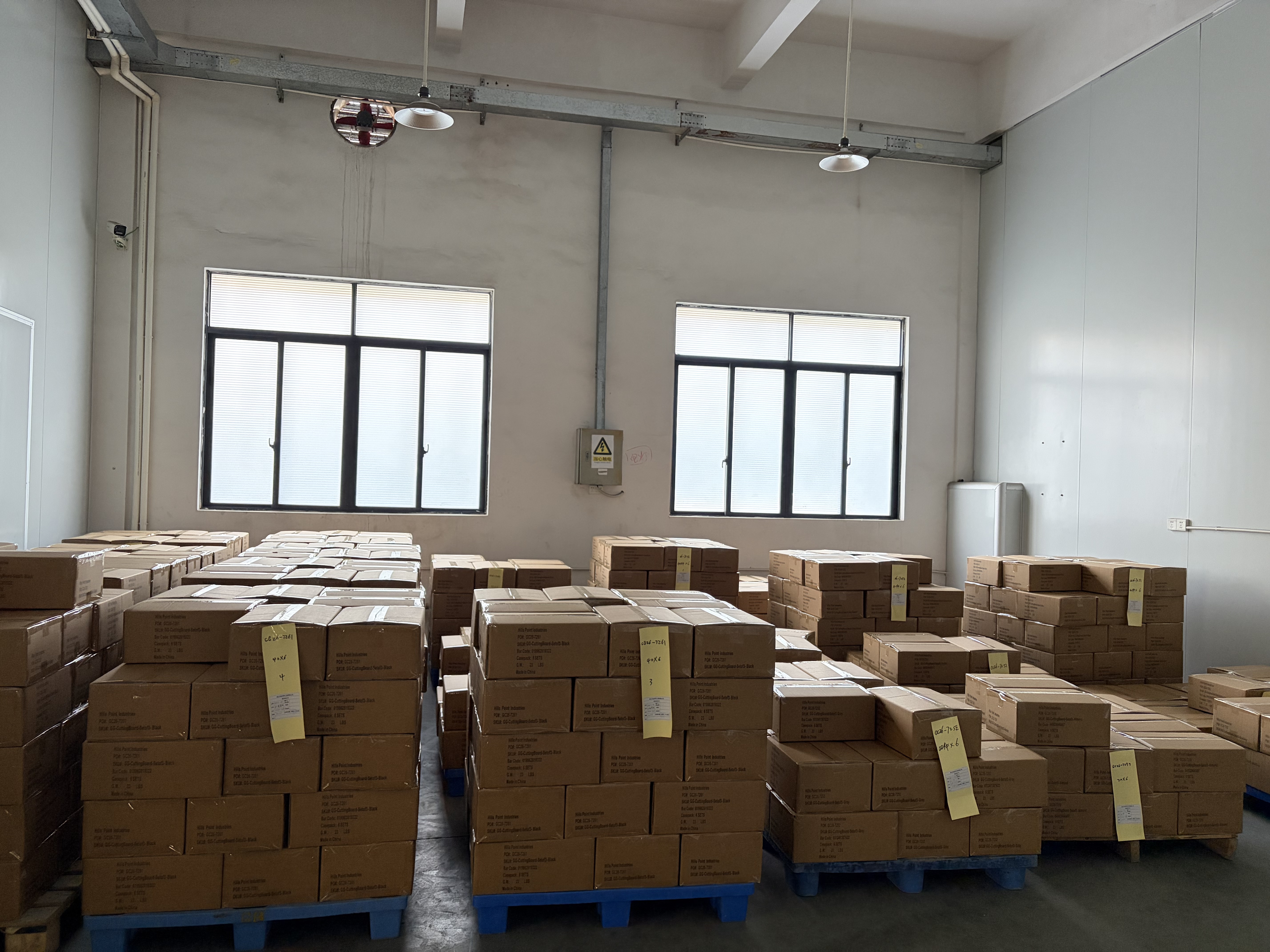
The stacking rule inside each zone is written down, not left to habit: no more than five cartons high on a knife set, print facing outward, heaviest at the bottom, and a two-carton gap between a pallet and the rack upright so that a fork truck cannot clip the corner. Handles are stored in their moulding boxes until assembly asks for them, because a handle that sits loose on a shelf for a month picks up dust that shows on a finished knife.
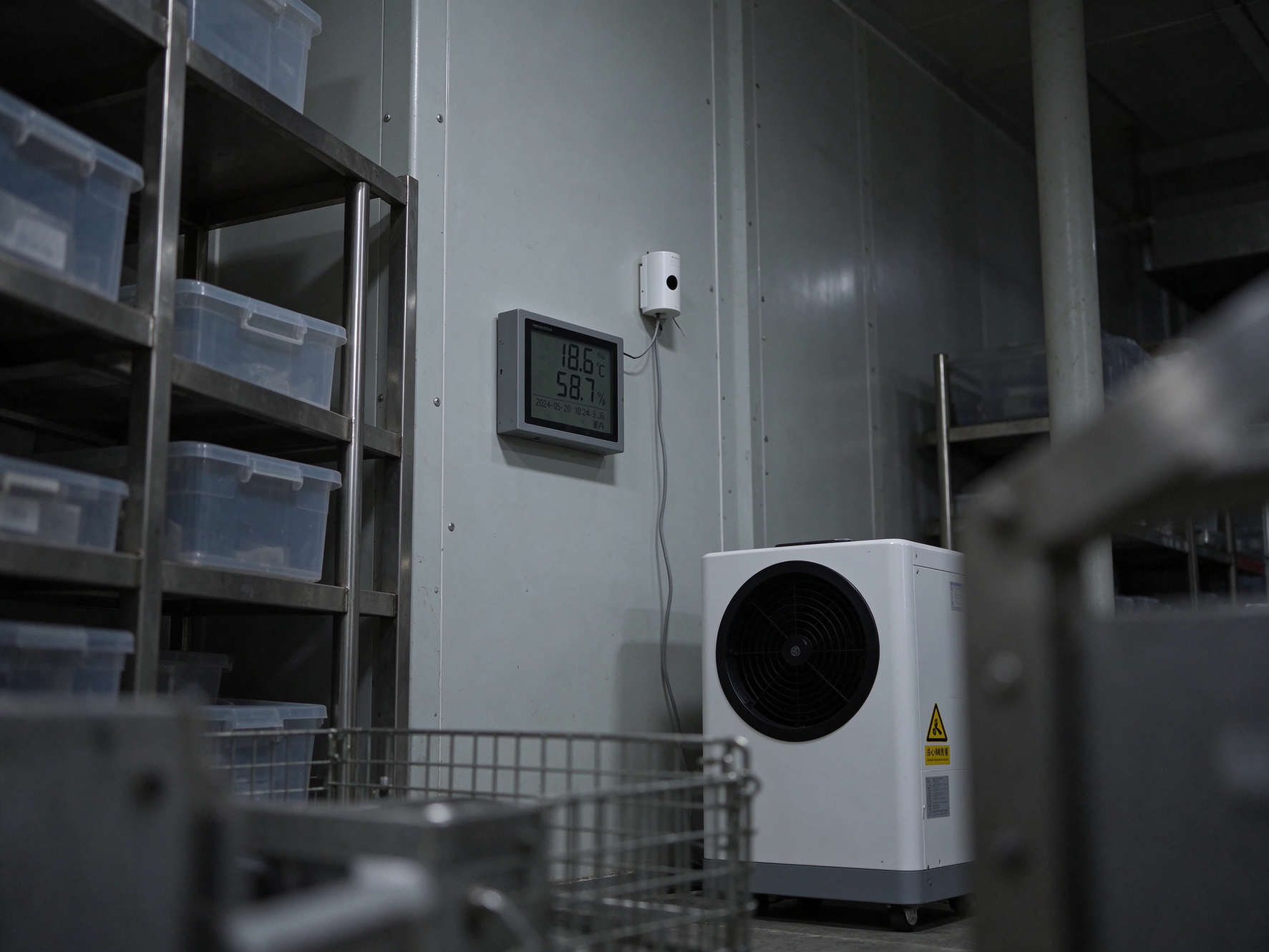
Yangjiang is humid for much of the year, and a knife blade is a polished surface that will show it. We hold the storage floor in a band around 45–65% relative humidity and log the reading twice a day, with dehumidifiers placed at the edge of the finished-goods zone rather than in an office.
What the control protects, in order of cost: the blade surface (flash rust on a ground blade is a re-polish), the handle (a polymer shell that absorbs moisture can shift colour and dimension), the packing (board loses compression strength above roughly 70% RH, which is how a carton arrives crushed), and the label adhesive, which is the least visible failure and the most annoying at retail.
When the reading drifts above the band — typically after a week of rain — the response is sequenced rather than dramatic: close the roller door, run the dehumidifiers longer, pull the finished-goods pallets away from the wall, and re-check the ground blades before they go to assembly. What we never do is wipe a blade and call it clean; a stain that has started under a film of oil is already a re-polish job.
Ventilation is the cheap half of climate control: moving air stops a corner from becoming a damp pocket, and it keeps the smell of oil and mould release out of a zone where cartons are stored. Our aisles are laid out so that air reaches the back of the racks, not just the front row that a supervisor walks past.
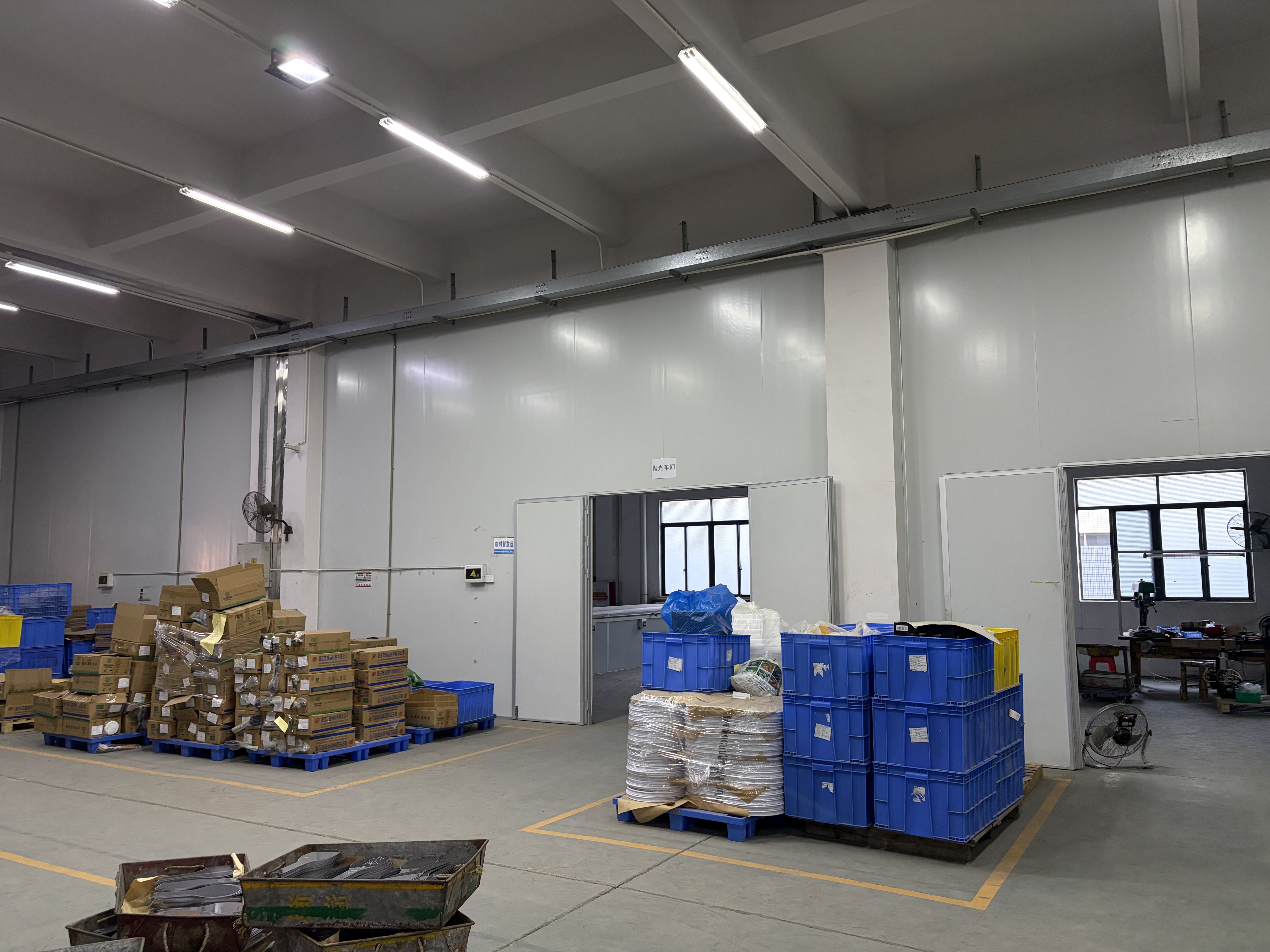
Lighting is treated as an accuracy tool rather than a comfort item. Every location label has to be readable from the aisle without a torch, because a mis-read location is a mis-picked carton. It also has a colour consequence: fluorescent light shifts the appearance of a printed box and a coloured handle, so approval samples are checked under the same lamps the goods are stored under, not in daylight at a desk.
Cleanliness in a cutlery warehouse is not about appearance. Dust on a polished blade becomes a scratch the moment someone wipes it; oil on a carton becomes a stain that a retail buyer rejects. We schedule cleaning by zone and log it, with finished goods cleaned on a different cadence from raw material.
Security is the other half of the same control. Access control at the door, cameras on the loading bay, fire detection and extinguishers, and a rule that finished goods leave only against a signed pick list. A warehousing system without access control is a system that cannot answer the question "who moved this pallet" — and that question arrives with every serious claim.
The two people controls are the ones we would keep if we had to give up everything else. A warehouse crew trained on cutlery handles specific knowledge: which blade faces up, how a carton of 24 sets is stacked so the print does not take the load, and why a handle batch is rotated even when the colour looks identical.
Crew stability matters because a warehouse is a memory. The person who knows that pallet 14 is the second moulding run, and that it must ship after pallet 9, is the person who prevents a colour mismatch in a container. High turnover does not show up in an audit; it shows up four weeks later as a claim from a retail partner who received two slightly different blues in one carton.
Training runs on a fixed cadence rather than after an incident: new pickers spend their first week shadowing a location walk, then take a written check on zone rules, carton limits and the scan sequence. Every quarter the whole crew re-walks the warehouse system against the eight controls, which is how a rule that has quietly stopped being followed gets found before a buyer finds it.
Behind the eight controls sits a record layer: location codes on every rack, a scanner at every pick, and a rule that stock leaves in the order it arrived. When a blade goes out, the system knows its steel lot; when a carton goes out, it knows which pallet, which shift and which container.
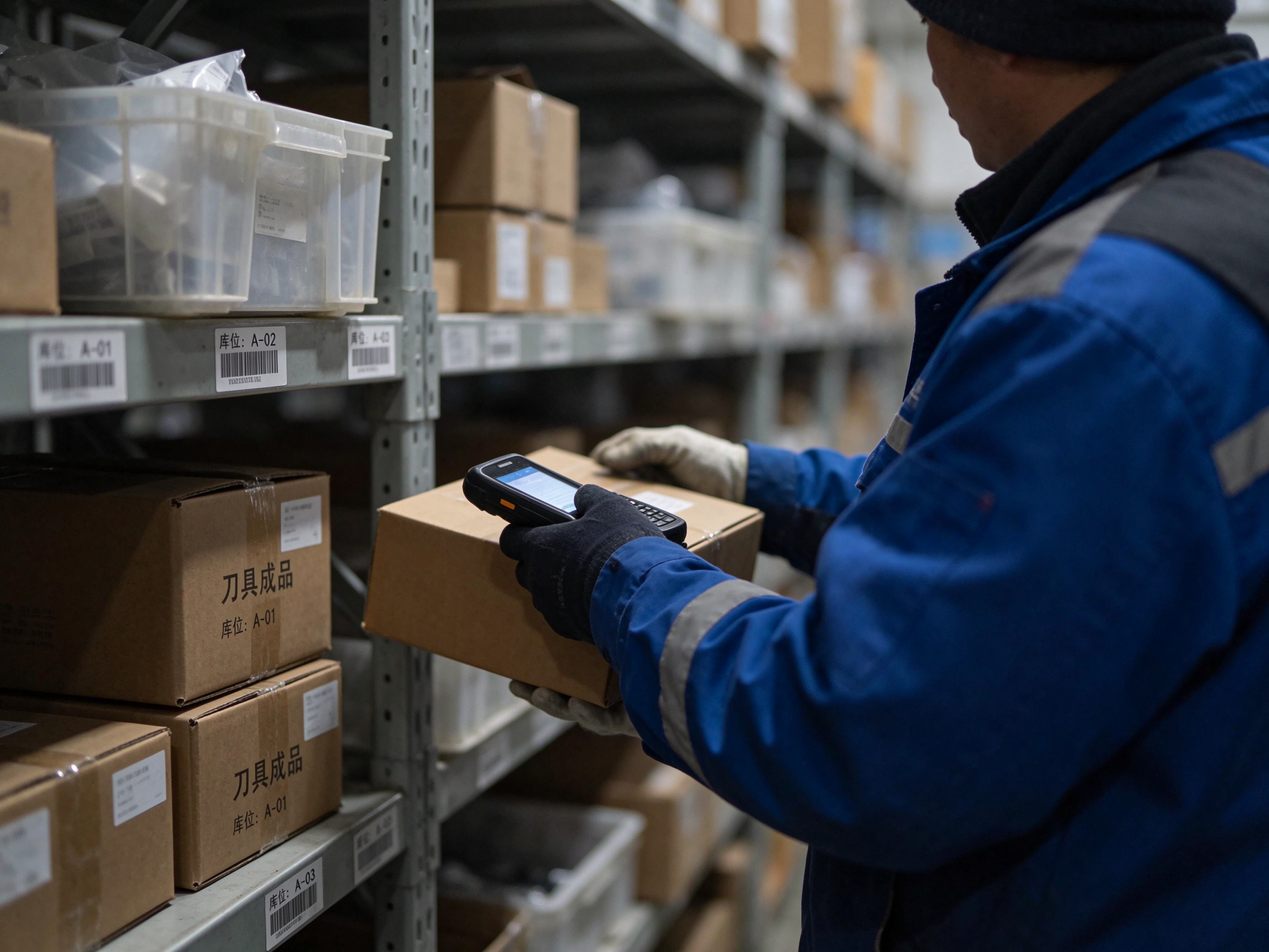
This is where most factory warehouses stop and where a real warehousing system begins: FIFO for steel and components, FEFO for anything with a shelf life — adhesives, oils, printed packaging — and a cycle count that reconciles the system against the racks every month rather than once a year before an audit.
Insight has designed, produced and sold kitchen knives for more than 23 years from Yangjiang, in a 20,000 square metre plant with monthly capacity of roughly five million pieces. The warehousing system here is one of the seven systems that hold the plant together, alongside supply chain, process control, heat treatment, grinding, assembly and inspection — which is why a storage problem is fixed by a process change, not by an apology.
We build chef knives, santoku knives, bread knives, paring knives and kitchen tools for brands buying OEM and ODM, including private label, colour programmes and gift sets. If you are auditing a supplier, the useful questions are not "how big is your warehouse" but "what is your humidity band, who signs the pick list, and how do you prove FIFO on a steel lot."
Ask us for a warehouse walkthrough against those three questions, with photos of the zones, the log sheet and the location codes that apply to your own order.
It is the combination of physical zoning, climate and security controls, a trained and stable crew, and a record layer that ties each carton to a batch. Racks alone are storage; the system is what makes storage repeatable.
Because a polished blade shows rust first, a polymer handle absorbs moisture and shifts colour, and carton board loses strength in damp air. Holding the floor around 45–65% RH removes most of those failures before they start.
Yes. A walkthrough covers the three zones, the temperature and humidity log, the access and CCTV arrangement, and a live scan showing a carton traced back to its batch.
Yes, in a dedicated zone with its own location codes and count, separated from Insight stock so that a customer-supplied handle batch cannot be consumed by another order.


