


Views: 8945 Author: Site Editor Publish Time: 2026-11-18 Origin: Site


Content Menu
The Twelve Stages, and What Each One Fixes
Four Stages Where the Parameters Decide the Knife
Heat Treatment: Four Processes, One Hardness
Wet Grinding: Four Steps That Build an Edge
How the System Is Enforced Day to Day
Why Insight Can Hold These Parameters at Volume
● Is a Critical Parameter Production Process Control System the same as quality inspection?
● How many parameters are controlled per stage?
● Why does a quenched blade need tempering before it can be used?
● Can a buyer audit the process, not just the product?
● How does Insight keep parameter discipline across five million pieces a month?
Insight's Critical Parameter Production Process Control System exists for a single, unglamorous reason: a knife is not made by twelve machines, it is made by twelve decisions, and only a handful of numbers in each decision actually matter. Yangjiang Insight Industry And Trade Co., Ltd. has spent more than 23 years learning which numbers those are, and building a system that holds them across a 20,000 square metre plant running roughly five million pieces a month of chef knives, santoku knives, bread knives, paring knives and kitchen tools.
This article explains that system the way a process engineer would: what each stage contributes, which parameter decides the outcome, how it is verified, and what a buyer can reasonably ask to see before placing an OEM or ODM order.
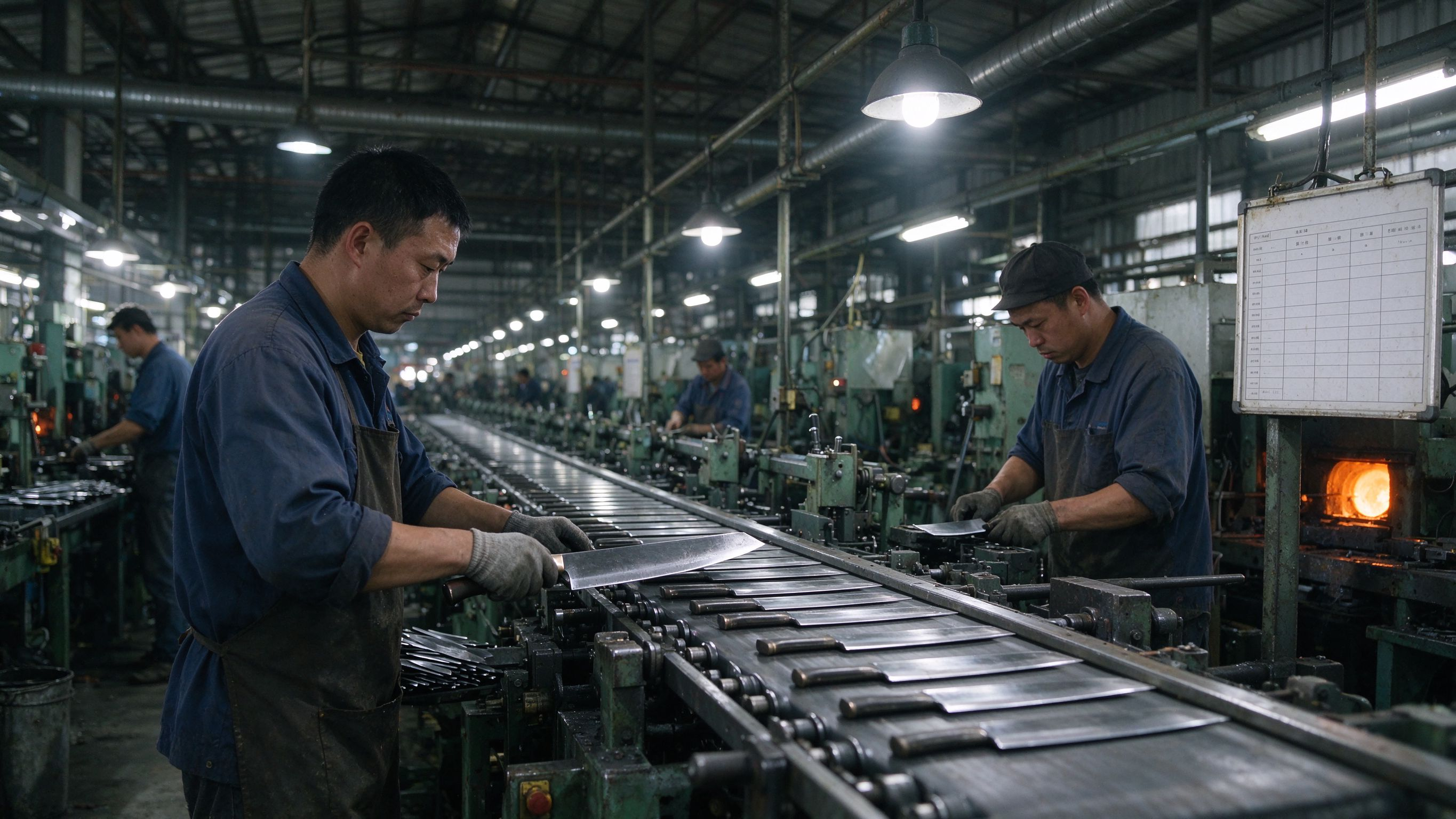
The production flow runs blanking, straightening, heat treatment, welding, wet grinding, sanding, edge opening, injection moulding, logo marking, cleaning, assembly, then inspection and packing. Different knife families run this sequence in a different order, and some skip a step entirely: a forged blade does not start at a stamping press, and a full-steel handle does not visit the injection machine. The control logic does not change; only the route does. Every stage below is mapped inside the Critical Parameter Production Process Control System, and the parameter column is the part a buyer should read first.
Stage | Parameters held | How it is verified |
01 Blanking | Strip grade and thickness, die clearance, burr height | Thickness gauge, burr check on first piece |
02 Straightening | Straightness over blade length, residual bow | Flat-plate check, straight edge |
03 Heat treatment | Soak temperature and time, quench rate, temper temperature and cycles | Hardness sampling per batch, cycle record |
04 Welding | Joint position, weld penetration, distortion at the bolster | Visual and bend check, sample pull |
05 Wet grinding | Bevel angle, thickness behind edge, coolant flow | Angle gauge, thickness gauge, edge temperature feel |
06 Sanding | Surface finish, scratch depth, edge protection | Visual against master sample |
07 Edge opening | Apex geometry, burr removal, symmetry on both sides | Cut test on paper, both-side check |
08 Injection moulding | Melt temperature, mould temperature, cycle time, handle fit | First article, fit check on blade |
09 Logo marking | Position, depth, alignment to the blade axis | Template overlay, visual sample |
10 Cleaning | Residue removal, dryness, no water marks on the finish | Wipe test, visual |
11 Assembly | Rivet tightness, handle gap, blade play | Hand torque check, gap gauge |
12 Inspection and packing | Hardness, edge, dimension, carton count and labelling | Pre-shipment inspection against the spec sheet |
Read down the middle column and the logic appears: every stage fixes one geometric or metallurgical property, and the next stage either preserves it or damages it. A grinding line cannot restore hardness lost in a bad temper; a polishing wheel cannot fix a bevel angle set wrong at the belt. Control is therefore ordered, not parallel.
Most stages tolerate a wide window. Four do not, and that is where a Critical Parameter Production Process Control System does its heaviest work. Blanking sets the mass of steel the knife will have; straightening sets whether that mass sits in a straight line; heat treatment sets the hardness the knife will carry; grinding sets the geometry that makes the knife cut. Put the four together and you have described almost every knife failure a customer ever reports. Everything else in the plant is, in comparison, adjustable after the fact.
Blanking is where grade and thickness are locked. A strip that arrives at the low end of its thickness tolerance and a die with generous clearance produce a knife blade that is dimensionally legal and metallurgically thin at the edge, and no downstream step will notice until the knife is in someone's hand. This is why incoming strip is checked before it reaches the press, not after the first thousand pieces.
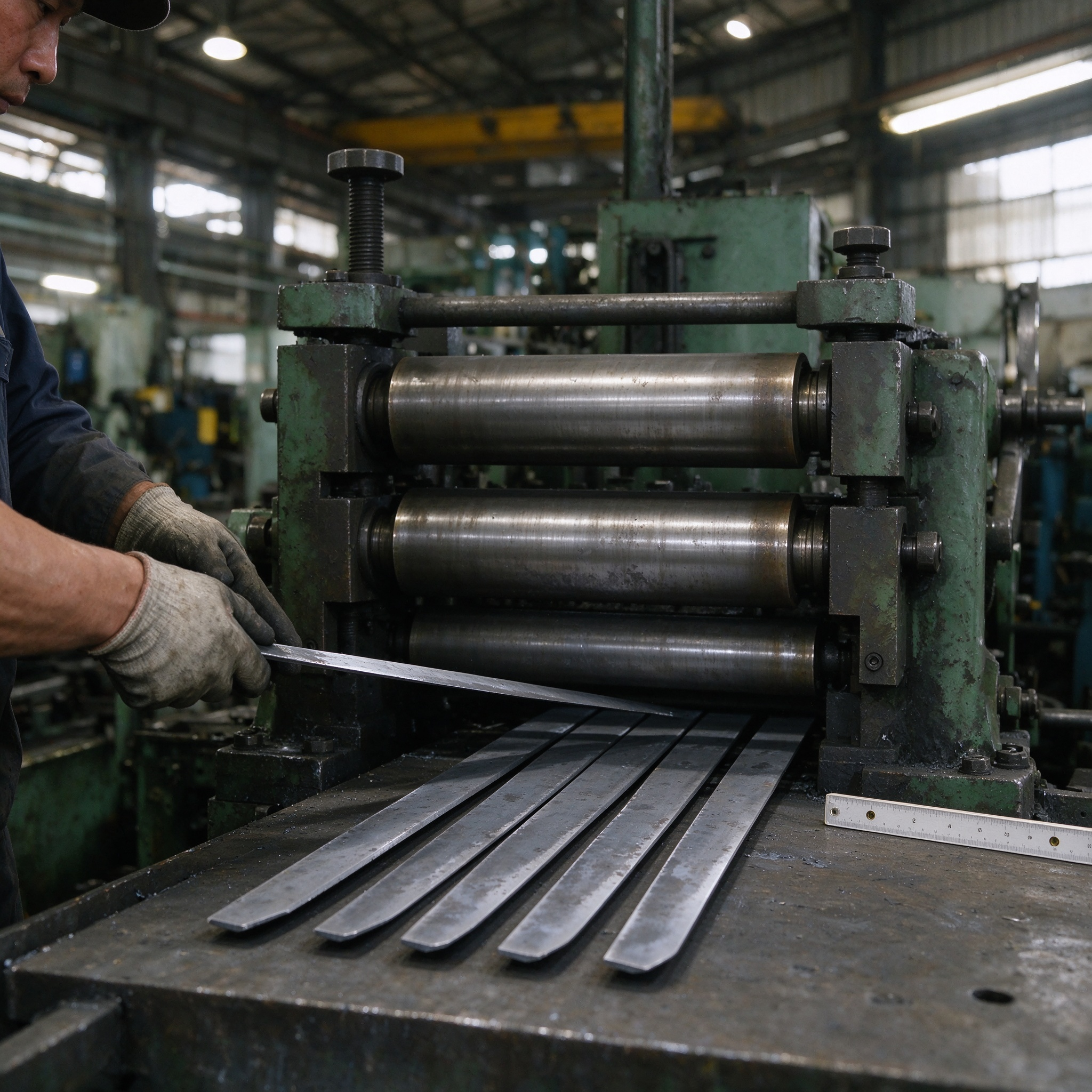
Straightening is measured, not felt. A blade that leaves this stage with a bow inside tolerance will pass polishing; one that leaves with hidden stress will move after it, and the knife arrives warped in the customer's warehouse three weeks later. The control point is a flat plate and a straight edge, applied to a sample from each run and to any blade that a press operator flags.
The heat-treatment stage is not one operation. It is four, each with its own purpose, and skipping or shortening any of them shows up as a different defect. The Critical Parameter Production Process Control System records them as one linked operation, because a hardness value without the cycle behind it proves nothing about the knife.
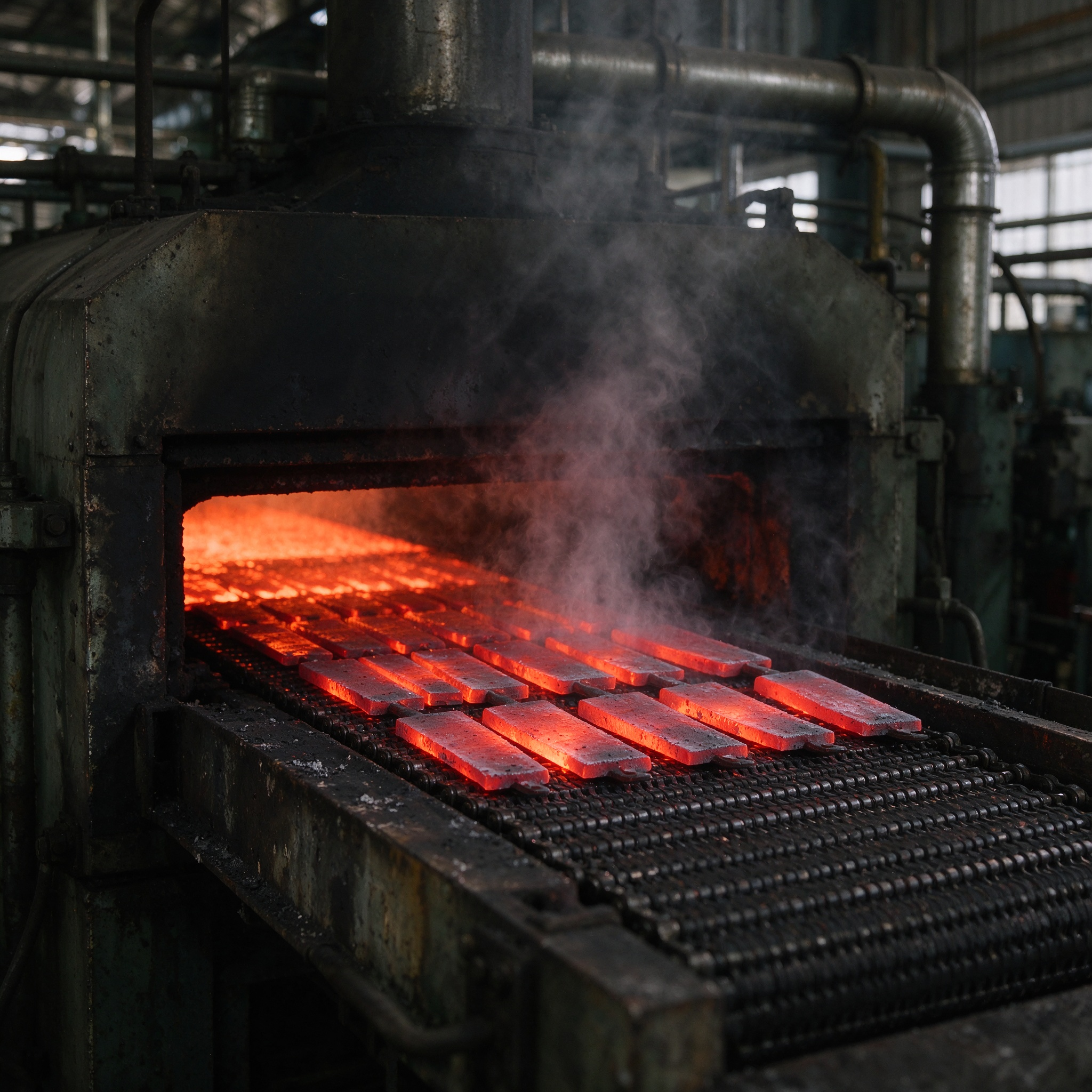
Annealing heats the steel to a temperature where its structure transforms or partly transforms, holds it, then cools slowly. Its job is to remove structural defects inherited from blanking and rolling, homogenise the structure, refine grain, and lower hardness so the blade can be machined and ground without cracking. It is a preparatory treatment — a semi-finished stage — and its parameter is the cooling rate as much as the temperature.
Normalising heats above the critical temperature so the steel becomes uniform austenite, then cools in air. It refines grain, breaks up the network carbide that makes hypereutectoid steel brittle, and for parts with moderate demands it can replace annealing at lower cost. The parameter here is the air-cooling condition, which in a humid plant is not the same in July and January.
Quenching heats the part to a point above the critical temperature, holds it, then cools it fast in water, oil, molten salt or an aqueous polymer. The structure becomes martensite, or bainite, or a mixture, and the blade becomes hard — and at the same time brittle. This is the stage that creates hardness, and the stage that creates distortion. The parameters are the soak, the transfer time and the quench medium's condition, and the last one drifts quietly as a bath ages.
Tempering follows immediately. The hardened part is held at a temperature above room temperature but below roughly 710 degrees Celsius, then cooled. Tempering adjusts the mechanical properties so the blade meets its intended use, stabilises the structure so it does not transform in service and change dimension, and relieves quenching stress so the blade does not crack later. A quenched blade is not released to production as-is: one to two tempering cycles, sometimes more, are standard, and the number of cycles is a controlled parameter in its own right.
Put together, the stage is a chain of trade-offs: annealing buys machinability, normalising buys uniformity, quenching buys hardness, tempering buys toughness back. A Critical Parameter Production Process Control System records the temperature and time of each link, plus hardness measured after the last one, because hardness alone does not prove the chain was correct.
If heat treatment sets how hard the steel is, wet grinding sets how that hardness is used. The stage runs as four escalating steps, and each has a parameter that must be met before the next begins.
Edge setting is the first pass on the bevel: it establishes the primary geometry and removes the blanking and stamping irregularities. The controlled parameters are the angle relative to the blade axis and the thickness left behind the edge. Get these wrong and no later step recovers them, because later steps only refine.
Edge refining adjusts the bevel more precisely on the foundation set in the first pass, aiming at sharpness and durability together rather than sharpness alone. The parameter is symmetry: both sides must meet at the apex, or the blade steers in the cut and wears unevenly.
Fine grinding removes the remaining unevenness and scratch pattern and takes the surface toward a smooth, continuous bevel. Here the risk is heat, because a finer belt with light pressure still concentrates energy at a thin section. Coolant flow and contact time are the parameters, and they protect the hardness achieved four stages earlier.
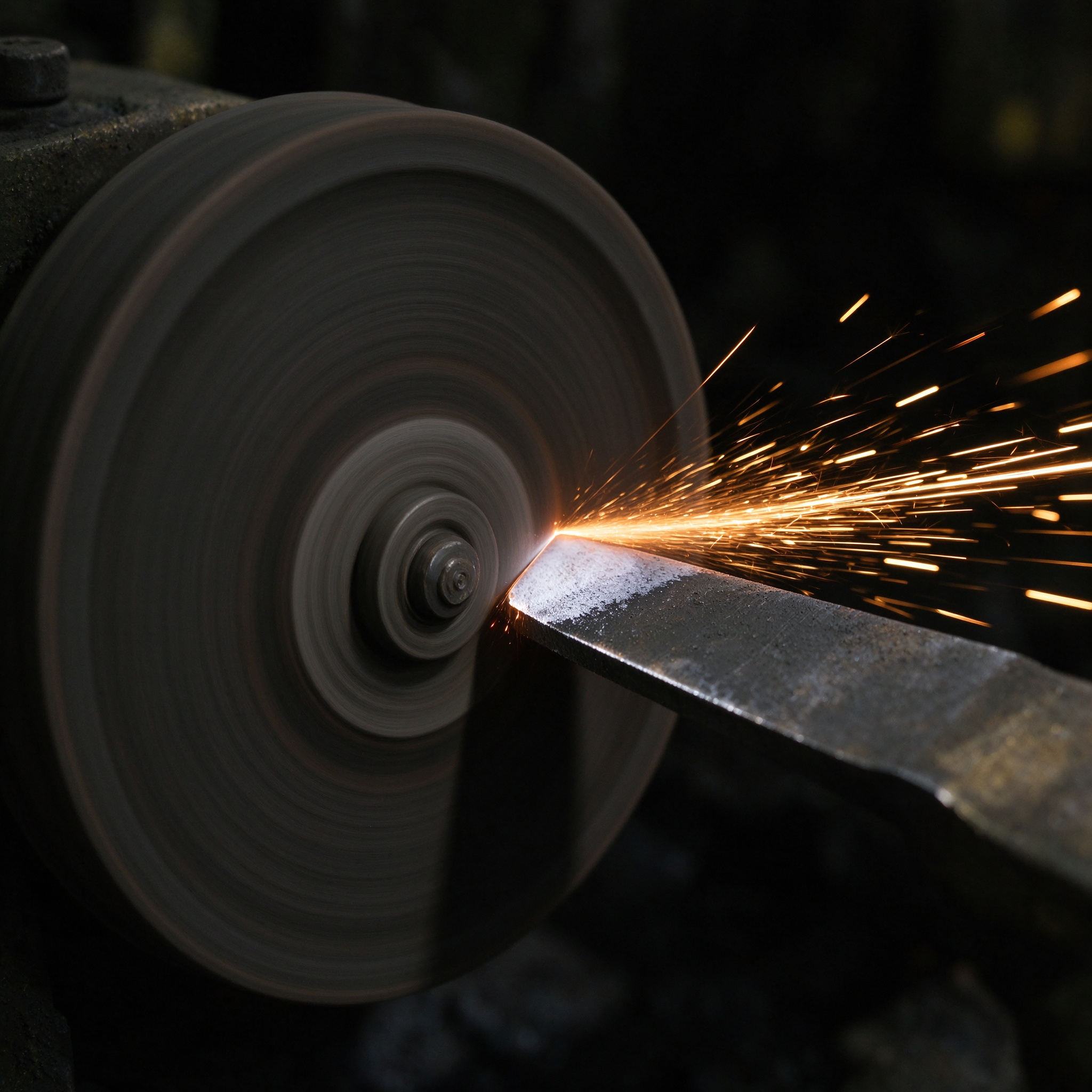
Final honing is the last pass, where the apex is brought to its finished condition and the burr is removed rather than bent over. A burr left in place feels sharp for a week and then folds, which is the single most common complaint that reaches a factory as "the knife went blunt by itself", and the hardest one to answer without a honing record for that knife. The parameter is burr removal verified by cut test, not by touch.
A Critical Parameter Production Process Control System is paper until something enforces it. In practice, six mechanisms do the work.
· First article approval. The first piece off a new run is measured against every critical parameter before the run continues; nothing is produced at scale until it passes.
· In-process patrol. A defined sampling frequency per stage, not a random walk: hardness per batch, angle and thickness per run, edge quality per shift.
· Gauge control. Calipers, angle gauges and hardness testers are themselves checked on a schedule, because a drifting gauge produces confident, wrong data.
· Route card and batch identity. The parameters travel with the physical batch, so the knife in a customer's warehouse can be traced back to its furnace load and grinding setup.
· Nonconformance handling. Out-of-window parts are segregated and dispositioned, and the cause is corrected at the parameter, not at the finished piece.
· Change control. A new steel lot, a new mould or a new belt supplier is a parameter change and is re-validated before it ships.
These six are what turn a Critical Parameter Production Process Control System from a document into a rate of consistency that holds at five million pieces a month, where no one can inspect every knife and no one needs to, because the knife was already checked at the stage that made it.
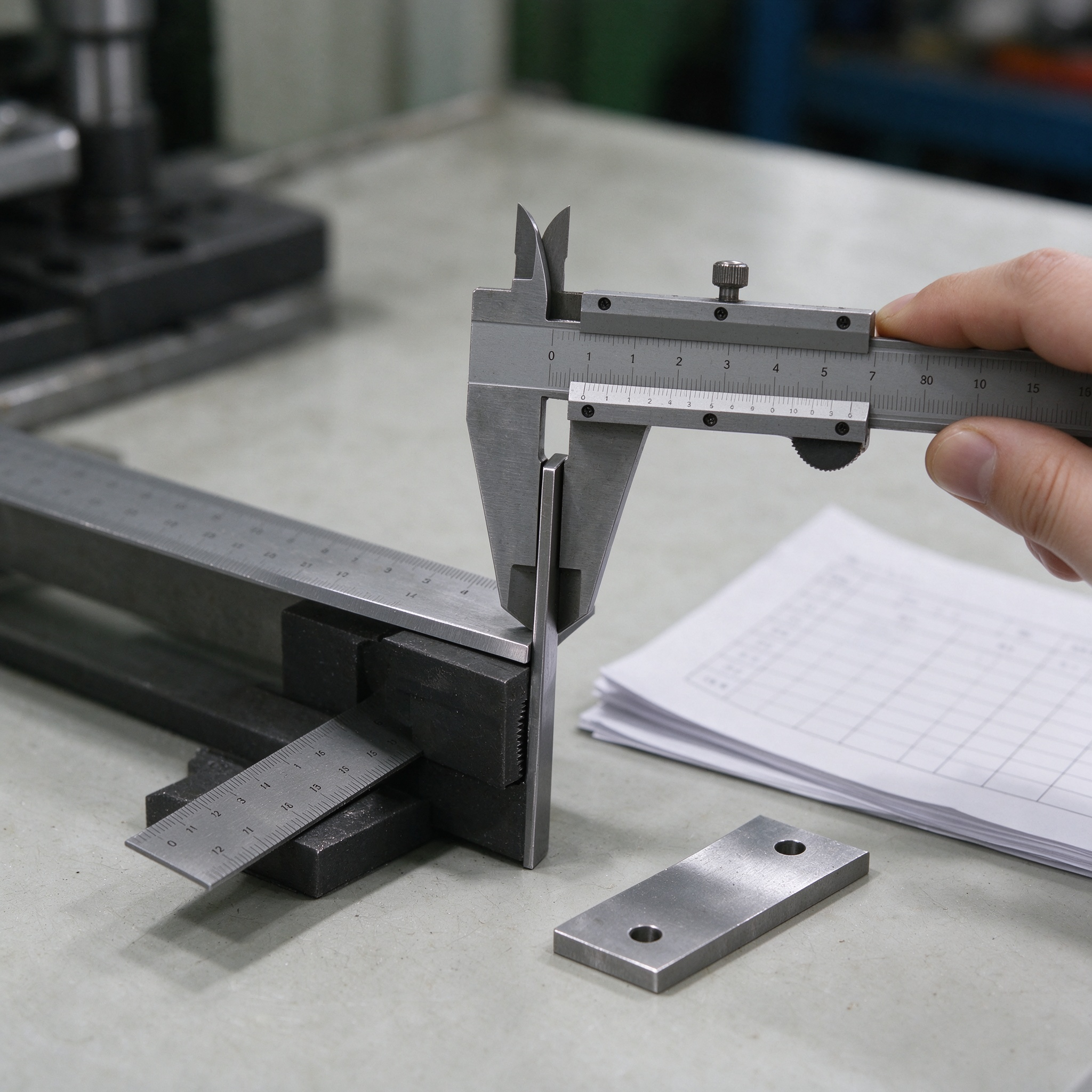
Insight has designed, produced and sold chef knives, santoku knives, bread knives, paring knives and kitchen tools for more than 23 years, in a 20,000 square metre plant with a monthly capacity of roughly five million pieces, serving brands that buy OEM and ODM. The Critical Parameter Production Process Control System is one of seven systems that run around that production, and it is the one that touches every stage listed above. For an OEM buyer, the shortest honest description of what the plant sells is a knife held to a documented window at every stage, with the evidence kept.

The advantage of keeping all twelve stages under one roof is that a parameter set at stage one can still be measured at stage twelve. Blanking, heat treatment, wet grinding, moulding and packing sit within the same quality organisation, with the same record system and the same batch identity, so a hardness question and an edge question converge on one document.
It also means the system can be shown. A visiting buyer can walk the route, see the first-article check at the press, the hardness sampling after tempering, the angle gauge at the belt, the cut test at the honing station and the pre-shipment inspection at packing, then compare what they saw against the records for their own batch.
No. Inspection finds defects after the fact; parameter control prevents them. The system defines which variables decide the outcome at each knife stage, sets windows, and verifies them during production rather than only at final inspection.
Typically two to four. Blanking holds strip thickness, die clearance and burr height; wet grinding holds bevel angle, thickness behind the edge and coolant flow; heat treatment holds soak, quench and temper conditions. More settings exist, but these are the ones whose drift changes the product.
Because quenching makes the steel hard and brittle at the same time. Tempering below roughly 710 degrees Celsius relieves the internal stress, stabilises the structure and adjusts toughness, so the blade does not chip or change dimension in service. One to two cycles, sometimes more, are normal.
Yes. Insight hosts process audits for OEM and ODM programmes: the route, the parameter windows, the first-article records, the sampling plan and the batch traceability can all be reviewed, and a sample batch can be tested independently against the agreed specification.
By making the parameters part of the route card rather than part of a person's memory: written windows, checked gauges, fixed sampling frequencies, batch records, and change control that re-validates any new steel lot, mould or consumable before it ships. Volume is a result of repetition, and repetition only stays consistent when it is documented.


