Welcome to INSIGHT  |     phoebe@insightknife.com.cn   |    +86-15975693888
You are here: Home » About Us » Utility Knife Manufacturers

Utility Knife Manufacturer

Utility knife is a versatile kitchen tool designed for a variety of food preparation tasks. It typically has a medium-sized blade that is suitable for chopping, slicing, dicing, and mincing a range of ingredients. Unlike specialized knives like chef's knives or paring knives, a utility knife is intended to be a general-purpose tool that can handle many kitchen tasks.

Our Utility Knife Series

Our Services for Utility Knife

Yangjiang Insight Industry And Trade Co., Ltd. was founded in 2003 in Yangjiang, China.
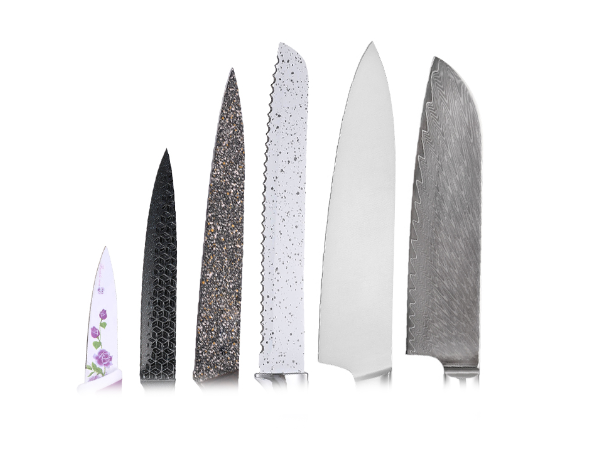
With over 21 years of development, INSIGHT has become a professional knife enterprise and brand in the hardware industry in China. INSIGHT provides OEM&ODM service about chef knife, including its material,surface treatment,shape and so on.

How We Make Utility Knife?

  • Step 1
    We will provide samples to you, when you choose some items or plan to design something.
  • Step 2
    When you place an order and pay advance charge to us, we will begin to prepare mass production.
  • Step 3
    We will arrange inspection activity to you, while products almost finish.
  • Step 4
    We will book shipment to freight forwarder and check the ETD with you.
  • Step 5
    We will ship out goods.
  • Step 6
    Please arrange balance payment to us and we will send shipping documents to you.

The Material of Blade

420J1/2Cr13: The carbon content can be adjusted through heat treatment to achieve a hardness typically reaching HRC48-50.
420J2/3Cr13: The carbon content can be adjusted through heat treatment to achieve a hardness typically reaching HRC52-54.
2Cr14: The carbon content can be adjusted through heat treatment to achieve a hardness typically reaching HRC48-50.
3Cr14: The carbon content can be adjusted through heat treatment to achieve a hardness typically reaching HRC52-54.
5Cr15MoV: The carbon content can be adjusted through heat treatment to achieve a hardness typically reaching HRC55-58.
Damascus Steel: Created by layering different compositions of steel and forging them into a unique structure. It features distinctive patterns, high hardness, and good toughness.

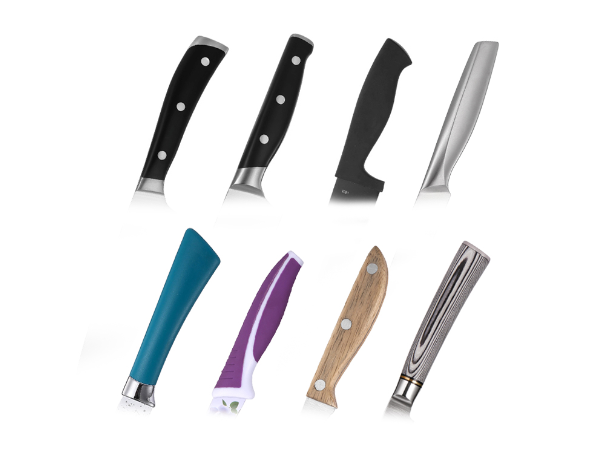
The Material of Handle

1. Wooden Handles:
Olive wood, walnut, colored wood, oak, acacia, ash wood, rosewood, sandalwood, pine, rubber wood, mango wood, birch, beech, teak, maple, cherry wood.
Pros: Excellent feel, hard texture, lightweight, wear-resistant, corrosion-resistant, aesthetically pleasing.
Cons: Prone to warping when exposed to moisture, flammable.
 
2. Plastic Handles:
ABS, PP, POM, acrylic, TPR. 
Pros: Lightweight, waterproof, easy to clean, low production cost, customize in various colors and shapes.
Cons: Prone to aging, easily deformed.
 
3. Stainless Steel Handles:
430, 304.
Pros: Corrosion-resistant, wear-resistant.
Cons: Heavier, high thermal conductivity, which may affect comfort during use.

The Main Processes of A Utility Knife

Material cutting, straightening, heat treatment, welding, water grinding, sanding, sharpening, injection molding, logo printing, cleaning, assembly, inspection, and packaging. The key process for knives is heat treatment, which generally takes about 3 hours. The heat treatment time varies depending on the blade material. If the hardness is too low, the knife won't be sharp enough; if it's too high, the knife may easily break. Typically, the hardness for kitchen and dining knives is between 50-54 HRC. After heat treatment, the surface of the finished product has a layer of texture.

Why Choose Us

Yangjiang Insight Industry And Trade Co., Ltd. was established in 2003 by Miss Feng Phoebe in Yangjiang, a city renowned in China for its knives and scissors. With over 20 years of experience in the kitchen knife industry, we offer 24/7 online support. Our strong manufacturing capabilities allow for low minimum order quantities. We maintain an internal system to monitor production processes and track manufacturing schedules. We accept customized designs to meet clients’ needs. Our skilled production team ensures competitive pricing and high-quality products. We conduct thorough inspections to guarantee product quality, and we are certified under a quality management system.

How to Choose A Utility Knife?

  • Q Blade Material for Utility Knife

    A Look for high-quality stainless steel or carbon steel blades. Stainless steel is resistant to rust and corrosion, while carbon steel offers sharper edges but may require more maintenance.

  • Q Blade Size and Shape

    A Choose a blade size and shape that suits your needs. Utility knives usually have blades ranging from 4 to 6 inches in length. A straight blade is versatile, while a serrated edge can handle tougher materials.
  • Q Handle Comfort and Grip

    A Ensure the handle is comfortable to hold and provides a secure grip. Materials like rubber or textured plastic offer good traction, while ergonomic designs reduce hand fatigue.
  • Q Blade Replacement and Maintenance

    A Check if the knife allows for easy blade replacement and maintenance. Some utility knives have replaceable blades, while others are designed to be sharpened.
  • Q Durability

    A

    Consider the overall build quality. A well-constructed knife should feel sturdy and durable, with no loose parts or flimsy components.

  • Q Additional Features

    A

    Some utility knives come with additional features like retractable blades, safety locks, or adjustable blade depths. These can add convenience and safety.


ScreenShot_2026-03-27_091615_174_762_762.png
A Kid's Cooking Knife: The Gateway To Culinary Confidence

This guide explores the rewarding process of teaching children to use cooking knives safely and effectively. It emphasizes that starting early fosters culinary confidence, motor skill development, and better eating habits. By guiding parents through age-appropriate tool selection—from nylon knives for toddlers to metal blades for older children—and highlighting crucial safety habits like the "claw" technique and the "safety circle," the article provides a practical framework for empowerment. The focus remains on building a respectful, responsible relationship with kitchen tools, ensuring that the journey toward independence is a safe and joyous one for both child and parent.

READ MORE
海报30_735_735_745_745.jpg
How To Clean Old French Cooking Knife?

This article provides a comprehensive guide on safely cleaning and restoring vintage French cooking knives. It emphasizes the importance of assessing the knife's condition before starting, using gentle, non-abrasive cleaning methods to remove rust, and maintaining the blade's integrity by avoiding dishwashers and harsh chemicals. It also covers the value of preserving the natural patina and provides essential care tips to ensure the knife remains a functional and beautiful heirloom for years of future culinary use.

READ MORE
海报29_763_763.jpg
Pulling Test for Knife-Our Lab Equirment Yangjiang Insight

This article provides an in-depth exploration of the pulling test procedure used for quality control in knife manufacturing, highlighting the role of advanced laboratory equipment at Yangjiang Insight. It covers the technical necessity of verifying handle security, the step-by-step testing process, and the broader implications for product safety and design reliability in the competitive cutlery industry.

READ MORE
海报33_717_717.jpg
How To Correctly Use A Knife for Cooking?

This guide explains the fundamentals of kitchen knife mastery, emphasizing the importance of the pinch grip and the claw technique for safety and efficiency. It covers essential maintenance practices, including regular honing and sharpening, and offers advice on proper storage to ensure longevity.

READ MORE
海报34_754_754.jpg
How To Be Safe Using Knives While Cooking?

This guide emphasizes that knife safety is the cornerstone of a proficient kitchen. By prioritizing blade sharpness, adopting the pinch grip and claw technique, securing workspaces with stable cutting boards, and following responsible cleaning and storage habits, cooks can prevent injuries and enhance their culinary skills. Safety is presented not as a limitation, but as the foundation for confidence and precision in all cooking endeavors.

READ MORE

You May Also Like

Contact us

Contact Us

Phone: +86-15975693888
Copyright © Yangjiang Insight Industry And Trade Co.,Ltd.All rights reserved

Menu

Products

Leave A Message