


Views: 8879 Author: Site Editor Publish Time: 2026-11-16 Origin: Site


Content Menu
The Short Answer: Three Failures That Look the Same
A Five-Minute Diagnosis Before You Touch a Stone
When It Is Neither: the Board and the Hands
How Insight Holds Both Together
● Is a dull knife usually a steel problem or an angle problem?
● How can I tell whether the edge has rolled or chipped?
● What edge angle should a kitchen knife have?
● Can Insight supply knives to a specified hardness window and edge angle?
● How does Insight check edge quality before a knife leaves the plant?
A knife that has gone dull is not one problem. It is at least three, and they feel identical in the hand: the blade skates on a tomato, tears instead of slicing, and no amount of effort restores the line. Most people respond by sharpening harder, which fixes the symptom for a week and often makes the underlying cause worse.
Yangjiang Insight Industry And Trade Co., Ltd. has made knives and kitchen tools for more than 23 years — chef knives, santoku knives, bread knives, paring knives and kitchen scissors — at a 20,000 square metre plant running roughly five million pieces a month for brands buying OEM and ODM. In that time the same three questions have come back from buyers, chefs and home users, and they are worth separating properly: is this the steel, the edge angle, or the sharpening itself?
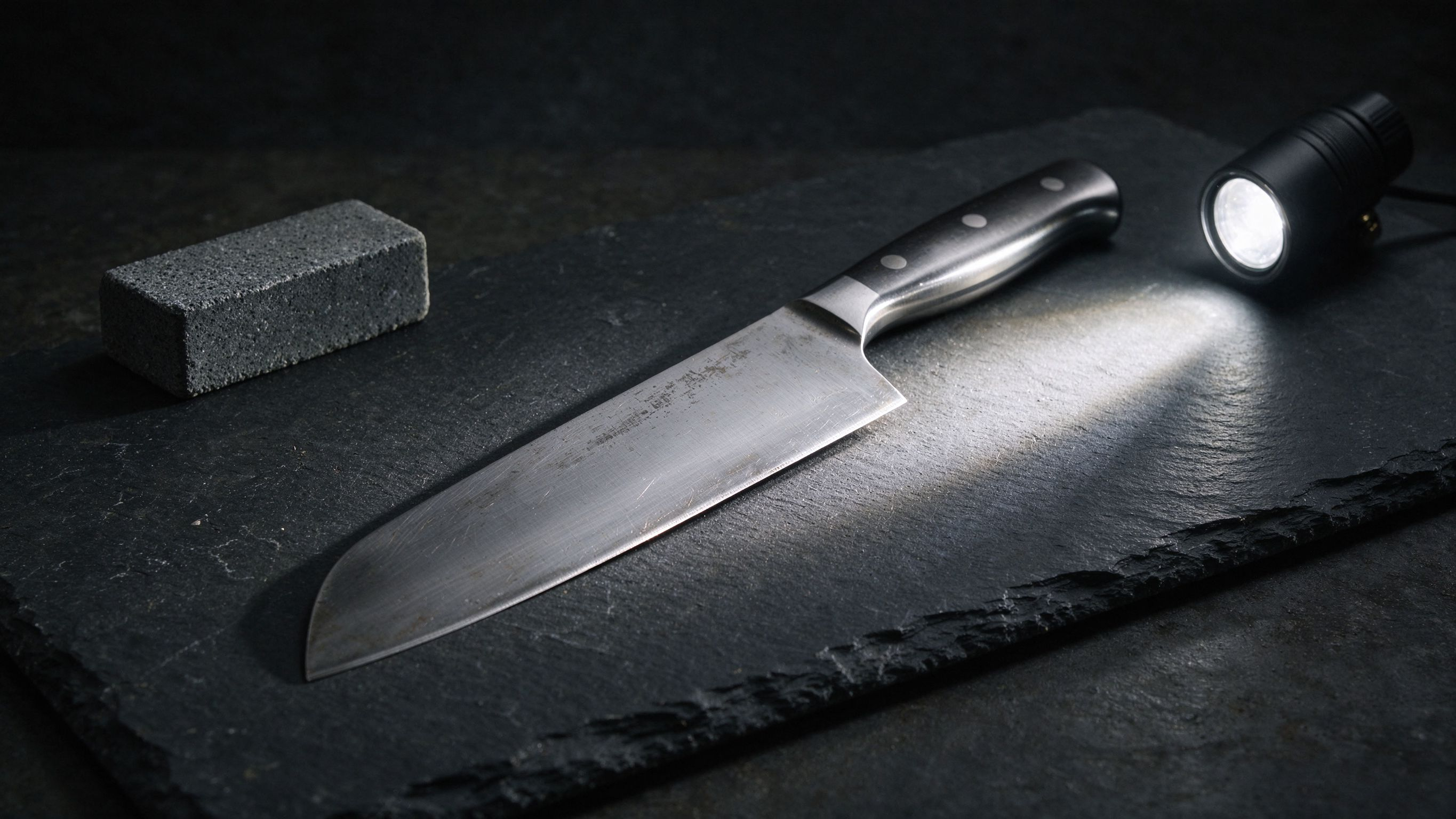
Steel decides whether the edge can hold. Geometry decides how much load the edge has to carry. Sharpening decides whether the apex is actually an apex, or a rounded shoulder pretending to be one. A blade can be made from good steel, ground at the wrong angle, and finished with a burr — and it will cut badly for all three reasons at once.
The useful way to think about it is as a chain. Hardness sets the ceiling, the edge angle sets the load, and knife sharpening sets the finish. Break any link and the knife feels blunt, but the repair is different in each case. Re-grinding a blade whose steel is too soft buys a few days. Re-hardening a blade that was simply steep is impossible. And polishing a blade that still carries a burr makes it feel sharp for exactly one meal.
Before any knife sharpening, run five checks. They take about five minutes and they tell you which of the three causes you are actually dealing with.
1. Look at the edge under light. Hold the blade so a light source reflects off the apex. A continuous bright line means the edge is still there; a broken or grey line means it has rolled, chipped or worn through.
2. Cut paper, slowly. A sound edge bites and travels. An edge that skates, or that only cuts when you bear down, is either too steep or still burred.
3. Cut a ripe tomato. Skin is the honest test: a thin, correctly finished edge enters with almost no pressure, while a steep or burred edge slides.
4. Feel for a burr, carefully. Run a fingertip across the edge, never along it. A wire edge that feels sharp on one side and smooth on the other is a sharpening problem, not a steel problem.
5. Measure the angle you can see. A cheap angle gauge or a photographed profile will tell you whether the bevel is around 15 degrees per side or closer to 25. Most dull knives are simply steeper than the user believes.
Only after these five checks is it worth asking what the steel is. Diagnosis first, then specification.
Steel fails in two different ways, and they need different responses. The first is rolling: the apex deforms sideways under load because the material behind it is too soft to resist. The second is chipping: the edge breaks away because it is too hard, or because a coarse grit left a fracture at the apex.
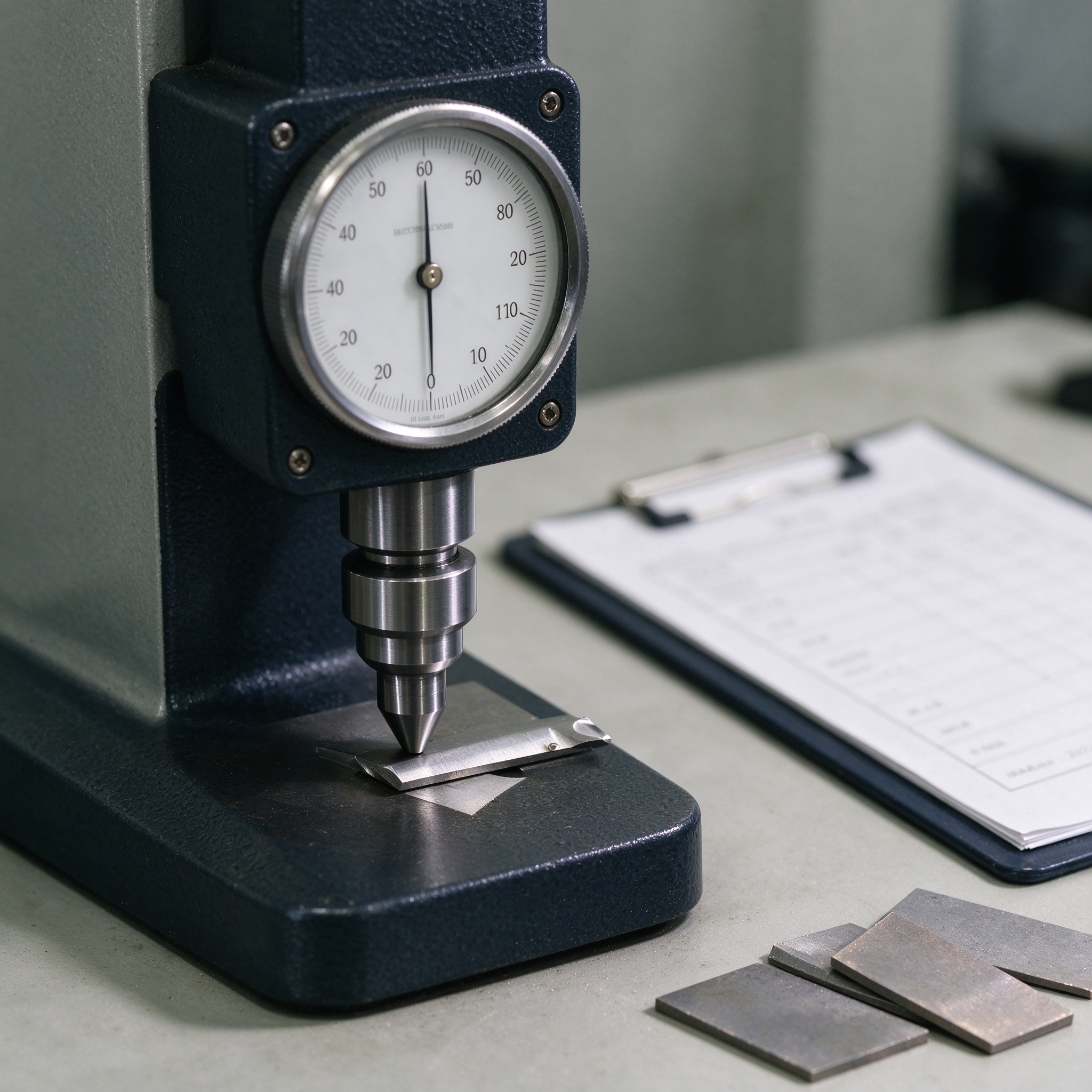
On the grade ladder Insight works from, 3Cr13 sits around 52 to 54 HRC, 5Cr15MoV around 55 to 58, and higher-carbon grades can run above 58 where the use case justifies it. The number matters because it sets how much side load the apex survives before it folds. A knife at 52 HRC used on a hard board with a heavy hand will roll; the same blade at 56 HRC in the same hands will hold, even though the difference is four points on a dial.
What buyers tend to miss is that a certificate is not an edge. Heat treatment sets hardness through the blade, but the final grind can remove it at the one place that matters if the edge is allowed to overheat. If a blade is ground dry and fast, the thin section at the apex can pass the tempering range and come out softer than the specification says, while the rest of the blade still tests correct. That is why a plant that cares about knife sharpening controls the temperature of the grinding contact, not only the furnace.
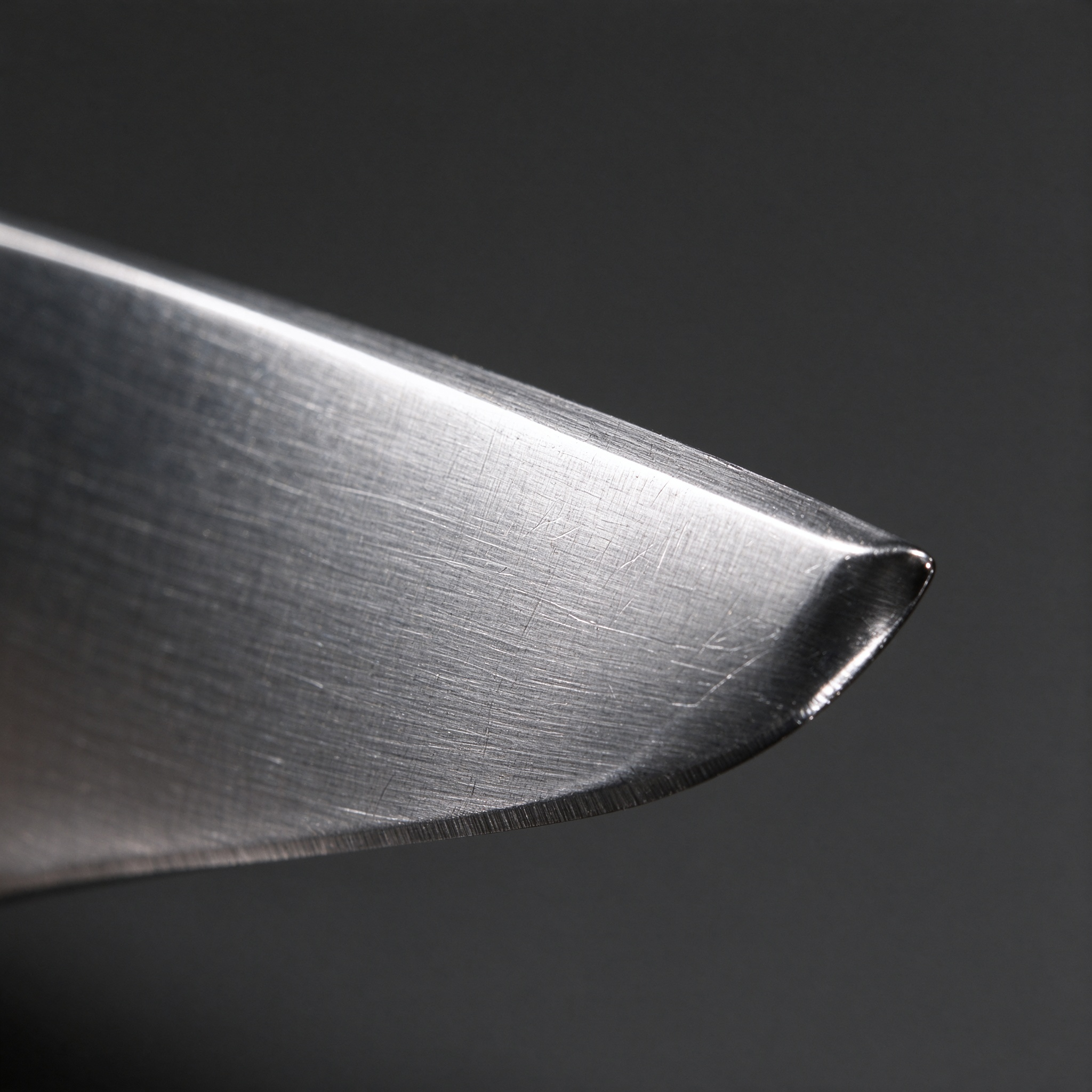
The edge angle is the most misunderstood number in knife sharpening, largely because two different angles share a name. The angle of one bevel to the blade's centre line is the edge angle per side; the angle between the two bevels is the included angle. A knife described as 15 degrees usually means 15 per side, which is a 30-degree included edge. If a buyer and a factory disagree about that, they will produce a blade that cuts nothing like either of them expected.
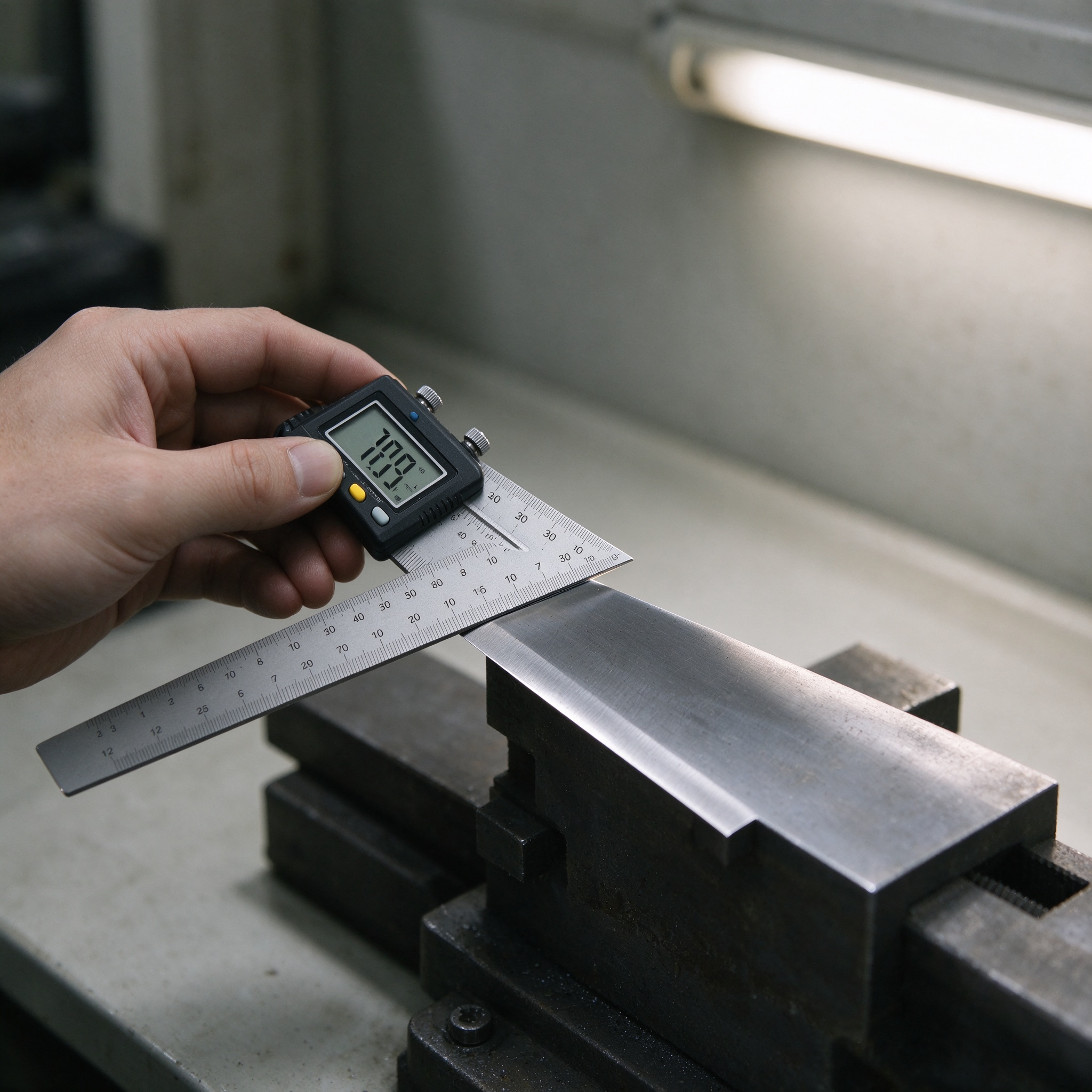
The mechanics are simple: a thinner edge needs less force to enter material, and carries less material behind it to resist wear. A 15-degree-per-side edge on a hard thin blade is a laser; the same angle on soft steel is a fold waiting to happen. A 20-degree-per-side edge is the general-purpose compromise most kitchen knives live at. A 25-degree edge is what you fit to a knife that will meet bone, board and abuse.
Metal removed at the wrong angle is permanent. That is the important asymmetry: a steep edge can be thinned, but a blade thinned too far cannot be thickened again without changing its geometry. This is why the angle question belongs at the specification stage and should only be maintained afterwards, never invented at the stone.
There is one legitimate exception. A micro-bevel — a slightly steeper final bevel of a few degrees, applied at the very apex — adds durability without thickening the whole blade. It is a factory technique rather than a repair, and it is worth asking whether your supplier applies one, and at what angle.
Most home knives are not dull; they are unfinished. Knife sharpening produces a burr, a thin wire of metal along the apex, and that burr is the difference between an edge that cuts and one that merely feels sharp for a day. A blade that cuts paper beautifully and fails on a tomato is almost always burred or over-polished.
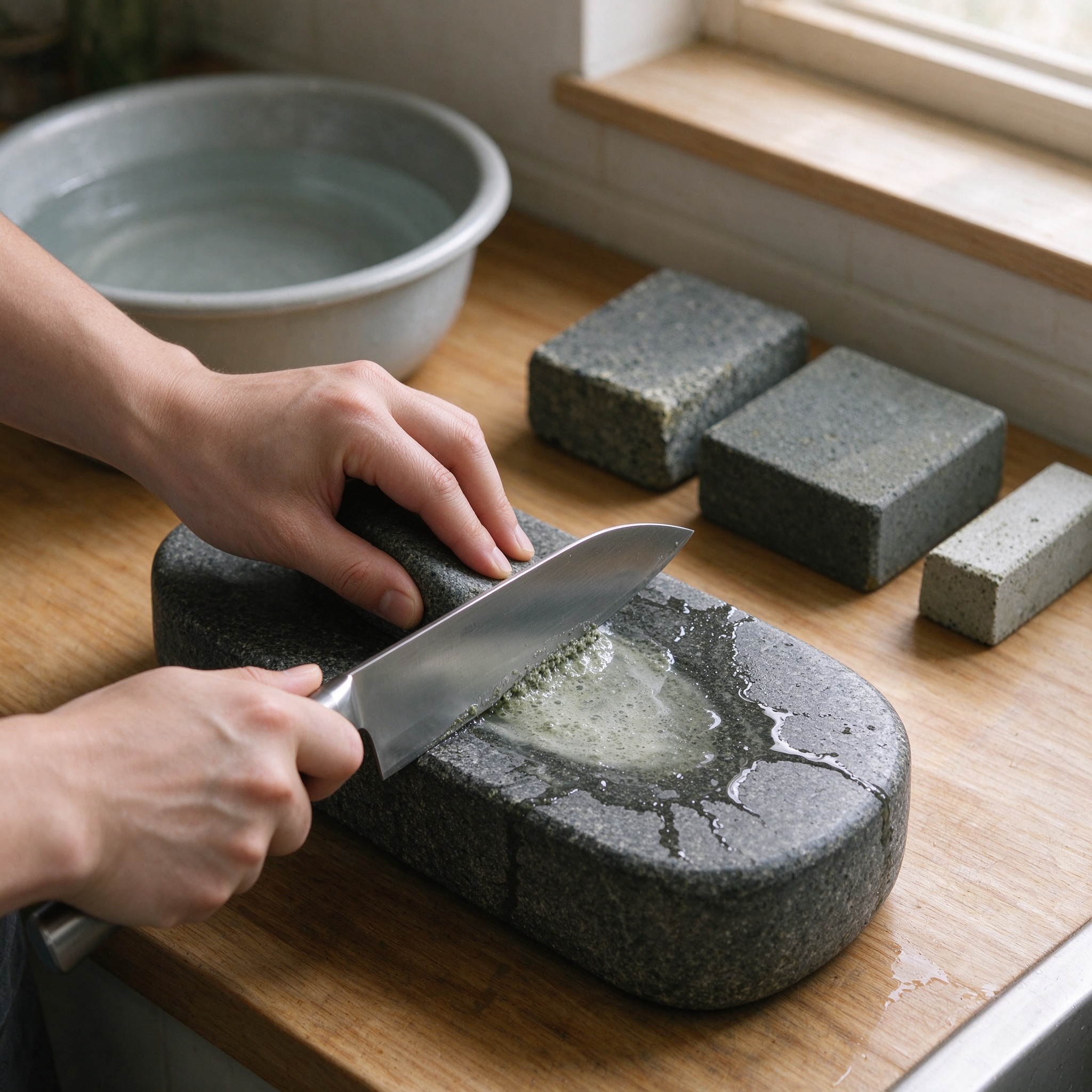
The sequence matters more than the stone. Coarse work sets geometry, medium work removes the scratches of the coarse step, fine work establishes the apex, and the final passes remove the burr without rounding the edge. Skipping the middle step is the most common reason a knife feels sharp off the stone and dull the next morning: the coarse scratches remain, and the apex collapses along them under load.
Angle control during knife sharpening is the second variable. A hand that rises two degrees across the stroke produces a convex bevel that never quite reaches the apex, and the blade will feel dull no matter how long it is worked. A fixed-angle guide removes human error, which is precisely why factories that need consistent output measure angles instead of trusting steady hands.
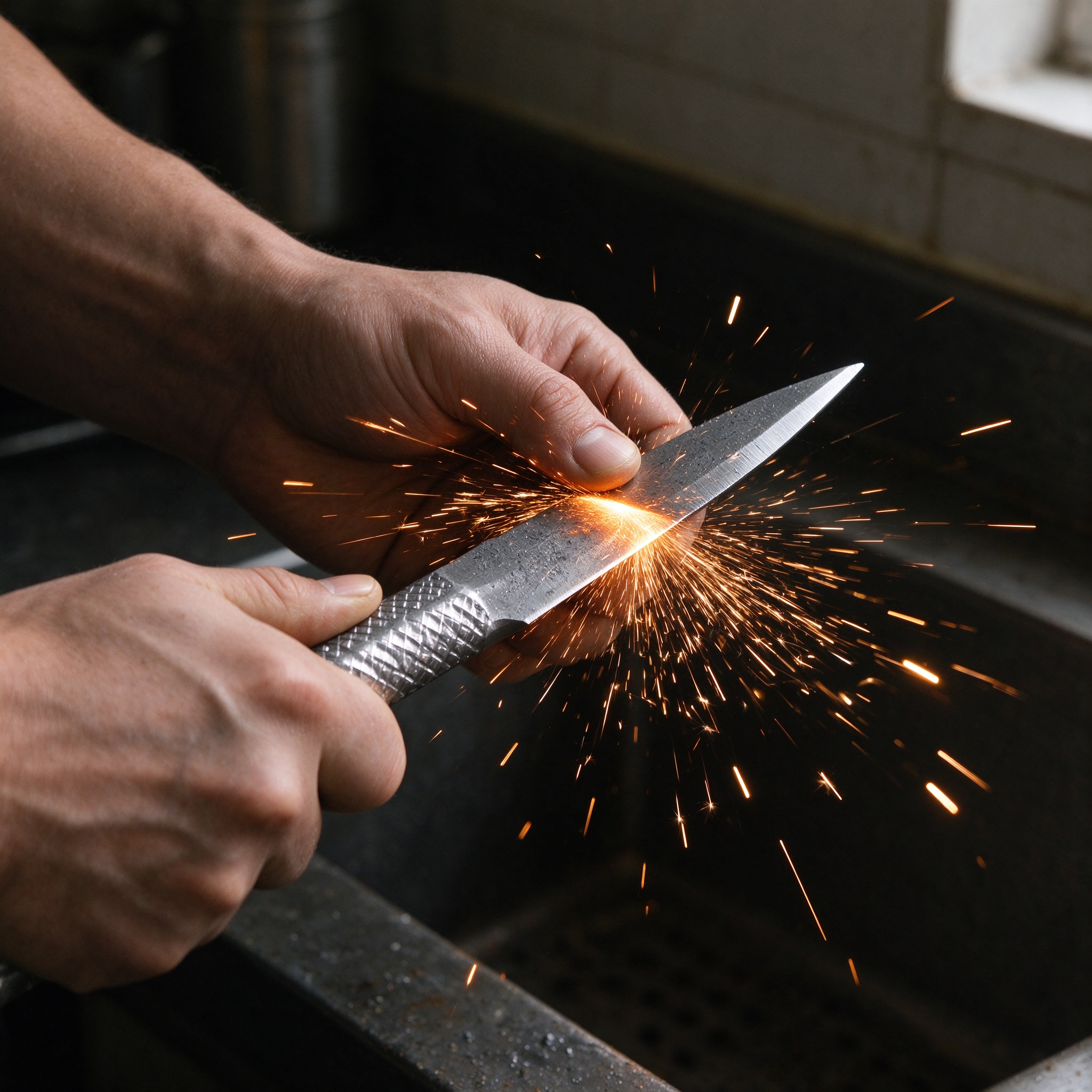
And then there is the honing rod. A rod realigns an edge; it does not create one. Used at a shallow angle with light pressure it is a maintenance tool and a good one. Used at a steep angle with speed, it grinds a narrow band at the apex, overheats it, and slowly turns a 20-degree edge into a 25-degree one. A knife that needs a rod every week is telling you it needs a stone once a quarter.
Two variables sit outside the blade and are routinely blamed on it. The first is the cutting surface. Glass, stone and hard composite boards are unforgiving: the edge meets a surface harder than itself at the end of every stroke, and a thin apex loses that argument. A soft wood or end-grain board lets the edge finish its cut.

The second is technique. Scraping food sideways with the edge, chopping into a board with the full weight of the shoulder, and storing a knife loose in a drawer are three habits that produce more dull edges than any steel grade. None of them are fixed by knife sharpening, and all of them are fixed by thirty seconds of habit change.
Insight's plant in Yangjiang runs blanking, heat treatment, grinding, polishing and assembly of chef knives, santoku knives, bread knives and paring knives under one roof, at roughly five million pieces a month. That matters here for a specific reason: hardness and angle are set in two different departments, and they only stay consistent when the same quality system owns both.
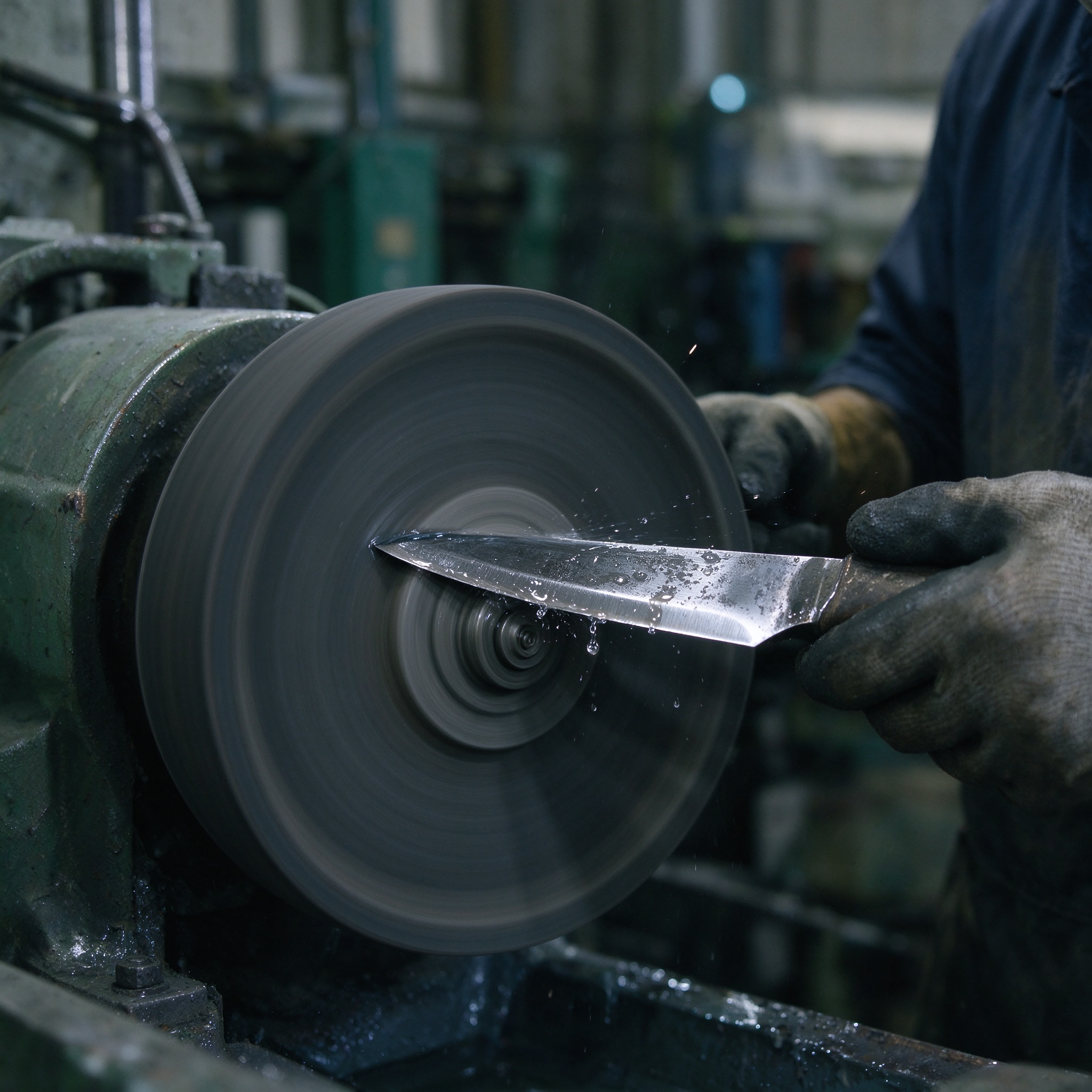
In practice that means wet grinding with a controlled contact temperature, angle fixtures that make the bevel repeatable instead of dependent on a steady hand, hardness sampling recorded per batch, and a cut test before packing. None of it is exotic. It is simply the difference between a plant that can answer a complaint and one that can prevent it — and with more than 23 years of OEM and ODM work behind it, most of the answers are written down before the buyer asks.
Angle, most of the time. A blade ground steeper than its use requires needs noticeably more force and wears faster, even in good steel. Steel becomes the answer when the edge rolls repeatedly at the correct angle under normal use.
Look along the apex under a light. Rolling shows as a wavy grey line that reflects diffusely; chipping shows as discrete breaks with bright facets. Rolling points to hardness or load, chipping to brittleness or too coarse a final grit.
Around 20 degrees per side for general cooking, 15 per side for slicing and precision work where the steel supports it, and 25 per side for cleavers and knives that meet bone. State per-side and included angle separately in any specification.
Yes. That is what an OEM or ODM specification looks like in practice here: a grade and a hardness range per part, an edge angle per side plus the included angle, a thickness behind the edge, and a grinding method. Insight has built chef knives, santoku knives, bread knives, paring knives and kitchen tools for more than 23 years, at a 20,000 square metre plant running roughly five million pieces a month, and those four numbers are quoted and recorded rather than promised verbally.
Three checks, all recorded per batch: hardness sampling near the edge with a benchtop tester, an angle check against the fixture value, and a cut test on paper and ripe tomato before packing. If a customer later reports an edge that rolled, the batch identity on the carton leads back to the steel lot, the heat-treatment run and the grinding parameters that produced it.


