


Views: 9378 Author: Site Editor Publish Time: 2026-11-11 Origin: Site


Content Menu
What a Supply Chain System Means in Cutlery
Where Supply Sits in The Seven System
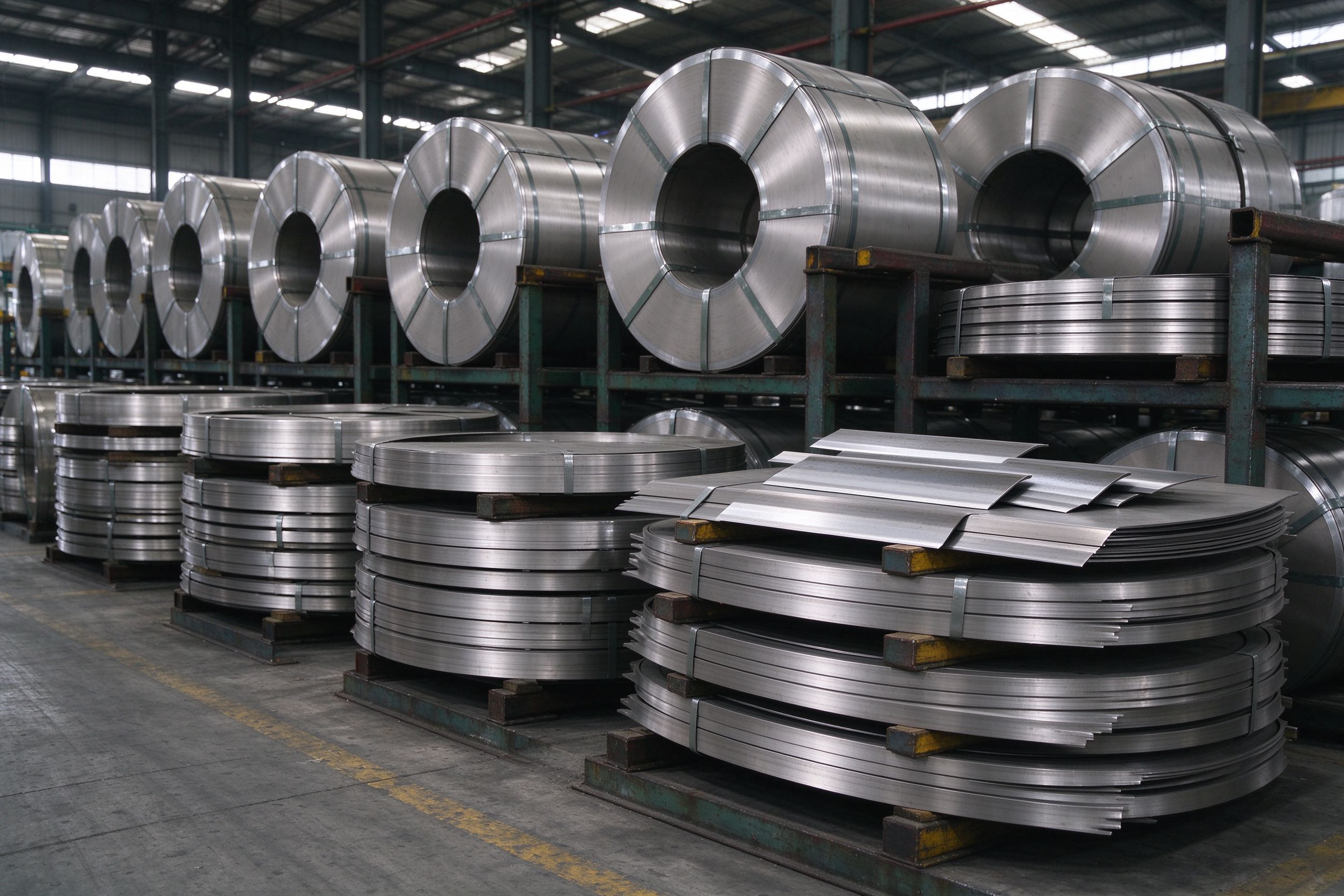
Material Family One: Blade Steel
Material Family Two: The Handle
Material Family Three: The Rivet Nobody Notices
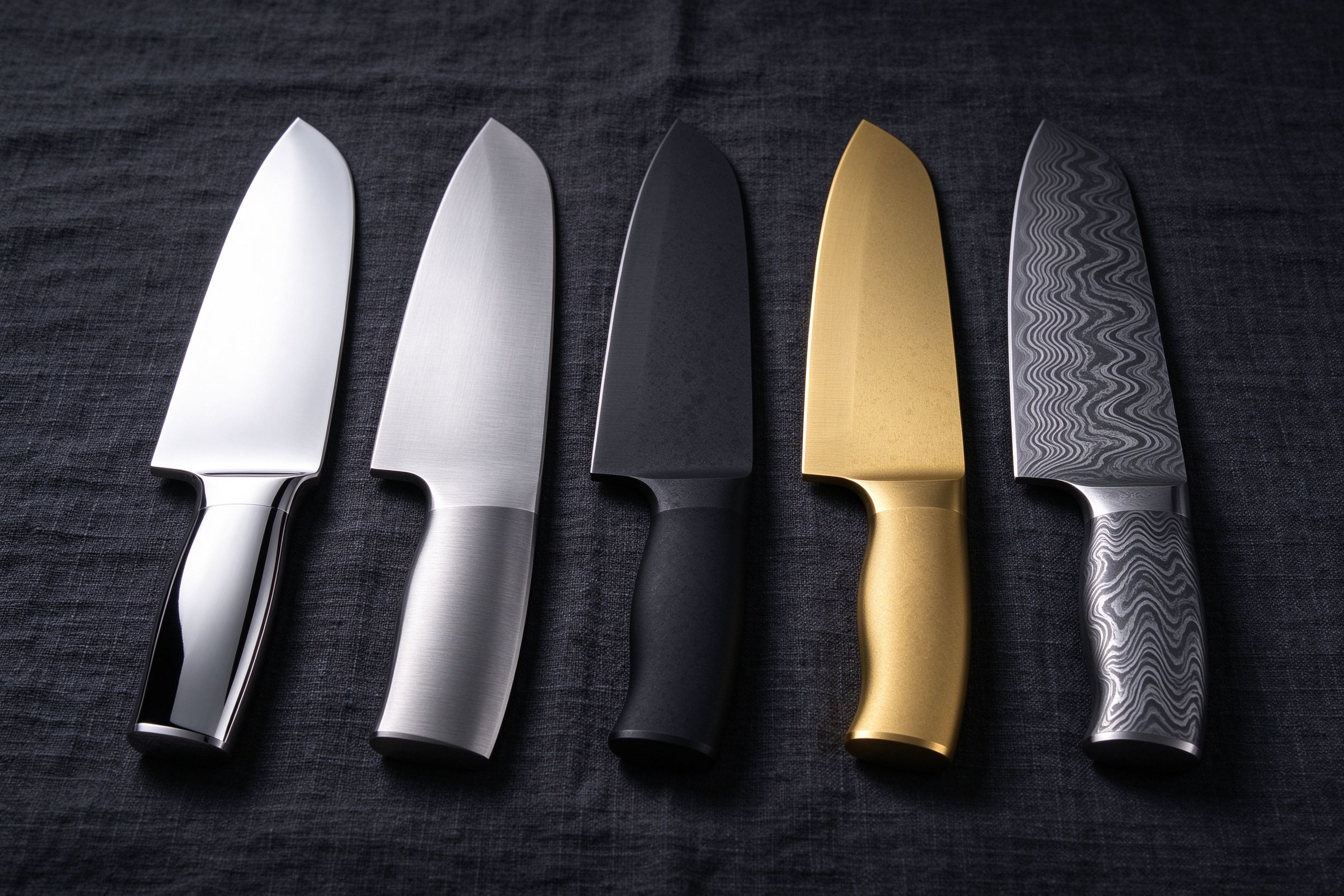
Material Family Four: Surface Finish Is a Specification
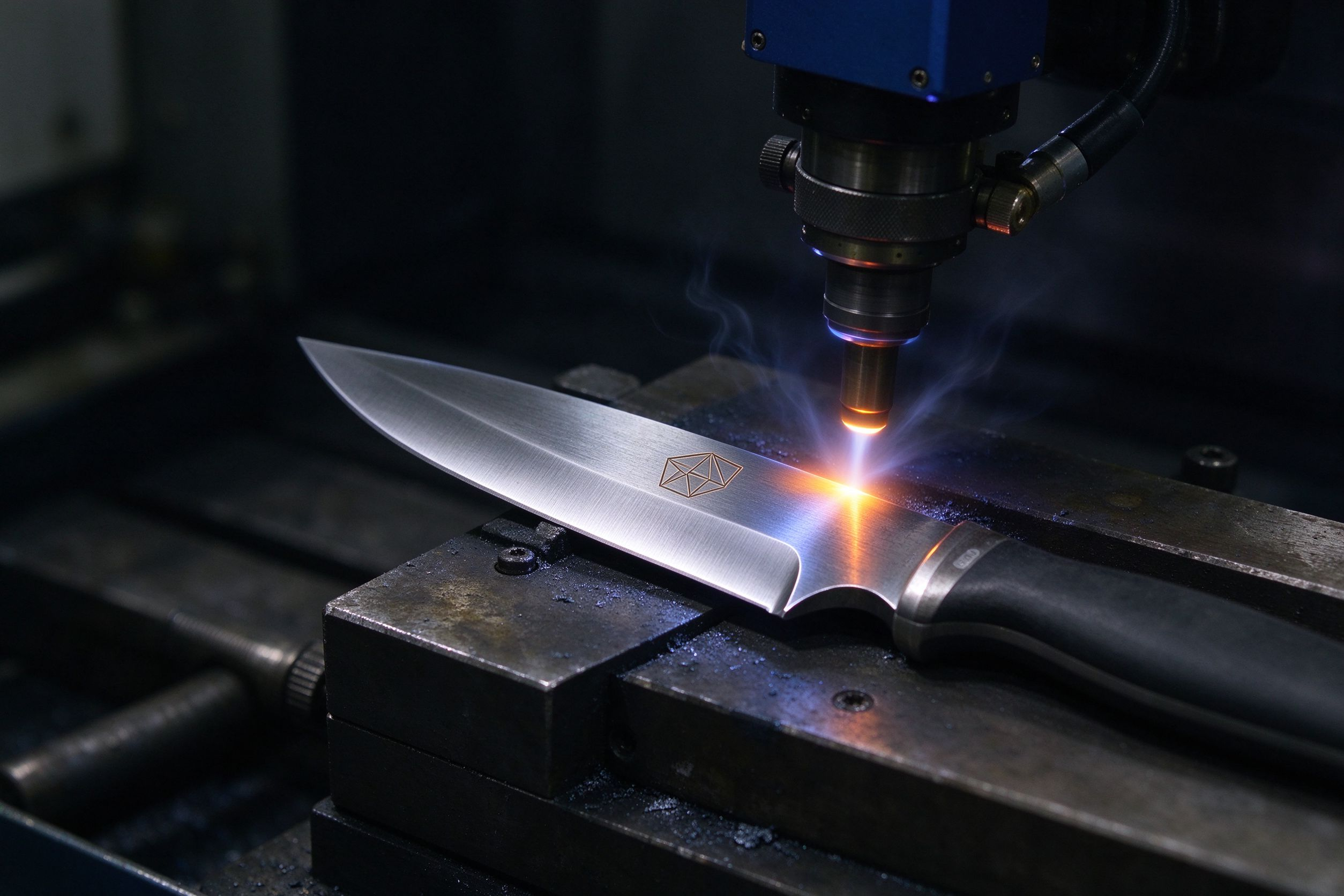
Material Family Five: Marking Your Brand
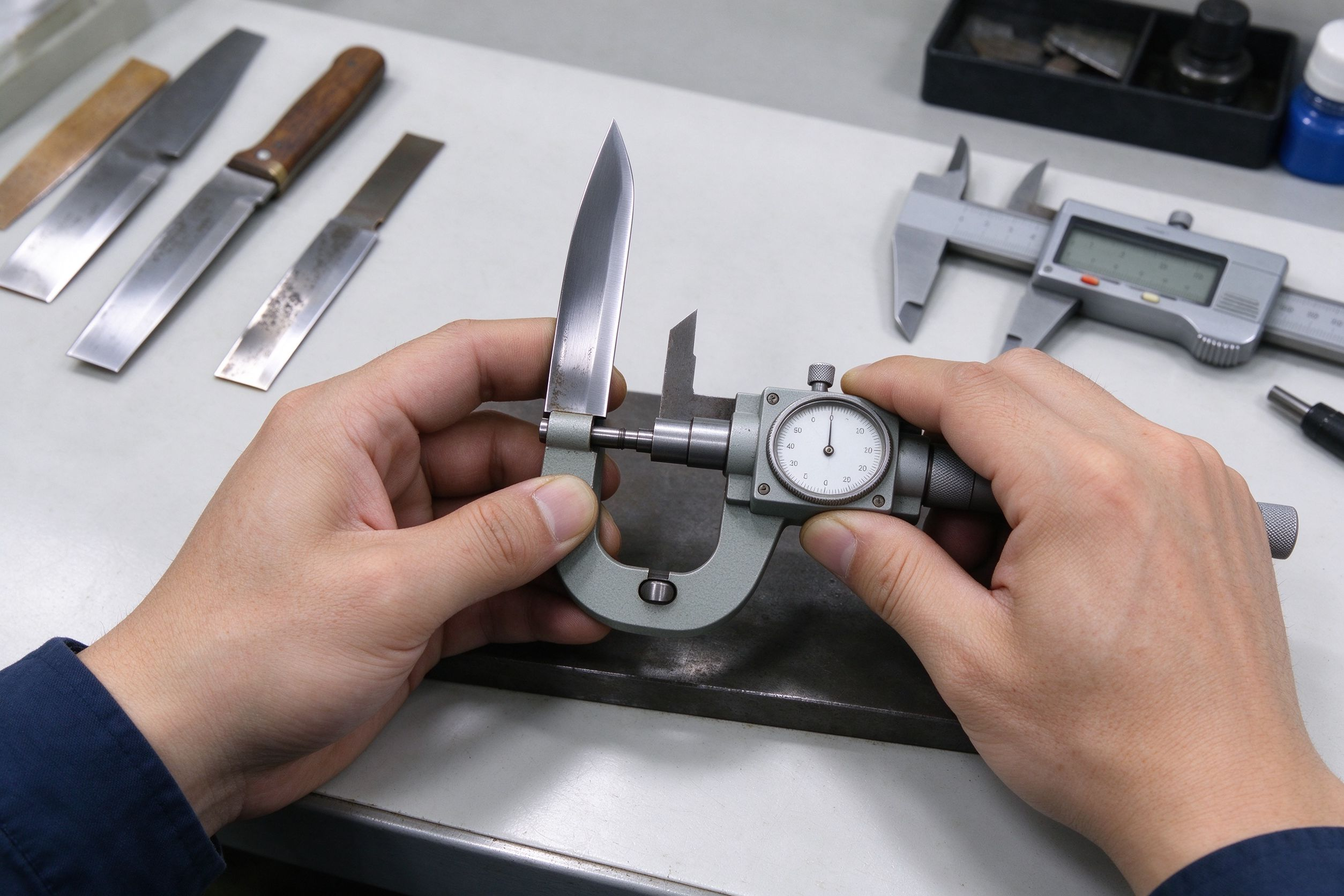
Material Family Six: Size and Thickness
From Specification to Supplier: How the System Is Held
A knife is six material families before it is a product: steel, handle, construction, rivets, finish and marking. Insight, a Yangjiang manufacturer with 23 years of OEM and ODM experience, explains the specification behind the top supply chain system in China and how it is held at five million pieces a month.
Yangjiang Insight Industry And Trade Co., Ltd. has spent more than 23 years designing, manufacturing and selling knives and kitchen tools, including chef knives, santoku knives, bread knives, paring knives and the tools around them, for brands worldwide through OEM and ODM programmes. Our plant covers 20,000 square metres, monthly capacity reaches roughly five million pieces, and the supply system described below is the first of the seven systems that run underneath that capacity.

In most industries, sourcing is a purchasing function. In cutlery it is a specification function first, because the same finished knife can be built from wildly different inputs at three different price points, and the customer cannot see the difference in a photograph.
Consider what a single 8-inch chef knife actually contains. A strip of stainless steel with a specific carbon and chromium content. A handle block of walnut, olive wood, rosewood or a moulded ABS body. Two or three rivets, possibly hidden, possibly decorative. A surface treatment that may be mirror-polished, satin-brushed, coated or patterned in Damascus layers. A brand mark applied by laser, stamp, screen or acid. And a thickness choice from 2.5 mm down to 1.2 mm that changes how the blade feels long before it changes how it cuts.
That is six decisions before a single knife is ground. A supply system exists to make those six decisions repeatable: to write them down, to choose suppliers who can hit them, to inspect what arrives, and to trace a complaint back to the batch that caused it.
At Insight we describe the plant as seven interlocking systems rather than one production line, and the supply chain system is the first of them, because nothing downstream can be better than what arrives at the door.
System |
What it controls |
What a buyer feels |
01 Supply system |
Steel grades, handle materials, rivets, finishes, marking methods, supplier qualification |
The price you are quoted, and whether the second order matches the first |
02 Key-parameter process control |
Hardness, blade thickness, edge angle, geometry at each station |
Whether the knife cuts like the sample you approved |
03 Warehousing |
Material segregation, batch identification, finished-goods storage |
Whether reorders come from the same steel lot and the same specification |
04 Packaging |
Retail box, inner protection, carton strength, labelling |
Whether the goods arrive retail-ready or damaged |
05 QC |
Incoming inspection, in-process checks, final inspection sampling |
Defect rate, and how quickly a claim is resolved |
06 Pre-shipment inspection |
Verification before the container is released |
Whether what you paid for is what leaves the port |
07 After-sales service |
Claims, replacement parts, technical response |
Whether a problem costs you a review or a relationship |
The order matters. Supply decides the ceiling; process control keeps you under it; warehousing and packaging protect what was built; QC and pre-shipment inspection prove it; after-sales tells you which of the first six failed.
Steel is where most sourcing conversations start, and where most of them go wrong, because buyers compare one number, hardness, while a knife is governed by four interacting properties: carbon content, chromium content, hardenability and price.
Grade |
Typical hardness |
Where it belongs |
Trade-off |
420J1 / 2Cr13 |
HRC 48–50 |
Entry-level blades, promotional sets, low-cost export lines |
Easiest to grind and polish, shortest edge life |
420J2 / 3Cr13 |
HRC 52–54 |
Mainstream retail knives, everyday kitchen sets |
Balanced cost and edge retention; the volume workhorse |
2Cr14 |
HRC 48–50 |
Corrosion-first applications where hardness is secondary |
Higher chromium for rust resistance, softer edge |
3Cr14 |
HRC 52–54 |
Knives sold into humid or coastal markets |
More corrosion resistance than 3Cr13 at similar hardness |
5Cr15MoV |
HRC 55–58 |
Premium lines, professional and gifting ranges |
Best edge retention of the martensitic stainless family, highest cost |
The ordering that matters commercially is the one printed on most of our internal comparison sheets: carbon content, rust resistance, corrosion resistance, hardness, price and overall quality all rise in the same direction, from 2Cr13 through 3Cr13 and 2Cr14 to 3Cr14 and 5Cr15MoV. That single ladder lets a brand build a good, better, best range without changing anything except the steel callout.
What 304 and 430 are for
Buyers sometimes ask why we do not simply use 304 everywhere. Because 304 is an austenitic grade: high in chromium and nickel, excellent in corrosion resistance and elongation, easy to clean, food-safe, and not hardenable. It belongs in handle bodies, kitchen tools and utensils, not in a cutting edge. 430 sits between: 16 to 18 percent chromium, no nickel, good formability and oxidation resistance, cost-effective, and still used mainly for handle components and tools rather than for blades that must hold an apex.
The other blade materials
Three further materials sit outside the stainless ladder. Carbon steel gives professional cooks the keenest edge and the highest hardness, at the cost of maintenance. Ceramic is light, easy to clean and leaves no metallic taste, but is brittle. Damascus is a construction rather than a grade: layers of different steels forge-welded together, producing one of the pattern families we quote, among them micro-wave, hammer-tone, quicksand, feather, fish-bone, forged black fish, embossed beast, small rose, natural, raindrop and crescent.
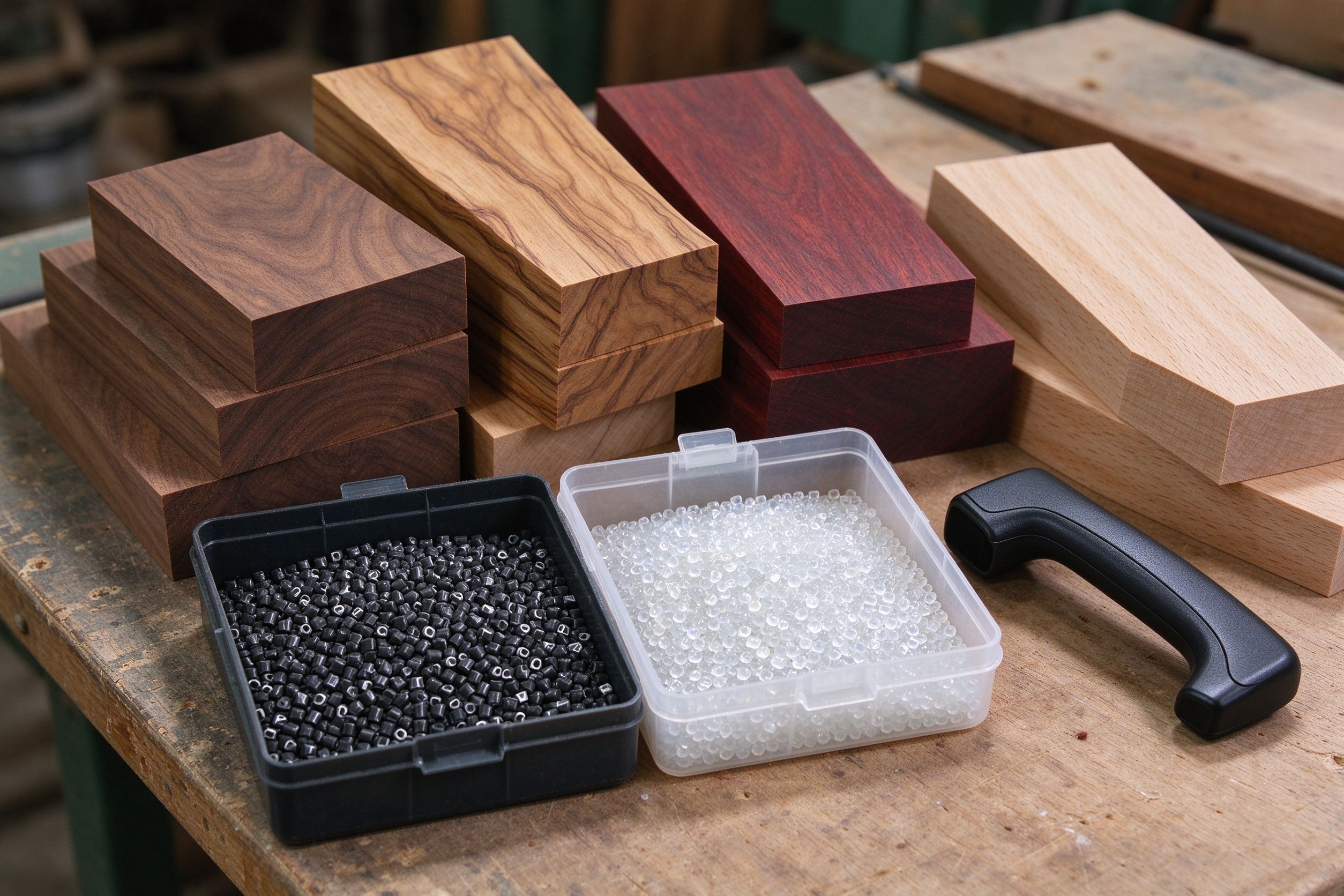
The handle is where a knife's price and personality are decided, and where most quality disputes originate, usually at the joint rather than in the wood.
Wood
Our wood handle programme covers olive, walnut, coloured laminated wood, oak, acacia, ash, rosewood, purple sandalwood, wenge, pine, rubberwood, mango, birch, beech, teak, maple and cherry. They are not interchangeable. Walnut and olive give warmth and grain at a mid-range price; rosewood and sandalwood carry a premium and a weight penalty; beech and rubberwood are stable and economical for volume; coloured laminated wood is the practical answer when a brand wants a specific colourway without a natural-material lottery.
Plastic
ABS, PP, POM, acrylic and TPR cover the moulded-handle market. PP and ABS dominate volume; POM is chosen for stiffness and dimensional stability; acrylic is used for a translucent look; TPR gives grip and a softer touch. All of them are light, waterproof, easy to clean and cheap to produce in colour, which is exactly why a brand must specify the polymer and not just say "plastic".
Stainless handles
430 and 304 stainless handle bodies deliver corrosion resistance and a machined look, at the price of weight and a colder hand feel. Construction then decides how the blade and handle meet: a full tang handle where metal runs the length of the grip and delivers the highest torque and stability at the cost of weight; a half tang with a drilled or face-milled insert that is lighter and easier to service; a hollow handle that cuts weight further; a sandwich handle with metal on both sides around a plastic or composite core; or a plastic handle for volume. The steel-head option, single, double or imitation, is the detail that changes the perceived value of an inexpensive knife more than anything else on this page.
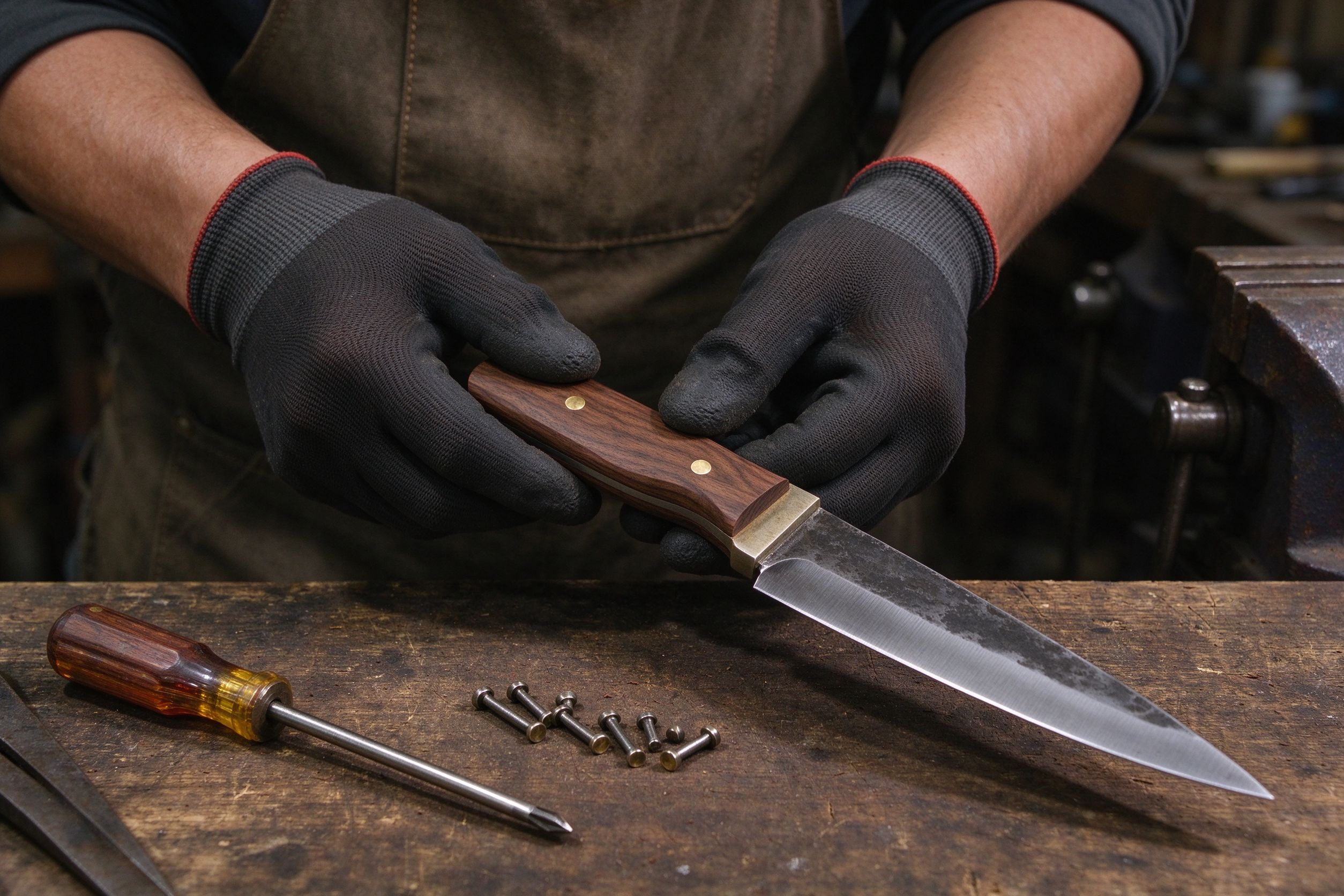
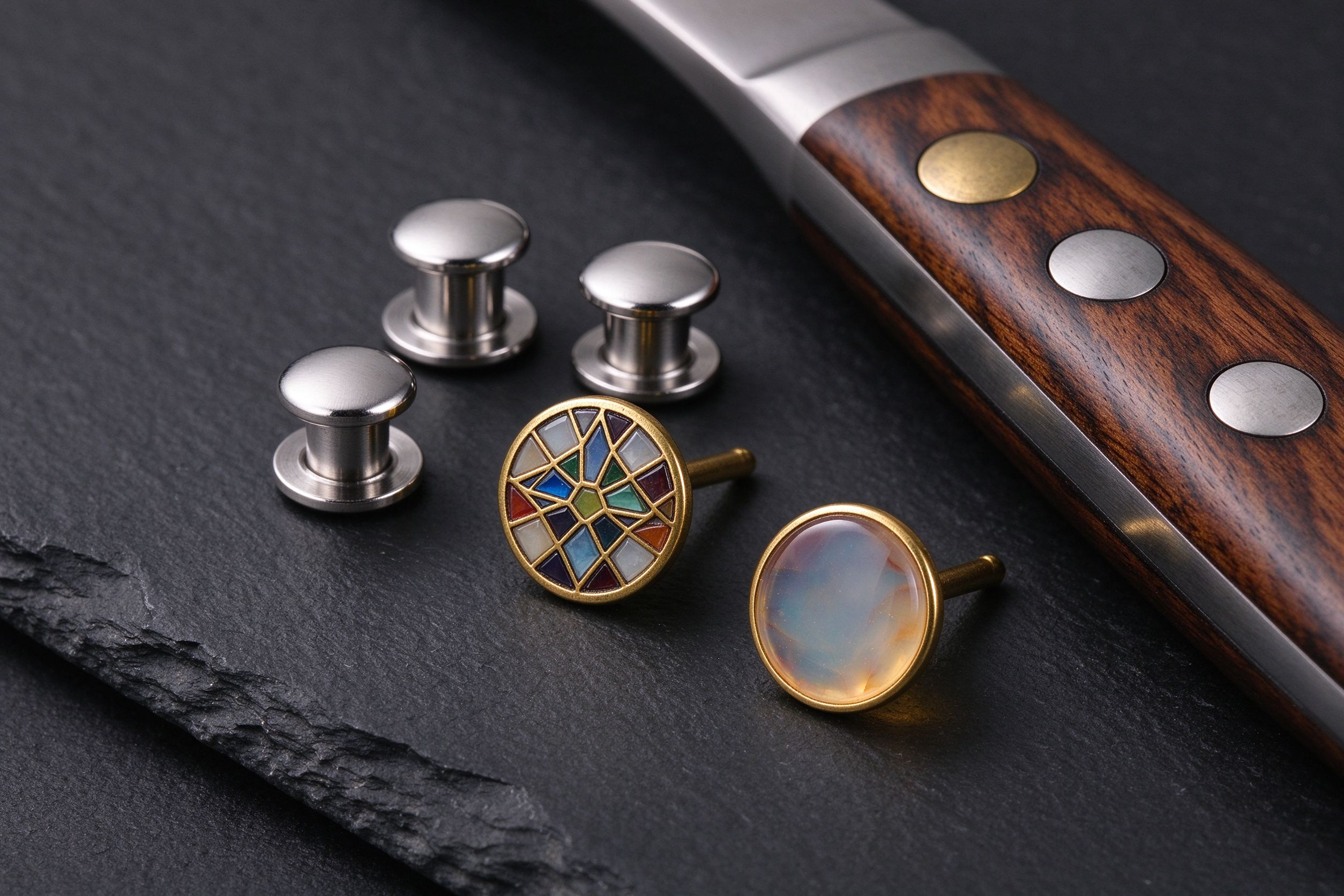
Rivets are the cheapest line in the bill of materials and the fastest way to lose a customer. They exist to hold the handle to the blade without loosening, and to do it without creating a gap where water, food and bacteria collect.
· All-metal rivets. Stainless, aluminium or brass in single-material construction; the highest strength and a classic look. Heavy, and best suited to traditional designs.
· Semi-metal rivets. A metal core with a non-metal outer layer; lighter, more comfortable in the hand, and less thermally conductive.
· Hidden rivets. Buried under the handle surface; cleaner appearance, no exposed fastener, and far less opportunity for grime to accumulate.
· Decorative mosaic pins. Multi-layer metal and filler arranged into a geometric pattern such as a star or a cross; the highest perceived value, priced accordingly.
· Resin rivets. Cast or moulded resin; very light, available in many colours, chemically resistant, but limited in strength and heat resistance.
For food-contact products, the defensible default is a hidden or semi-metal rivet on a sealed joint: it removes the exposed seam that a hygiene auditor will photograph. For gifting and premium lines, the mosaic pin is a legitimate upcharge because the customer can see it.
Finish is usually presented as a design choice. In a supply chain system it is a cost, hygiene and durability decision, and it has to be quoted precisely.
Finish |
What it is |
What to watch |
Mirror polish |
Repeated polishing from coarse to fine until the surface is glass-smooth |
Beautiful and easy to clean, but shows every scratch, and it is labour-heavy |
Satin brush |
Abrasive paper or belt applied in one direction |
Hides handling marks; the safest finish for high-volume retail |
Clear coating |
A transparent protective film over the blade |
Raises corrosion resistance and is validated by salt-spray testing |
Spray coating |
Sprayed layer that reduces friction and stain pickup |
Cheaper route to a dark look; durability depends entirely on pretreatment |
Titanium plating |
Titanium-based layer, including black titanium |
Higher hardness, wear and corrosion resistance; watch colour consistency between batches |
Damascus pattern |
Fold-forged layered steel, patterned by construction |
The pattern is structural, so it does not fade; the core steel still decides performance |
Laser or slant grind |
Three-stage grind from coarse to fine producing a light-catching bevel at 2.0 to 2.5 mm |
Corrosion resistance and appearance together; the most repeatable way to make a modest blade look expensive |
Double-side grind |
Both faces machined to remove excess material and establish the base edge angle at 2.0 to 2.5 mm |
Raises sharpness and accuracy, and always requires a finish step afterwards |
The logo is the last step and the one buyers negotiate hardest, because it is the only part of the knife that is unmistakably theirs. Four methods cover almost every order, and they trade off in a predictable way.
· Laser engraving. A focused beam writes directly into the steel: high precision, excellent durability, fast, low cost per unit once the machine is running, and no chemicals. Equipment investment is the barrier, which is why it suits established programmes and large runs.
· Steel stamp. The mark is built into the tooling, so every piece comes out identical with almost no incremental cost. Tooling is expensive and changeover is slow; the method is ideal for large, stable orders.
· Silk screen. Flexible, multi-colour, cheap equipment, works on almost any surface, but the ink layer is the least durable of the four and involves solvents, which matters if your market asks environmental questions.
· Etching. Acid-cut lines produce the finest detail and the most premium texture, at the highest unit cost and with the heaviest chemical footprint.
Sizes are the easy part: 8-inch and 7-inch chef knives, 8-inch and 7-inch santoku, 8-inch carving knives, 8-inch bread knives, 5-inch and 4.5-inch boning, utility and steak knives, 4-inch and 3.5-inch paring knives, and 8-inch and 7-inch Chinese cleavers at 4 mm, plus butter knives, spreaders, pizza wheels, cleavers, cheese knives and 10-inch sushi knives for the wider kitchen-tools range.
Thickness is the harder conversation, because it is invisible in a photograph and decisive in the hand:
· Large knives: 2.5, 2.0, 1.8, 1.5 or 1.2 mm.
· Small knives: 2.0, 1.5, 1.2 or 1.0 mm.
Go down the ladder and the knife gets lighter, faster and cheaper, and also more flexible, more prone to a wavy grind line and less tolerant of a heavy hand. Go up and you gain stiffness and a sense of substance, and lose agility. A brand that specifies thickness by feel rather than by number will find that its supposedly identical knife changes character between suppliers.
Plenty of factories can quote six material families. What separates them is whether the plant behind the quotation can hold those specifications for the life of a programme. At Insight the supply system is not a purchasing desk bolted onto a workshop. It is one of seven systems running under a single roof: 20,000 square metres, roughly five million pieces a month, chef knives, santoku knives, bread knives, paring knives and kitchen tools, built for brands that have bought OEM and ODM from us for more than 23 years.
Depth is the part buyers underestimate. Running four knife families and a tools range every month means the same grade ladders, handle species and finish callouts pass through our buyers and our lines continuously, so a specification is not written once and then forgotten, it is exercised. A supplier base assembled over two decades, and a specification library corrected by real claims rather than by theory, is an asset a newly built factory cannot buy in a season.
Qualification before price
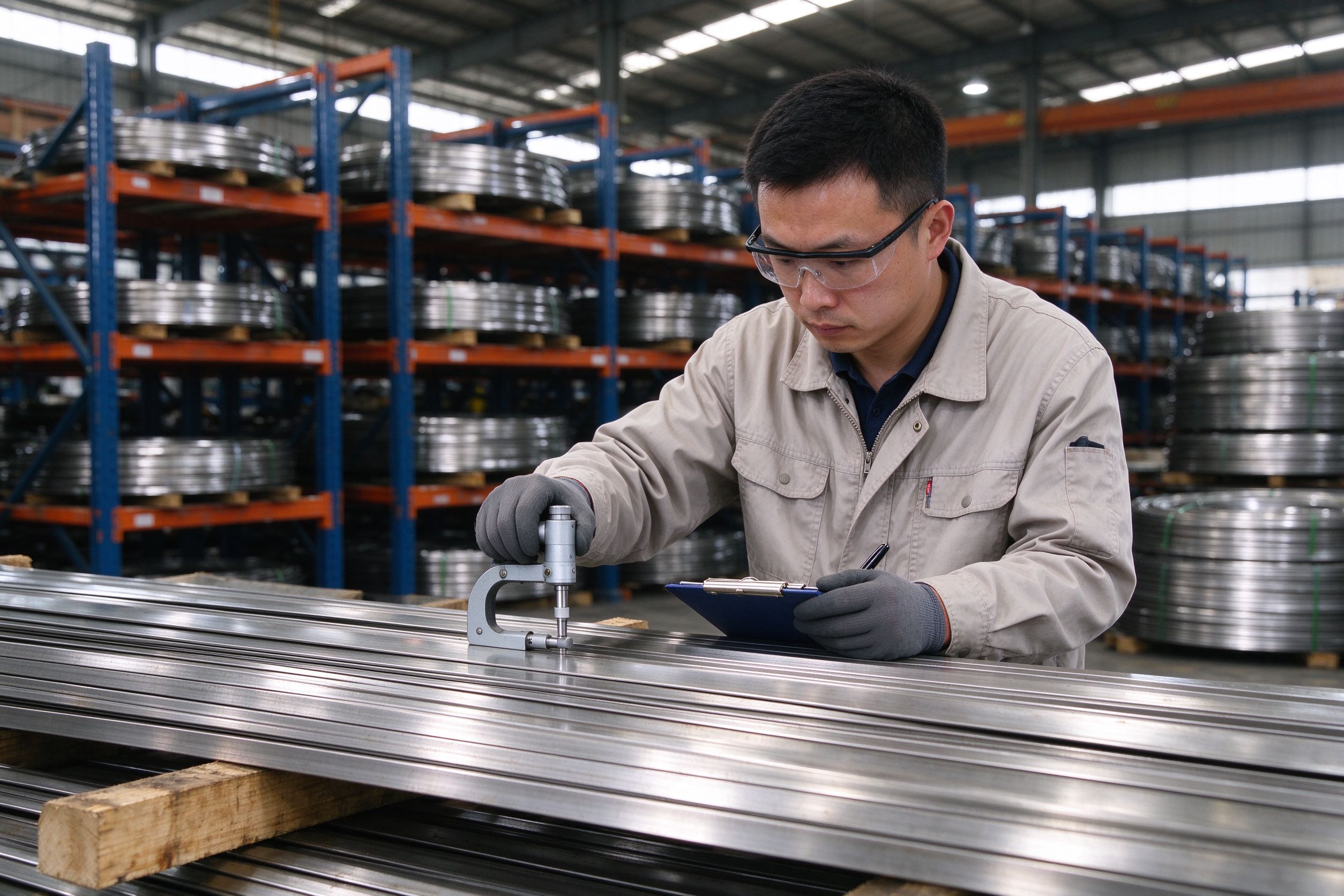
We qualify a steel mill on grade consistency and dimensional tolerance before price is discussed. Handle stock is qualified on species or polymer, moisture and colour match, rivets on alloy and pull-out strength, coatings on adhesion and salt-spray performance. Only then does the commercial conversation start, because a supplier who cannot hold a grade costs more in claims than it saves in freight, and that cost lands on your brand, not ours.
Dual sourcing where it matters
Volume grades, standard polymers and common rivets run on more than one qualified supplier, so a single mill rescheduling does not become your delayed shipment. Specialty items, such as a particular burl, a mosaic pin or a specific colourway, are single-sourced and carried with buffer stock instead. This is how a five-million-piece month keeps its rhythm without holding hostage stock for every line at once.
Incoming inspection and batch identity
Every delivery is checked against the specification sheet and labelled with a batch identity that follows it through warehousing, cutting, grinding and packing. When a knife returns two months later with a chipped edge, we can name the steel lot and the heat-treatment run behind it. That traceability is what makes a warranty a commitment rather than a gesture, and it is the reason a claim conversation with Insight starts with a batch number instead of an apology.
What this gives your programme
· One contract instead of four. Chef, santoku, bread and paring knives plus kitchen tools can be specified, produced and packed in the same plant, with one grade vocabulary across the range.
· Continuity from sample to bulk. The grade, handle species, thickness and finish you approve in a sample are the ones written into the production order and checked at incoming inspection.
· Documentation you can audit. Specification sheets, batch records and inspection results exist as files you can ask for, not as assurances offered on a call.
· One escalation path. Supply, process control, QC, packing and after-sales sit under the same roof, so a problem has an owner rather than a forwarding chain.
What does a knife supply chain system actually include?
Six material families plus the management around them: blade steel, handle material, handle construction, rivets, surface finish and brand marking, each with a written specification, a qualified supplier list, incoming inspection, batch identity and traceability into production.
Which steel grade should I choose for my market?
Match the grade to the price band and the climate. 2Cr13 and 3Cr13 cover entry to mainstream retail; 2Cr14 and 3Cr14 are the better answer where humidity and corrosion dominate; 5Cr15MoV at HRC 55 to 58 carries premium and professional lines. Using a higher grade than the retail price supports is the most common way brands lose margin.
Why do two knives with the same steel cost so differently?
Because steel is one line of the bill of materials. Handle species or polymer, tang construction, rivet type, surface finish, thickness and marking method can each move the cost, and together they can double it while the blade stays identical.
Is 304 stainless good for a knife blade?
No. 304 is an austenitic grade, high in chromium and nickel, with excellent corrosion resistance and formability and food-safe, but not hardenable, so it cannot hold a cutting apex. It belongs in handles, utensils and kitchen tools. Blades need a hardenable martensitic grade such as 3Cr13, 3Cr14 or 5Cr15MoV.
How do you prevent a supplier from substituting a cheaper grade?
At Insight the grade is never left to trust: it is a written callout on the specification sheet, verified at incoming inspection by batch, and held for the life of the order.After 23 years and roughly five million pieces a month, that is not vigilance, it is routine. It is also the part of a supply chain system that cannot be photocopied from a price list.


