
- Home
- Products
- About Us
- OEM/ODM
- VR
- Resources
- Contacts


Views: 7890 Author: Site Editor Publish Time: 2026-10-16 Origin: Site


Content Menu
● Introduction: Sourcing Kitchen Knives Is a Strategic Decision
● Why the Canton Fair Is the Premier Global Sourcing Event
● Five Key Criteria for Choosing a Kitchen Knife Supplier
● Understanding OEM vs. ODM for Private-Label Brands
● What to Look For in a Knife Manufacturer: Steel, Handle, and Construction
● How to Negotiate Effectively with Chinese Knife Factories
● Cost Considerations and Minimum Order Quantities
● Why Global Brands Partner with Yangjiang Factories
● Preparing for the 140th Canton Fair: A Practical Checklist
● Frequently Asked Questions (FAQ)
● Conclusion: Source with Confidence at the 140th Canton Fair
For any brand, distributor, or retailer entering the kitchenware market, the decision of where and how to source knives is strategic, not operational. A kitchen knife is one of the most frequently used tools in the home and the professional kitchen, and its quality directly shapes how consumers perceive your entire brand. Get it right, and you build repeat customers and word-of-mouth; get it wrong, and you face returns, complaints, and a damaged reputation.
This is why the Canton Fair matters so much to serious buyers. As the world's largest and longest-running trade fair, it concentrates thousands of verified manufacturers in one venue, giving you the rare chance to compare suppliers, test products by hand, and negotiate terms face to face. In this buyer's guide, we share the framework we use with our own clients at Yangjiang Insight Industry And Trade Co., Ltd. — a 23-year-old kitchen knife manufacturer — so you can source chef knives, santoku knives, bread knives, and paring knives with confidence at the 140th Canton Fair.

The China Import and Export Fair, commonly called the Canton Fair, has connected international buyers with Chinese manufacturers for more than sixty years. Its scale is unmatched: each session hosts tens of thousands of exhibitors across a vast range of product categories, and attracts hundreds of thousands of buyers from around the world. For kitchenware specifically, the fair is the single most efficient way to survey the market, because the leading cutlery producers — concentrated in Yangjiang — exhibit here in force.
The benefits of sourcing at the fair go beyond the sheer number of suppliers. Because exhibitors are vetted and physically present, you can verify a factory's legitimacy, examine its products directly, and gauge its professionalism in conversation. You can also benchmark pricing across multiple suppliers in days rather than weeks. For buyers new to Chinese sourcing, the fair is also a low-risk environment to learn the market, understand typical quality levels, and build the relationships that will underpin future business.
Before you walk the aisles, it helps to have a clear checklist. Based on our experience serving global brands, we recommend evaluating every potential supplier on five core criteria.
First, manufacturing capability. Confirm that the supplier is a genuine manufacturer with its own production facility, not a trading company. Look for evidence of production floor space, machinery, and the capacity to handle your volumes. Second, product quality and materials. Ask about the blade steels used, heat-treatment processes, and quality-control systems, and ask to see products that have been in use to judge real-world performance. Third, experience and reliability. A supplier with years of export experience is more likely to understand documentation, lead times, and the expectations of overseas buyers. Fourth, flexibility and customization. Determine whether the supplier can handle OEM production to your specifications and ODM development if you need a complete range built for you. Fifth, communication and service. A responsive, transparent supplier who answers questions clearly and honestly is worth far more than one with slightly lower prices and poor communication.
Two terms dominate every conversation at the fair, and understanding the difference will save you time and money. OEM, or Original Equipment Manufacturing, means the supplier produces a product to your exact specifications. You provide the design, the materials, the dimensions, the branding, and the packaging, and the factory manufactures it for you. This gives you maximum control and is ideal when you already have a clear product vision and technical specifications.
ODM, or Original Design Manufacturing, means the supplier both designs and manufactures the product. You bring a concept or a general requirement, and the factory's design team develops the product — selecting the steel, blade geometry, handle, finish, and packaging — and produces it for you. ODM is faster to market and requires less in-house design investment, making it attractive for brands that want a professional range without building a design department. Many successful private-label brands use a combination: sourcing core bestsellers as ODM and commissioning signature products as OEM.
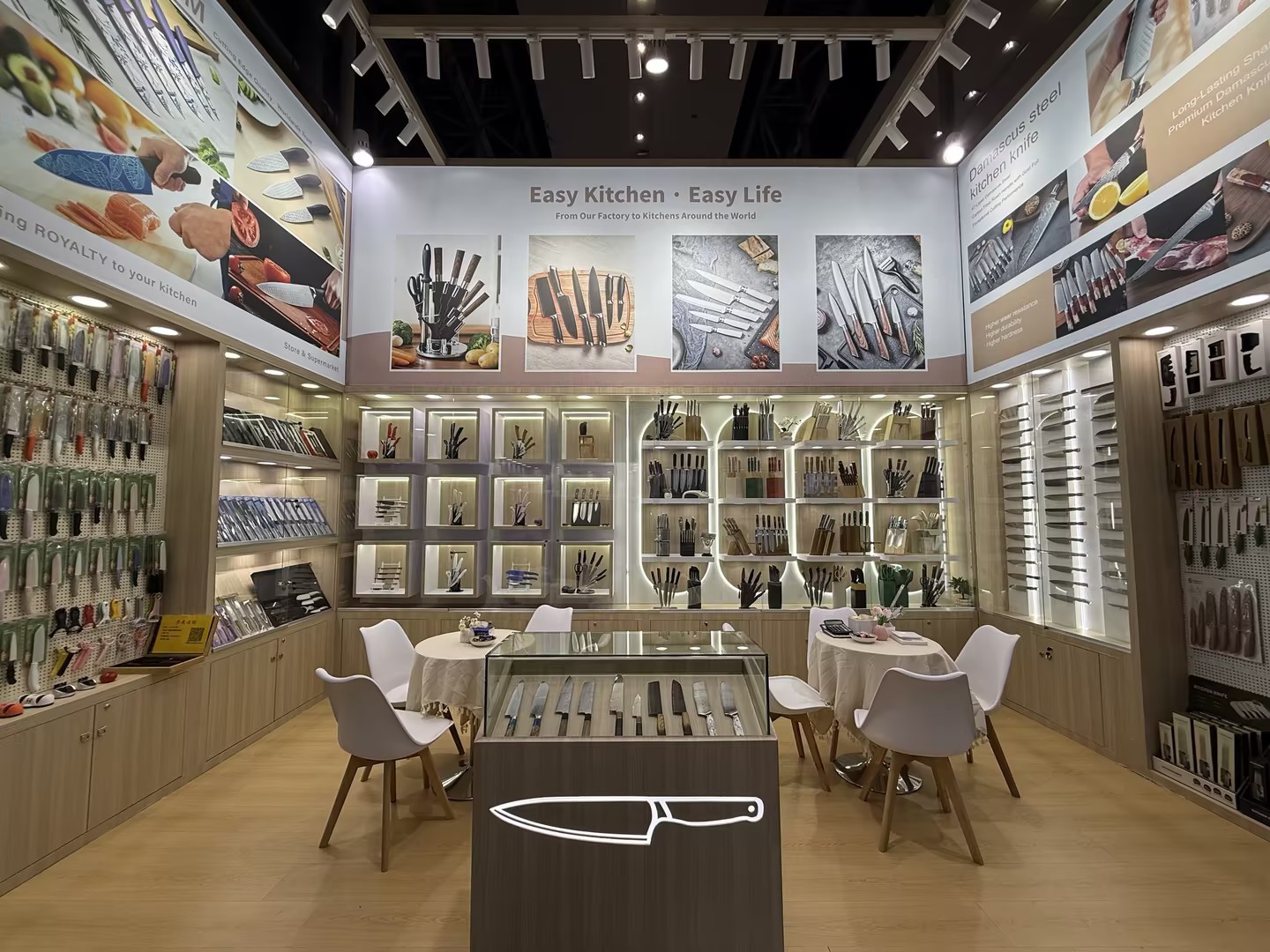
When you evaluate a knife in person, focus on the fundamentals of construction. The blade steel determines edge retention, hardness, and corrosion resistance. Quality stainless steels such as 4Cr13 offer a strong balance of these properties for both professional and consumer use, and you should ask about the specific steel, its hardness rating, and how the factory's heat treatment is calibrated. A blade that is too hard can chip; one that is too soft will not hold its edge.
The handle is equally important because it affects comfort, safety, and durability. Consider the material — wood offers a classic look, while polypropylene and other composites offer hygiene and easy cleaning for professional kitchens. Check how securely the blade and handle are joined, whether the knife is full-tang for maximum strength, and whether the balance point sits naturally in the hand. Finally, inspect the finish and the edge geometry, and if possible, test the knife by slicing a tomato or a loaf of bread. These hands-on details are the difference between a knife that looks good on paper and one that performs beautifully in real life.
Negotiation at the Canton Fair should be a partnership-building exercise, not a contest. The most successful buyers arrive prepared with clear specifications, target quantities, and a realistic budget, and they treat pricing as one part of a larger conversation about value. Remember that price is influenced by materials, finish, packaging, and volume, so ask for itemized quotations rather than a single number, and compare apples to apples across suppliers.
Build trust by being transparent about your needs and timelines. A reputable factory wants a long-term relationship as much as you do, and is more likely to offer favorable terms — better pricing, flexible minimum order quantities, or priority scheduling — to a buyer who communicates clearly and follows through. Also ask about lead times, payment terms, and what happens if issues arise, because a supplier's willingness to stand behind its product is a strong signal of reliability. Finally, get everything agreed in writing, including specifications, pricing, delivery dates, and quality expectations, so there is no ambiguity later.
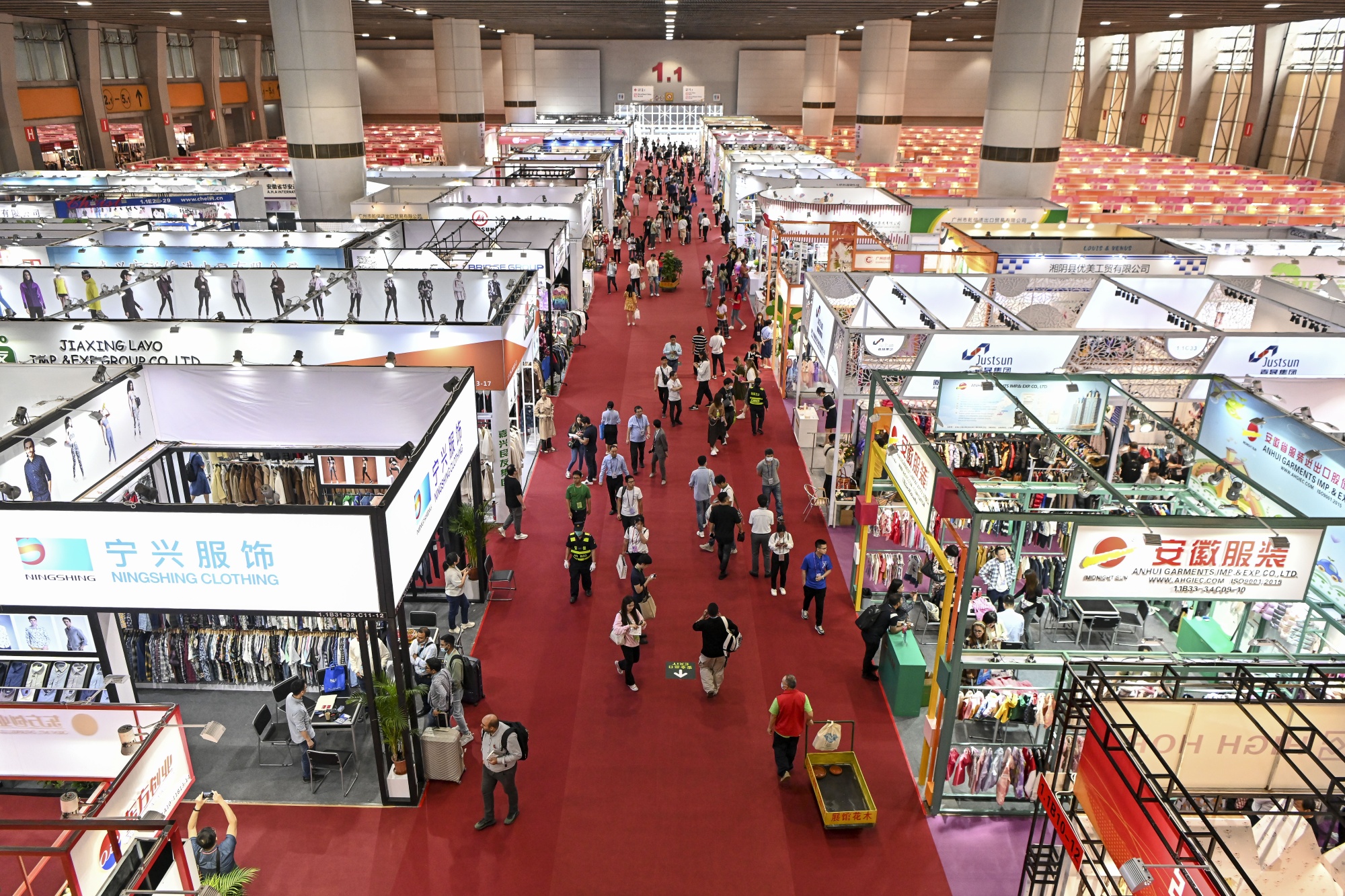
Understanding cost structure helps you budget realistically. In knives, the largest cost drivers are materials (particularly steel and handle materials), the complexity of manufacturing and finishing, and packaging. Premium finishes, special steels, and custom branding all add cost, so it is wise to prioritize where your budget goes based on what your target customers value most.
Minimum order quantities, or MOQs, vary widely between factories and products. A simple, standardized paring knife may have a low MOQ, while a forged, custom-branded chef knife in premium packaging will typically require a larger order. Discuss your sales forecasts with the supplier and look for a partner who can accommodate your starting volume while offering a clear path to scale. A factory with high capacity, like our five-million-piece monthly operation, is often more flexible because it can absorb smaller orders into larger production runs without disrupting efficiency.
A question first-time buyers often ask is why so many kitchen knife brands ultimately source from Yangjiang. The answer lies in the region's unique ecosystem. Yangjiang, in Guangdong Province, is recognized as the cutlery capital of China, with decades of accumulated expertise, a complete supply chain of steel suppliers, handle makers, and finishing specialists, and a deep pool of skilled workers. This concentration of capability means Yangjiang factories can deliver professional quality at scale and at competitive prices.
For a brand, choosing a Yangjiang manufacturer such as Yangjiang Insight means tapping into that ecosystem. You benefit from vertical integration, quality control across the full process, and the flexibility to scale from initial orders to container shipments. Combined with competitive pricing, this is why countless global kitchenware brands — from startups to established retailers — build their private-label knife lines with partners in Yangjiang, and why you will find the region's leading factories exhibiting prominently at the Canton Fair.
To get the most from your visit, prepare before you arrive. Register for your buyer badge online in advance and confirm the official dates and phases for the session you plan to attend. Prepare a specification sheet covering the products you want to source, your target price points, expected volumes, and quality standards. Bring reference samples or photographs of products you admire, along with a list of questions about materials, heat treatment, packaging, certifications, and export documentation.
Plan your booth visits in advance, but stay flexible enough to explore. Keep notes and collect business cards and samples so you can compare suppliers objectively after the fair. Finally, schedule follow-up conversations and, if possible, factory visits. For serious sourcing, nothing beats seeing the production line with your own eyes. Yangjiang is only a short high-speed rail ride from Guangzhou, and our team at Yangjiang Insight is always happy to arrange a factory tour so you can verify our 20,000-square-meter facility and five-million-piece monthly capacity firsthand.
Q1: What is the difference between OEM and ODM sourcing? With OEM, you supply the design and specifications and the factory manufactures the product for you. With ODM, the factory designs and manufactures the product based on your concept or requirements, which is faster and requires less in-house design investment.
Q2: What blade steel should I choose for kitchen knives? For a strong balance of edge retention, hardness, and corrosion resistance, quality stainless steels such as 4Cr13 are a popular choice for both professional and consumer knives. The ideal choice depends on your target market, budget, and performance expectations.
Q3: What are typical minimum order quantities for kitchen knives? MOQs vary by product complexity, materials, and packaging. Standardized products may have low MOQs, while custom-branded forged knives typically require larger orders. Discuss your forecast with the supplier to find a starting volume and a path to scale.
Q4: How can I verify a knife factory's quality control? Ask about incoming material inspection, in-process checks, and final inspection procedures, and request quality reports or certifications. A factory visit is the most reliable way to verify its quality systems and production capacity firsthand.
Q5: Can a factory produce my brand's logo and packaging? Yes. Most OEM and ODM knife manufacturers offer custom branding, blade marking, and packaging design. At Yangjiang Insight, we handle custom branding, packaging, and retail-ready finishing as part of our private-label services.
Q6: Why should I source knives from Yangjiang rather than elsewhere? Yangjiang is the cutlery capital of China, with a complete supply chain, skilled workforce, and decades of manufacturing expertise. This ecosystem enables professional quality, competitive pricing, and the flexibility to scale, which is why many global brands source their knife lines from Yangjiang factories.
Q7: How do I arrange a factory visit after the Canton Fair? Most reputable factories welcome visitors. Contact the supplier, agree on a convenient time, and they can typically help with transportation and a guided tour. We at Yangjiang Insight are glad to arrange a factory visit so you can see our production, quality control, and capacity directly.
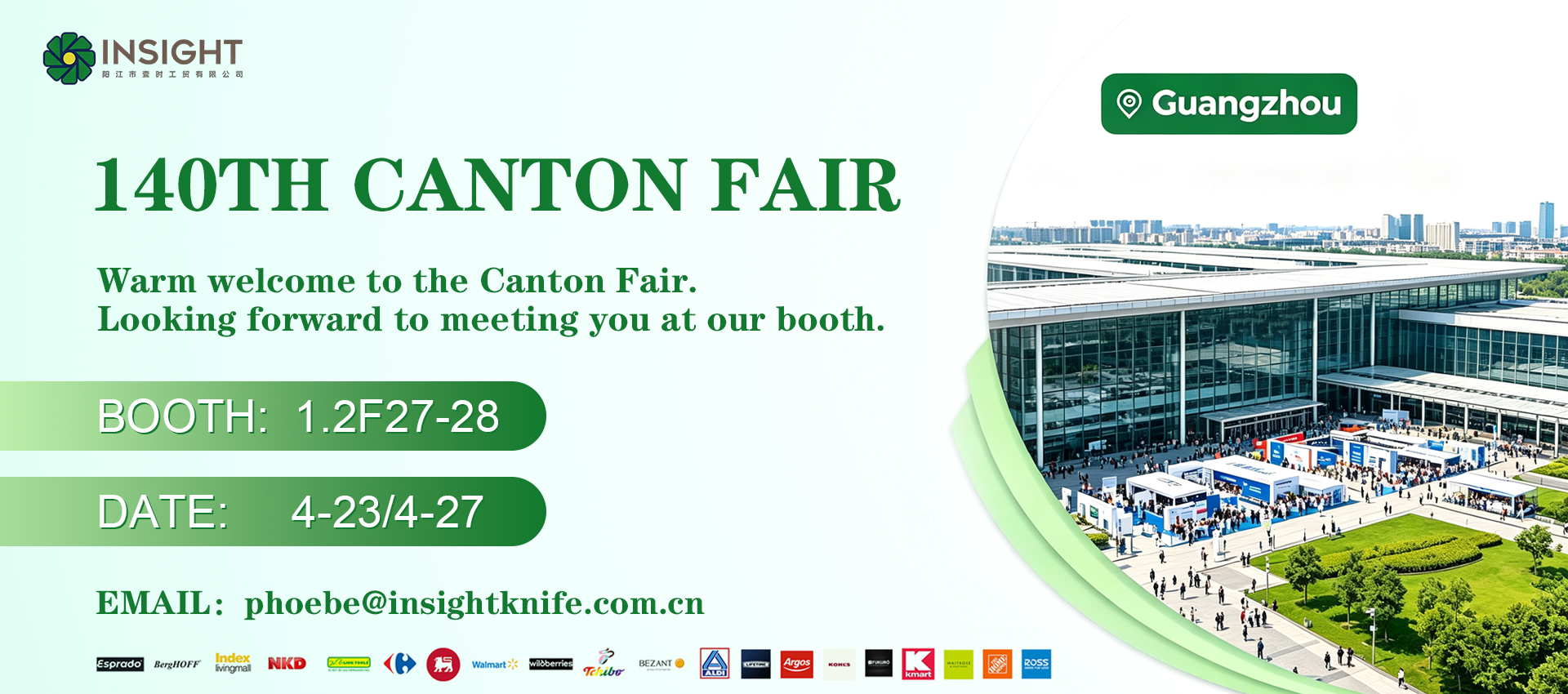
Sourcing kitchen knives is a strategic decision, and the 140th Canton Fair is the ideal place to make it well. By evaluating manufacturers on capability, quality, experience, flexibility, and communication, by understanding the difference between OEM and ODM, and by inspecting materials and construction with a clear eye, you can find a partner who will grow with your brand.
With more than 23 years of experience, a 20,000-square-meter factory, and a monthly capacity of about five million pieces, Yangjiang Insight Industry And Trade Co., Ltd. offers exactly the depth and reliability serious buyers need. Visit our booth at the fair, test our chef knives, santoku knives, bread knives, and paring knives in person, and let us show you how our OEM and ODM services can turn your brand vision into a successful product line. We look forward to partnering with you.


