| Availability: | |||||||||
|---|---|---|---|---|---|---|---|---|---|
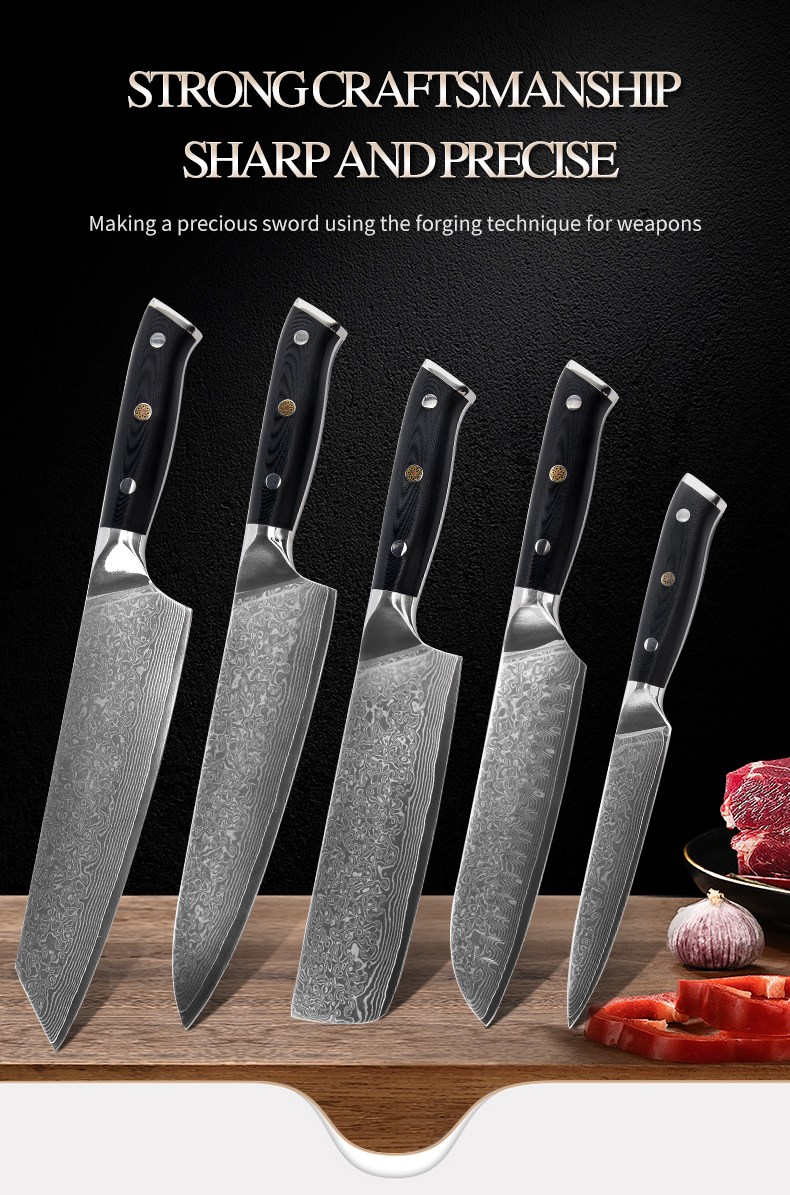
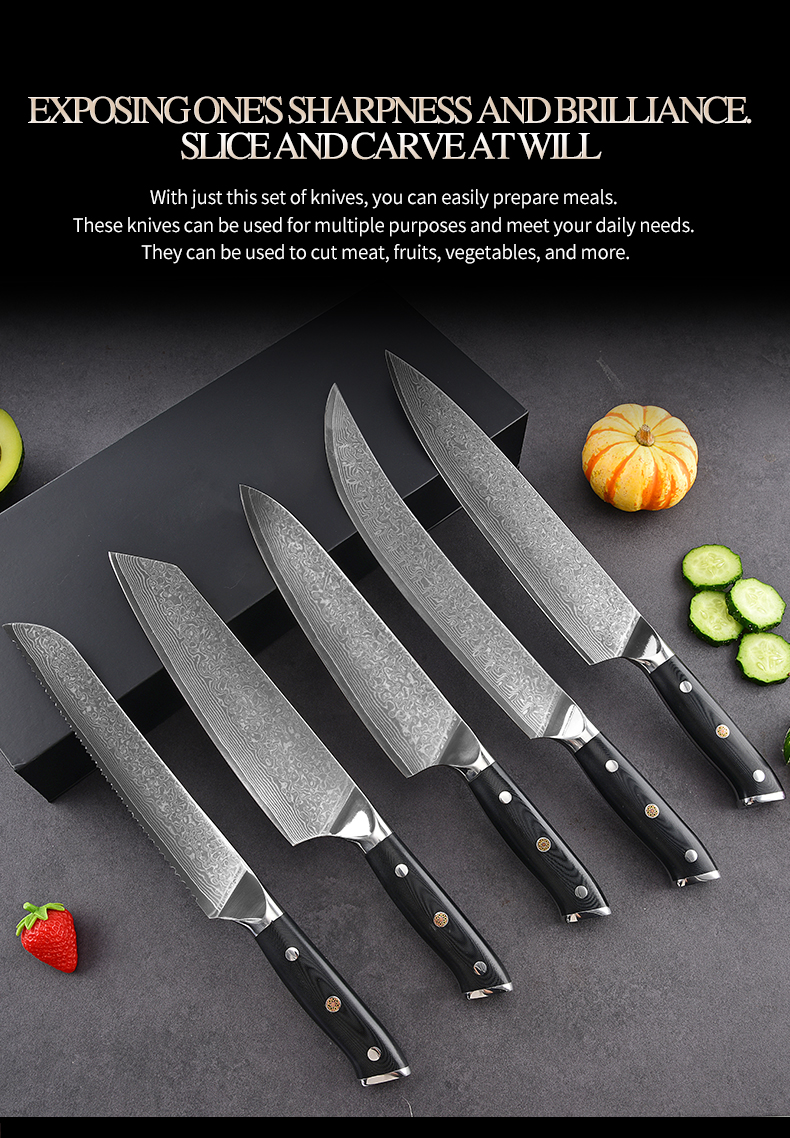
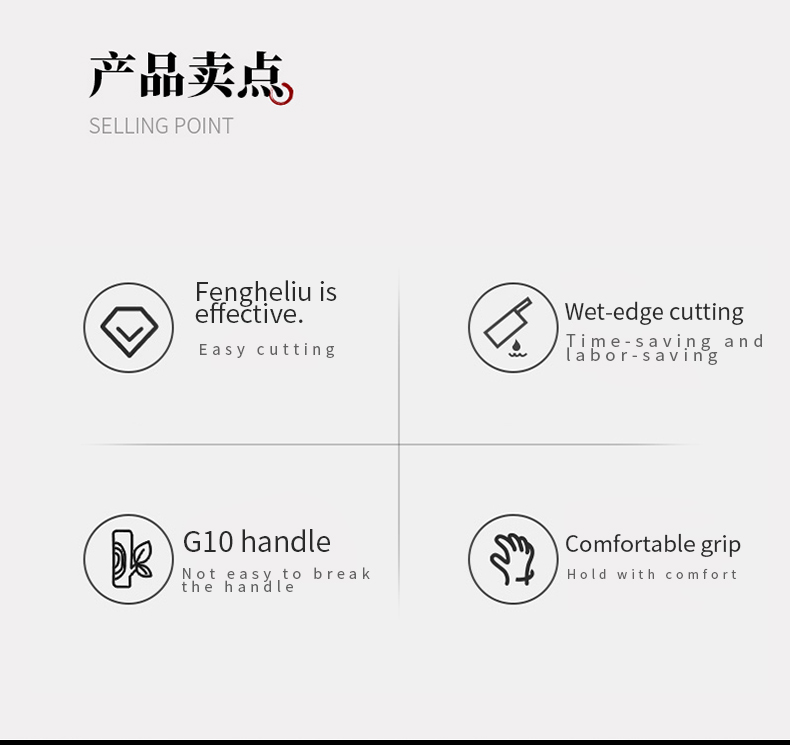
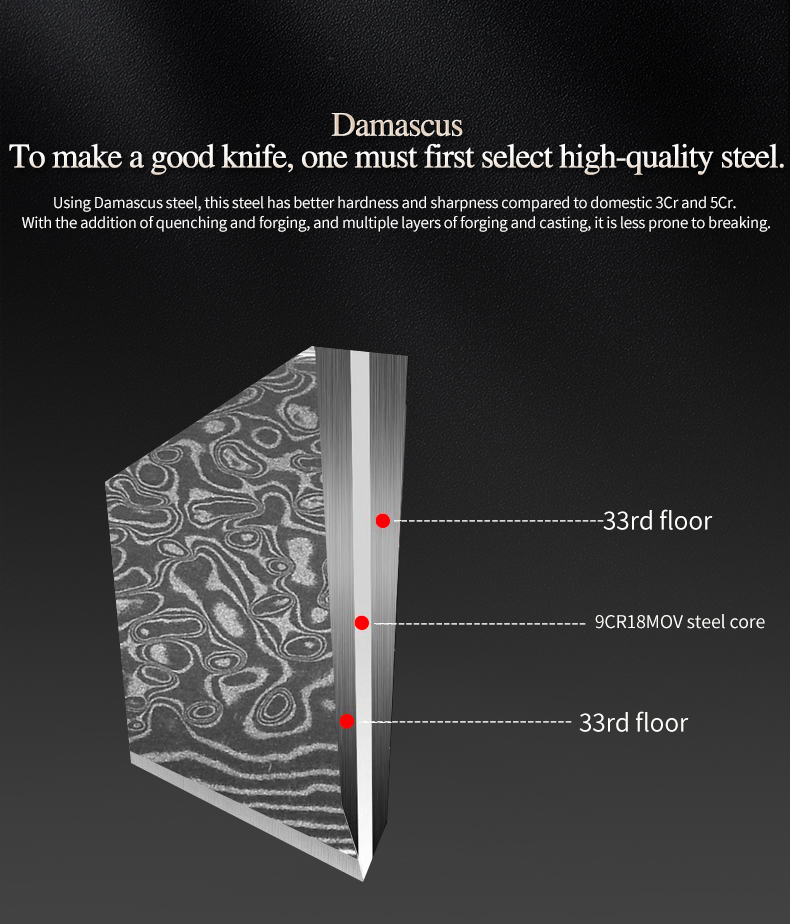
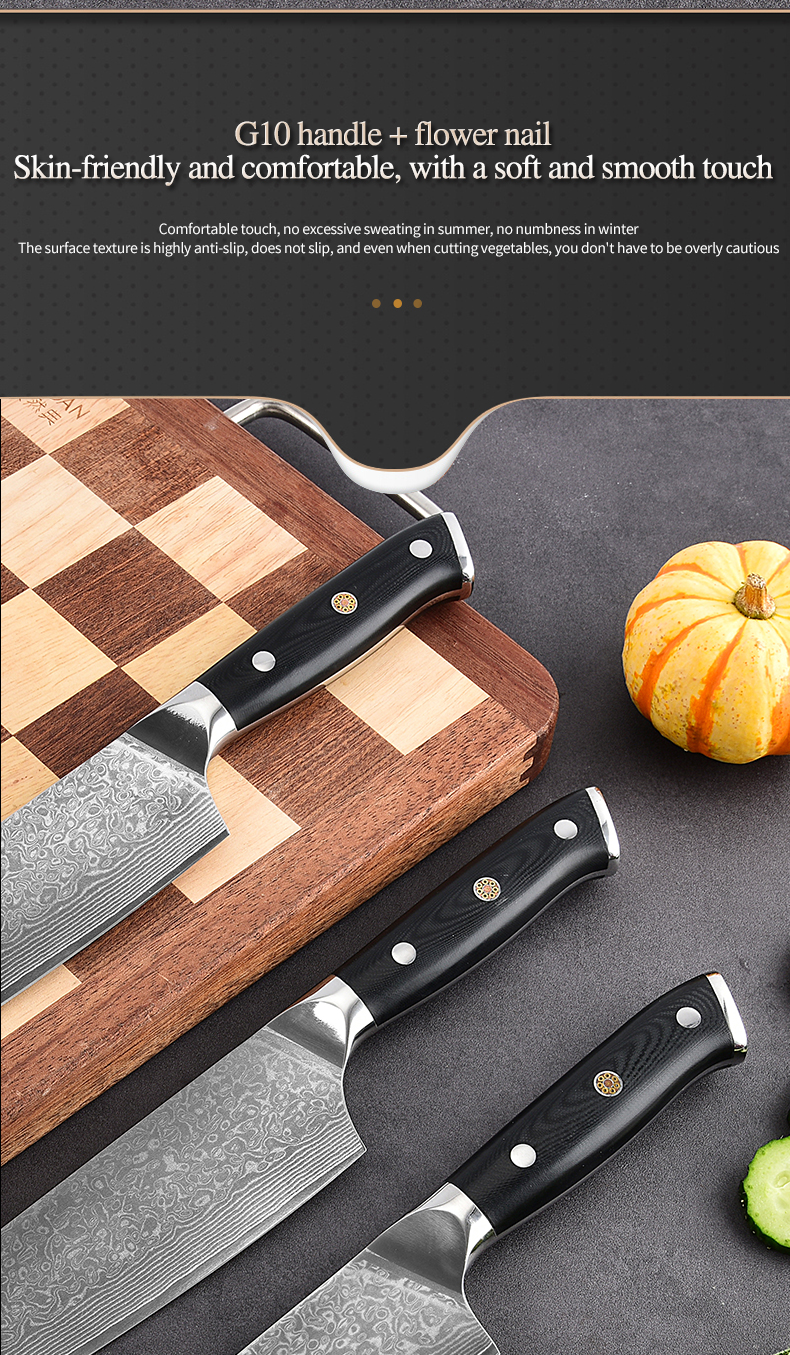
| Model Number: DM-14A Usage: Kitchen Tools Style: Double Steel Handle Blade Material: 9Cr18Mov steel core Handle Material: G10 Handle+Flower Nail Size: 8 Inch - 3.5 Inch Surface: Damascus Pattern Blade Edge: Plain Certification: FDA, LFGB | |||||||||
Superior High-carbon Stainless Steel Knife
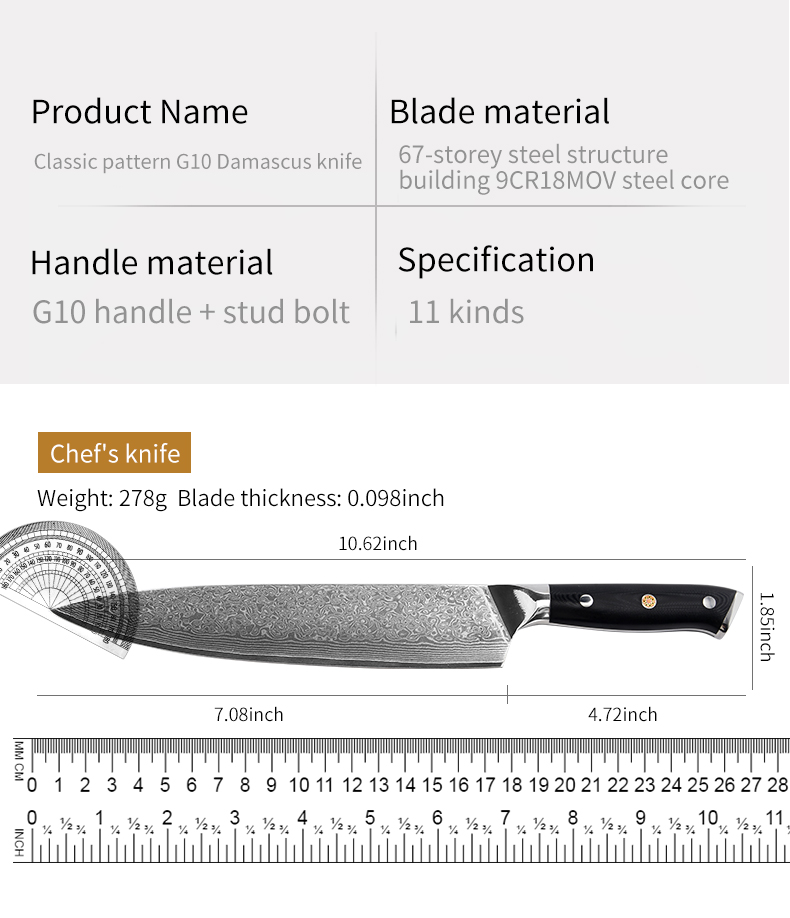
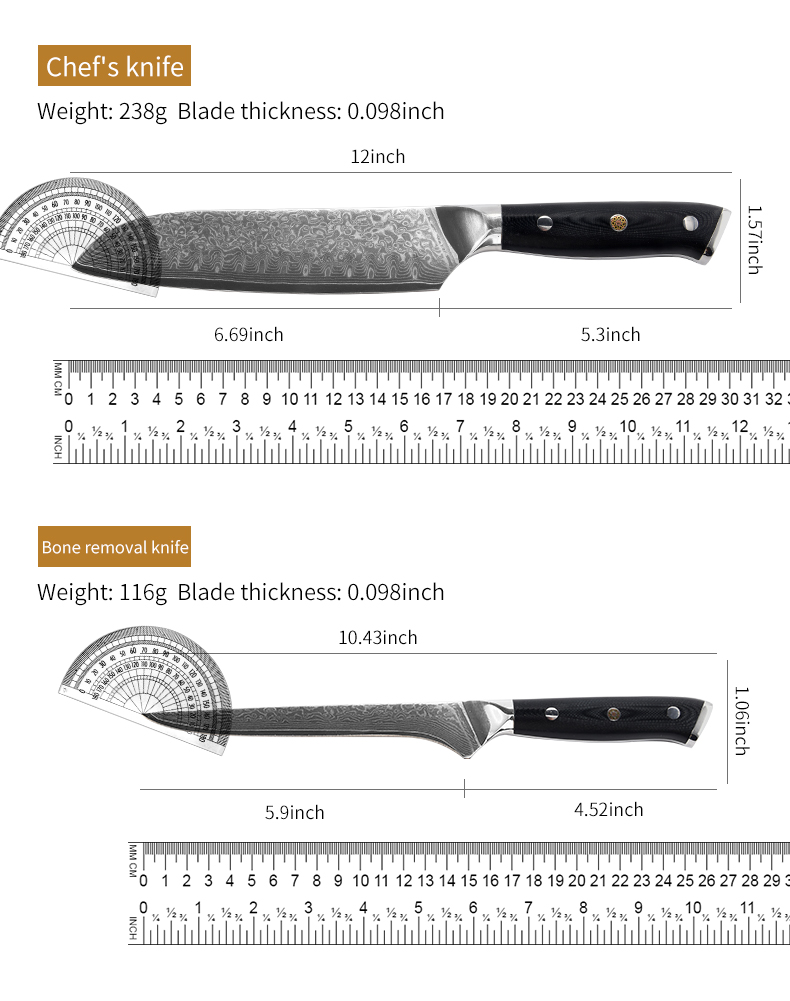
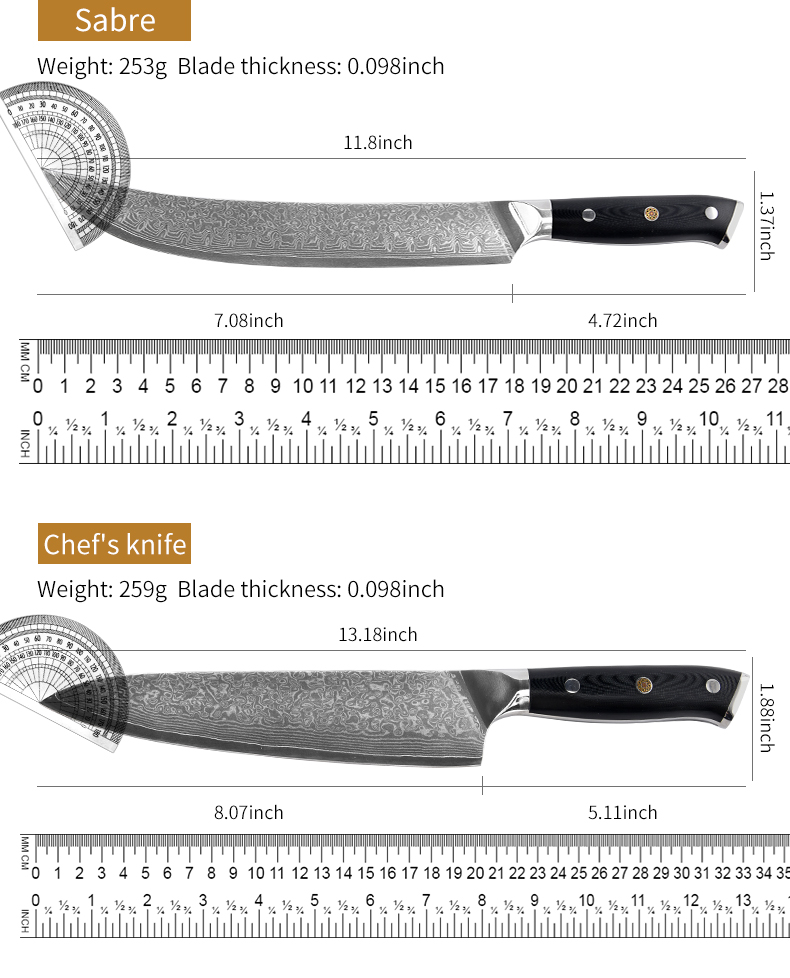
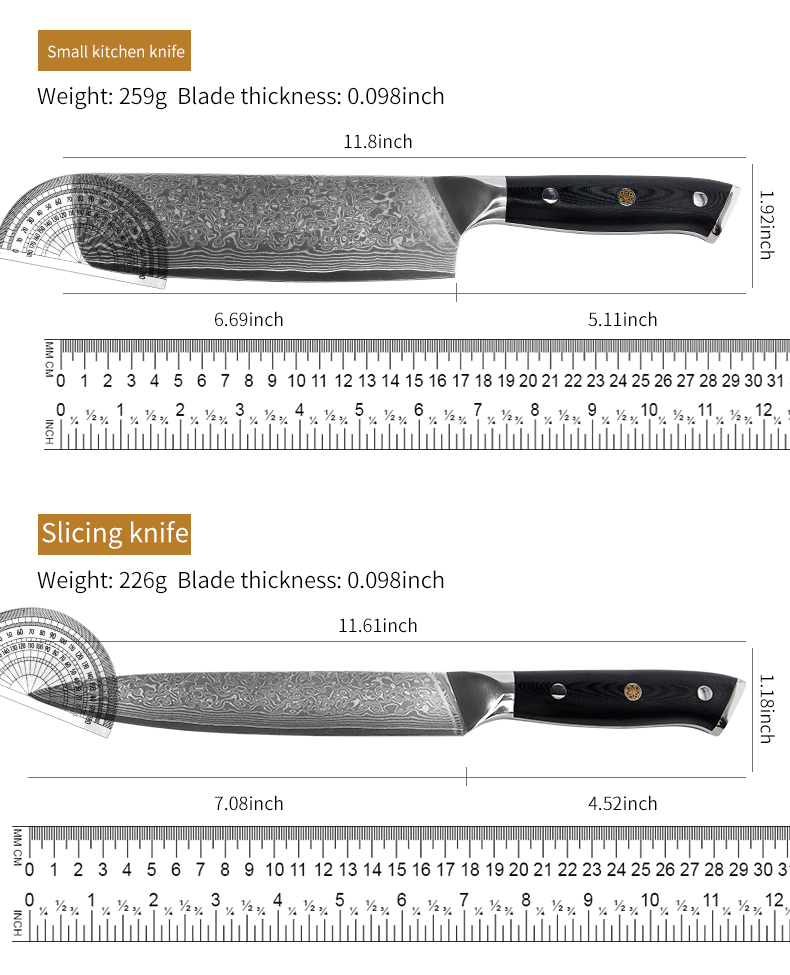
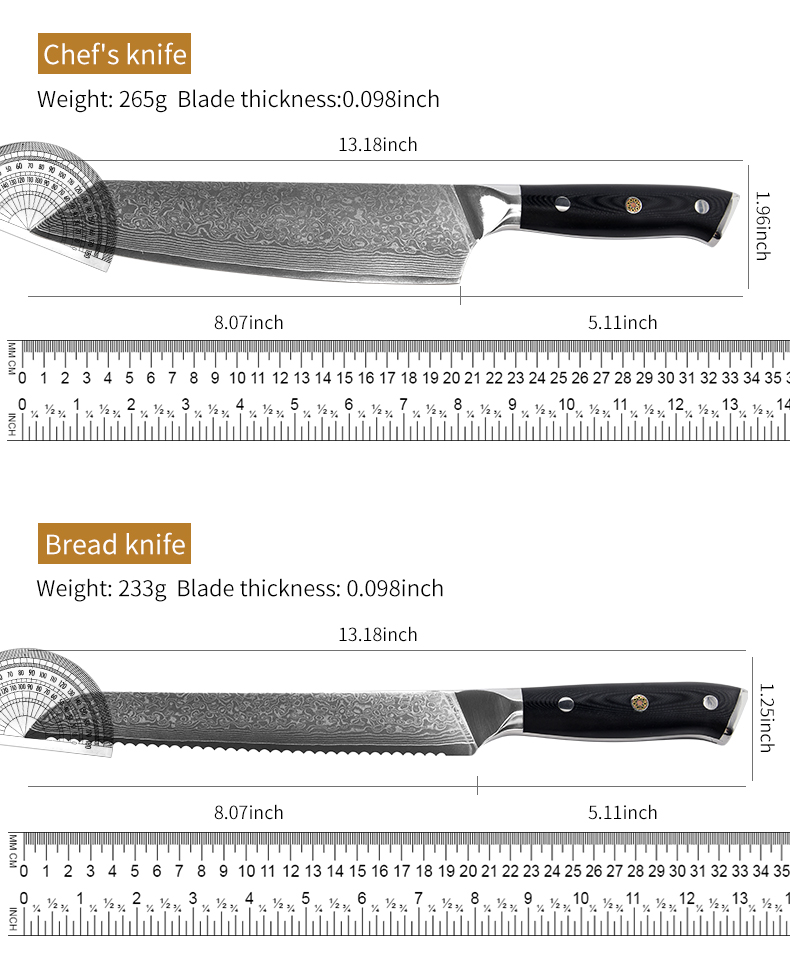
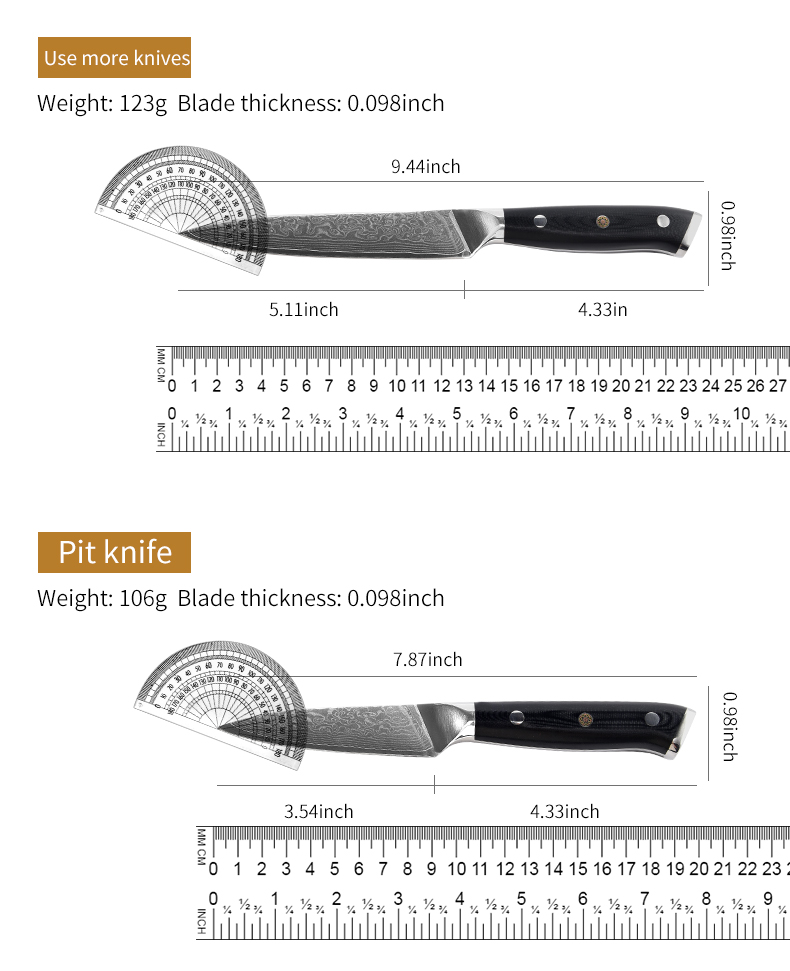
Description:
Each knife is forged from a single piece of high carbon stainless steel, resulting in a razor sharp pro quality blade that excels far beyond ceramic and cheap acrylic knives.
Balanced weight distribution and ergonomic handles minimize fatigue and maximize cutting precision for both women and men.
Superior high-carbon stainless steel blades for precision and accuracy
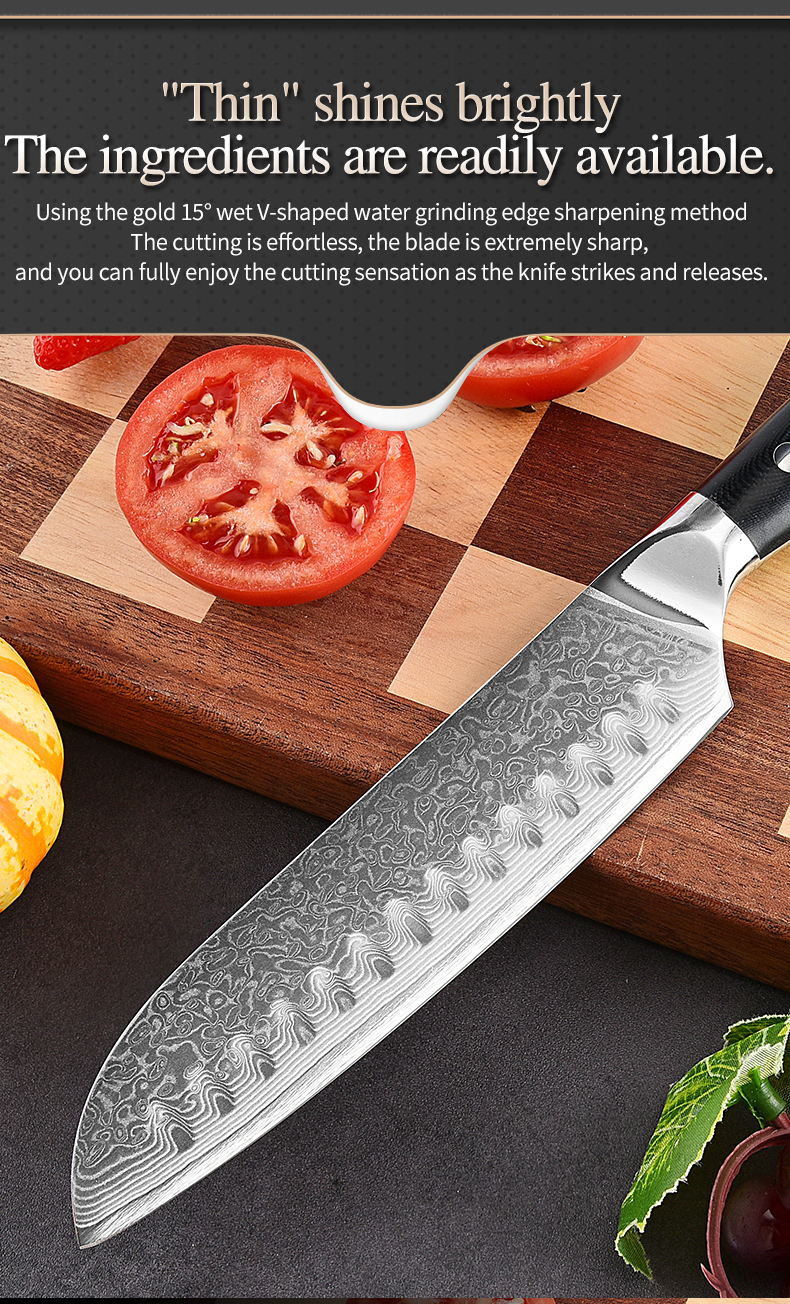
Precision-tapered ground blades that narrow gradually to an extremely sharp, fine edge
Forged durable extra-wide safety bolster for perfect stability and control
Stainless steel rivets to secure the full-tang blade to the ergonomically designed handle
Hot tags: superior high-carbon stainless steel knife, stainless steel kitchen knife set, kitchen knife, knife, chef knife, high quanlity chef knife, knife set, high quanlity knife sets, nice knife sets, household knife sets, buy, wholesale, customized, high quality, manufacturers, factory, suppliers, made in china
This article examines the regulatory requirements for knife imports under California's Proposition 65. It outlines the necessity of managing lead and cadmium exposure, emphasizing the importance of third-party laboratory testing to determine if warning labels are required. The text provides guidance on costs, labeling strategies, and the importance of supply chain due diligence to mitigate legal risks in the California market.
This article examines the critical distinctions between factories and trading companies in international sourcing. It outlines their unique business models, highlighting that while factories provide direct production access and potential cost savings, trading companies offer superior service, product consolidation, and logistical flexibility. By providing actionable advice on how to verify supplier identity through site visits and documentation, the article guides businesses in choosing the right supply chain partner to achieve their specific operational and financial goals.
This guide provides a comprehensive overview of the Harmonized System (HS) classifications for knives and cutlery, focusing on headings 8211, 8212, and 8215. It clarifies the distinction between cutting knives, razors, and serving implements, while offering best practices for accurate customs declarations. By understanding these codes, importers and exporters can ensure regulatory compliance, optimize duty payments, and prevent logistical delays in global trade.
This article explores the philosophy of "adding a little sugar to life," an insight-driven approach to modern existence. In a world dominated by relentless optimization and productivity, the author argues for the importance of intentional, small-scale rituals that provide warmth and contentment. By balancing life's inherent bitterness with deliberate, personalized moments of joy, individuals can reclaim their time and mental well-being. The text advocates for moving beyond result-oriented thinking to embrace the intrinsic, unmeasured value of simple pleasures, ultimately fostering resilience and grace within the mundane routines of daily life.
This article provides an essential guide for importers on navigating US FDA compliance for kitchen knives. It details the legal responsibility of ensuring that food-contact materials are safe, emphasizing the importance of migration testing, supply chain management, and maintaining comprehensive documentation to prevent border detentions and protect consumer health.
This article reflects on the triumphant conclusion of the recent Canton Fair, highlighting key trends such as sustainability and digital innovation. It emphasizes the importance of the upcoming Labor's Day holiday as a necessary period for rest and reflection for the global business community, ultimately looking forward to continued growth and collaboration in the international trade sector.
This article discusses the factors behind the company's recent success in the competitive knife market, emphasizing the role of quality craftsmanship, operational reliability, and strategic customer relationship management. By maintaining high product standards and optimizing supply chain logistics to handle surging global orders, the company has successfully scaled its operations. The narrative highlights the transition to frequent container shipments as a testament to sustained brand growth and outlines future strategies, including a commitment to sustainable innovation and continued responsiveness to international market demands.
The article highlights the successful conclusion of Phase 2 of the Canton Fair for Yangjiang Insight. It emphasizes the importance of the fair as a platform for demonstrating product innovation in kitchen knives and building international partnerships. The text covers the team's engagement with global buyers, the feedback received, and their commitment to future R&D and quality, marking the event as a catalyst for growth and future collaborations.
The energy of the second day of Phase 2 is an excellent sign, as this phase specifically highlights consumer goods, kitchenware, and gifts, making it the ideal environment for showcasing high-quality kitchen knives wintrue pakcggz.gov. Continued engagement and proactive follow-ups will be key to turning this initial interest into successful, lasting business relationships.
This article examines the "First Day Effect" of Phase 2 of the Canton Fair, specifically regarding the kitchen knife industry in Yangjiang, China. It explores how the intense, high-intent buyer activity during the fair's opening day serves as a critical indicator for market demand and sets the strategic tone for manufacturers. By analyzing industrial dynamics, shifting consumer preferences toward sustainability and integrated solutions, and the evolution toward hybrid trade models, the piece illustrates how Yangjiang manufacturers leverage this event to solidify long-term global partnerships and maintain their position as leaders in the international culinary tool market.
This article invites business partners to meet Yangjiang Insight Knife Factory at the upcoming Canton Fair. It highlights our commitment to high-carbon steel, ergonomic design, and advanced manufacturing precision. We emphasize our factory-direct model, offering competitive OEM/ODM solutions to retailers and global brands, and encourage prospective clients to visit our booth for professional discussions on collaborative opportunities and custom product development.
This article chronicles the evolution of the China Import and Export Fair, better known as the Canton Fair. Since its inception in 1957, the fair has transformed from a modest local initiative into the world's largest trade exhibition. It explores its historical significance as a bridge for international trade, its expansion alongside China's economic growth, and its modern transition into a sophisticated, global, and digital-integrated platform for commerce.
The Canton Fair, established in nineteen fifty-seven, is a paramount event in international trade, serving as a vital bridge between Chinese manufacturers and global markets. Initially a controlled export channel, it has evolved into the world's largest trade exhibition, acting as a critical barometer for global economic trends. The fair fosters invaluable business partnerships, enables direct sourcing, and promotes technological and sustainable development, maintaining its status as an indispensable cornerstone of global commerce.
This article outlines the operational requirements and logistics best practices for shipping knife blocks in a 40-foot high cube (40HQ) container. It emphasizes the importance of understanding container specifications, implementing optimized packaging designs, and maintaining disciplined loading, bracing, and quality control procedures. By focusing on volume maximization and load stability, businesses can ensure the safe and cost-effective delivery of high-volume kitchenware shipments while minimizing the risks of transit damage.
This article serves as an invitation for industry professionals to visit our booth at the upcoming Canton Fair. It emphasizes the irreplaceable value of tactile product evaluation and face-to-face networking in the knife industry. By highlighting our focus on quality craftsmanship, customized business solutions, and exclusive product previews, the piece encourages readers to engage directly with our team to foster long-term partnerships and gain a competitive edge in their respective markets.
This article highlights our attendance at Phase 2 of the Canton Fair, emphasizing our role in the prestigious Yangjiang knife and kitchenware industry. We showcase how Yangjiang has evolved from traditional forging into a global hub for high-precision, innovative kitchen tools. Our presence at the fair is dedicated to fostering global partnerships, demonstrating technical excellence in cutlery, and providing tailored OEM/ODM solutions to meet evolving international market demands.
This article outlines the significance of the Canton Fair's Phase Two for companies from Yangjiang, China's renowned knife-making hub. It highlights the focus on product innovation, ergonomic design, and strategic packaging. The piece emphasizes the importance of face-to-face interactions in building international partnerships and showcases how Yangjiang manufacturers adapt to diverse global market demands through flexible OEM/ODM services, ensuring high-quality kitchen tools reach culinary enthusiasts worldwide.
This article explores the thriving cutlery industry in Yangjiang, China. It details the transition from traditional craftsmanship to modern high-precision manufacturing. Through the lens of container loading, the piece examines the logistical complexities, the role of OEM production in global markets, and the industry's commitment to sustainability and innovation, highlighting how this region remains the center of global knife production.
Choosing a quality cooking knife is a foundational step for any home cook. This guide emphasizes the importance of understanding knife anatomy—specifically the blade, handle, and tang—and balancing weight and geometry to suit your personal style. It recommends prioritizing high-carbon stainless steel, full-tang construction, and versatile types like the Chef's knife or Santoku. Finally, it highlights that proper maintenance and appropriate cutting surfaces are just as essential as the knife itself for long-term performance.
This article provides a comprehensive, step-by-step framework for importing knives from China to the U.S. It emphasizes the importance of regulatory compliance, proper HTS classification, and meticulous documentation to avoid seizures and penalties. By conducting thorough supplier due diligence, partnering with experienced freight forwarders, and staying updated on evolving trade laws, businesses can build a secure and successful cross-border supply chain.