
- Home
- Products
- About Us
- OEM/ODM
- VR
- Resources
- Contacts


Views: 6666 Author: Site Editor Publish Time: 2026-09-21 Origin: Site


Content Menu
● 1. The Hidden Defects of Traditional Cutting Boards That Restrict Kitchen Hygiene
● 2. Core Advantages of S/S304 Cutting Board: Leading the New Standard of Kitchen Hygiene
>> 2.1 Excellent Antibacterial and Antimold Performance to Ensure Food Safety
>> 2.2 Super Durable, No Deformation and Long Service Life
>> 2.3 Ultra-Easy Cleaning, Saving Kitchen Labor Time
● 5. Common Misunderstandings About Stainless Steel Cutting Boards
● 6. FAQ: Frequently Asked Questions About Stainless Steel Cutting Boards
Yangjiang Insight Industry And Trade Co.,Ltd. is a professional manufacturer with over 23 years of dedicated experience in the design, production, and sales of premium kitchen knives and kitchen utensils, including Chef Knife, Santoku Knife, Bread Knife, Paring Knife, and high-performance kitchen cutting tools. Boasting a 20,000-square-meter production plant and a monthly production capacity of up to 5 million pieces, the company provides reliable OEM and ODM services for well-known kitchenware brands worldwide. With in-depth insights into kitchen product iteration and user cooking needs, Yangjiang Insight Industry And Trade Co.,Ltd. has long observed a significant consumption trend: the traditional wooden and plastic cutting board is gradually being phased out of modern home and commercial kitchens, while the stainless steel cutting board, especially the food-grade S/S304 cutting board, has become the mainstream choice for kitchen upgrades. This article will deeply analyze the core advantages of stainless steel cutting boards, compare their performance with traditional cutting board types, and explain why they have become an indispensable core kitchen tool in modern cooking scenarios.
For decades, wooden cutting boards and plastic cutting boards have been the two most common traditional options for family kitchens and small catering kitchens. They are favored by consumers for their low prices and basic cutting adaptability, but their inherent material defects have always been potential health and hygiene hazards in the cooking process, which are also the fundamental reasons why they are gradually replaced by modern stainless steel cutting board products.
Traditional wooden cutting boards are mostly made of solid wood or spliced wood materials. Although they have moderate hardness and will not easily damage knife edges, their natural porous wood fiber structure is difficult to avoid tiny gaps and cracks after long-term use. During daily cutting of meat, vegetables, and fruits, food residues, vegetable juice, and blood stains will penetrate into these tiny pores. Ordinary water washing and detergent cleaning cannot completely remove hidden dirt. Over time, a large number of bacteria, molds, and microorganisms will breed in the gaps, leading to mildew, black spots, and peculiar odors on the cutting board. In addition, wooden cutting boards are prone to warping, cracking, and degumming in humid kitchen environments, and their service life is short. Frequent replacement not only increases household costs but also causes unnecessary resource waste.
Plastic cutting boards, another mainstream traditional cutting board, solve the problem of wood mildew to a certain extent but have more prominent usage flaws. Most ordinary plastic cutting boards are made of low-density polyethylene materials. During long-term high-intensity cutting, it is easy to produce obvious knife marks and surface scratches. These scratches become new hiding places for bacteria. Moreover, low-quality plastic cutting boards are prone to aging and deformation after contact with high-temperature hot water and long-term friction. Some inferior products will even precipitate harmful chemical components when cutting high-temperature ingredients or acidic fruits, which poses a hidden danger to food safety. In addition, plastic cutting boards are easy to slip during use, which affects cutting stability and reduces cooking efficiency.
Different from traditional cutting board materials, theS/S304 cutting board adopts food-grade 304 stainless steel raw materials, which is recognized as one of the safest and most practical kitchen cutting board materials in the global kitchenware industry. Combined with the mature manufacturing technology of Yangjiang Insight Industry And Trade Co.,Ltd., the optimized stainless steel cutting board perfectly solves all the pain points of traditional cutting boards, and its comprehensive performance fully meets the high hygiene and high durability needs of modern kitchens.
The biggest advantage of the stainless steel cutting board is its non-porous integrated molding structure. Compared with the porous fiber of wooden cutting boards and the easy-scratch characteristics of plastic cutting boards, the surface of the S/S304 cutting board is dense and smooth without tiny gaps. Food residues, juice, and grease can only stay on the surface and will not penetrate into the interior. This structural feature fundamentally blocks the living environment of bacteria and molds. Professional testing shows that the food-grade 304 stainless steel material has an efficient antibacterial rate, which can inhibit the reproduction of E. coli, Staphylococcus aureus, and other harmful bacteria, effectively avoiding cross-contamination during raw and cooked food cutting. For families with infants, pregnant women, and the elderly, this high-hygiene cutting board is an essential guarantee for healthy diet.
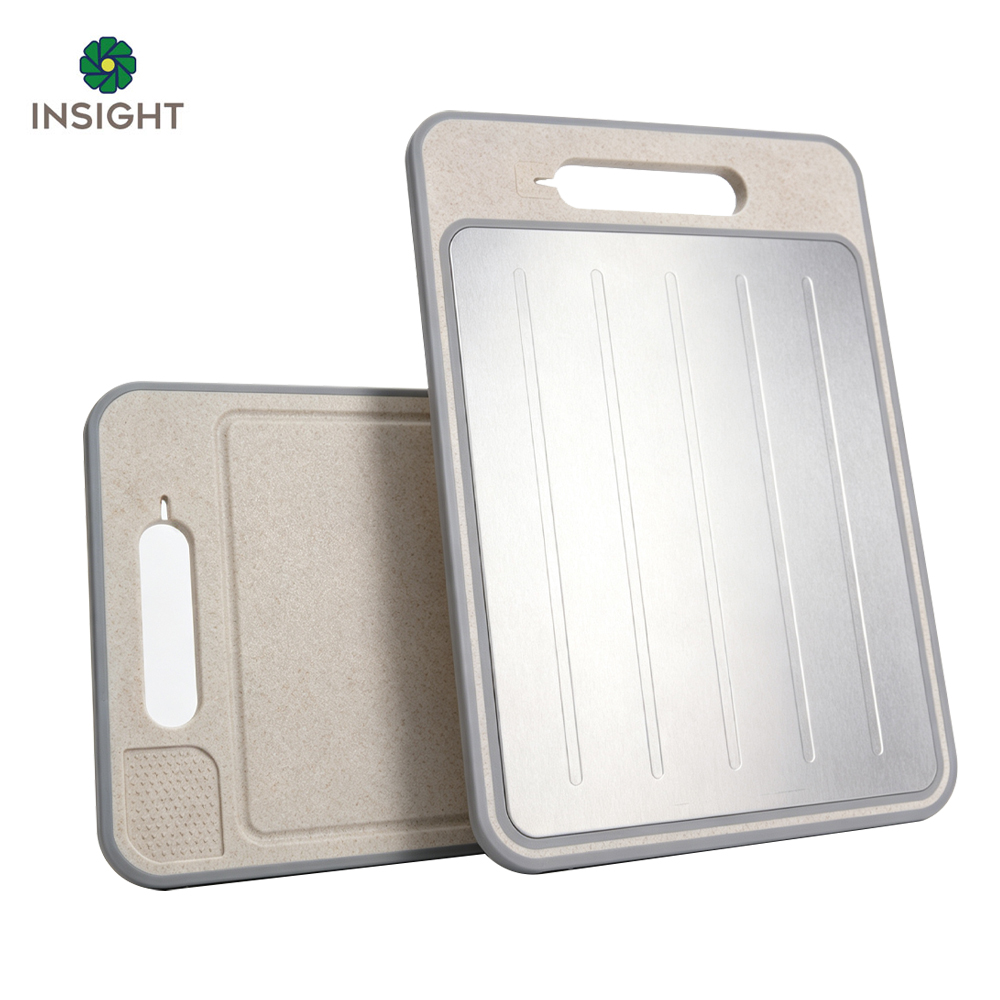
Traditional cutting boards need to be replaced frequently due to mildew, cracking, and aging, while the S/S304 cutting board has extremely high hardness, corrosion resistance, and oxidation resistance. 304 stainless steel has stable physical and chemical properties, will not warp or deform in humid, high-temperature, and low-temperature kitchen environments, and is not afraid of daily high-intensity chopping, cutting, and slicing. Even after years of repeated use, the surface can still maintain a flat and smooth state without obvious knife marks and scratches. Unlike wooden boards that are prone to cracking and plastic boards that are prone to aging, a qualified stainless steel cutting board can be used for many years stably, greatly reducing the frequency of replacement and saving long-term household kitchen costs.
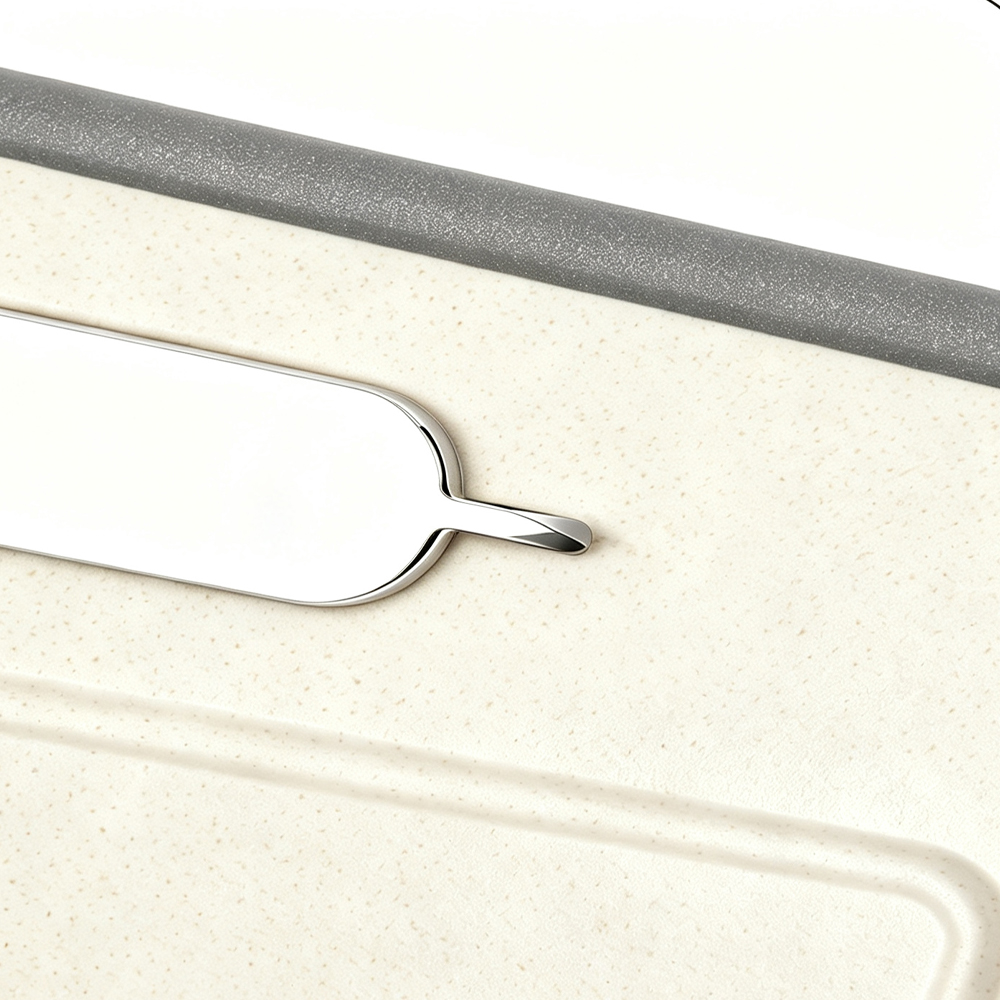
Modern consumers pursue efficient and convenient kitchen cleaning methods, and the easy-to-clean feature is a key reason why stainless steel cutting boards are popular. After daily cutting work, the surface of the stainless steel cutting board only needs to be rinsed with clean water or simply wiped with a cleaning cloth to remove all residues. For stubborn grease and stains, it can be quickly cleaned with a little detergent. It supports direct high-temperature boiling disinfection and dishwasher cleaning, which is incomparable to wooden cutting boards that are afraid of high temperature and easy to crack and ordinary plastic cutting boards that are easy to age at high temperature. No hidden dirt, no residual odor, one-step cleaning and disinfection, greatly simplifying the post-cooking cleaning process.
With the continuous upgrading of kitchenware manufacturing technology, today’s stainless steel cutting board is no longer a single cutting tool, but a multifunctional kitchen helper optimized for diverse cooking scenarios. Relying on 23 years of professional kitchenware R&D and production experience, Yangjiang Insight Industry And Trade Co.,Ltd. has optimized the structure and function of traditional stainless steel cutting boards, making up for the minor shortcomings of early metal cutting boards and greatly improving user experience.
The upgraded S/S304 cutting board adopts a double-sided functional design. One side is a fine stainless steel surface, which is suitable for cutting fruits, vegetables, cooked food, and desserts, ensuring clean and hygienic cutting; the other side is a textured anti-slip surface, which is specially used for cutting raw meat, bones, and hard ingredients, effectively preventing ingredients from slipping during cutting and improving cutting safety. In addition, the edge of the cutting board is designed with a waterproof groove, which can effectively lock vegetable juice and meat soup, prevent sewage from overflowing and polluting the kitchen countertop, and keep the kitchen operating area clean and tidy at all times.
In terms of user-friendly design, the optimized cutting board has a moderate thickness and weight, which is not bulky and easy to take and place. The rounded corner design avoids collision damage, and the reserved hanging hole is convenient for vertical storage and air drying, avoiding mold caused by long-term stacking and dampness. Whether it is daily family light cooking, heavy-duty ingredient handling, or commercial kitchen high-frequency use, the multifunctional stainless steel cutting board can perfectly adapt to various scenarios, realizing one board for multiple uses and improving kitchen space utilization efficiency.

In addition to hygiene and practicability, the stainless steel cutting board also has outstanding environmental protection and economic value, which is an important factor for it to replace traditional cutting boards on a large scale. Traditional wooden cutting boards consume a large amount of wood resources, and frequent replacement will cause resource waste and environmental pressure. Plastic cutting boards are mostly non-degradable materials, and discarded waste plastic cutting boards will cause environmental pollution.
The S/S304 cutting board is made of recyclable food-grade stainless steel materials, which is green and environmentally friendly, and will not produce harmful substances during use and disposal. Its super long service life avoids frequent replacement, reduces the generation of kitchen waste, and conforms to the current green and low-carbon household consumption concept. From the perspective of economic benefits, although the one-time purchase cost of a stainless steel cutting board is slightly higher than that of a traditional cutting board, it can maintain stable performance for many years without frequent replacement. Calculated on a long-term use cycle, its comprehensive cost performance is far higher than wooden and plastic cutting boards, bringing more cost-effective choices to families and catering enterprises.
In the process of popularization of stainless steel cutting board products, many consumers have some misunderstandings about metal cutting boards, which affect their consumption choices. In fact, with the upgrading of manufacturing technology, the current mature S/S304 cutting board products have completely avoided the defects of early metal cutting boards.
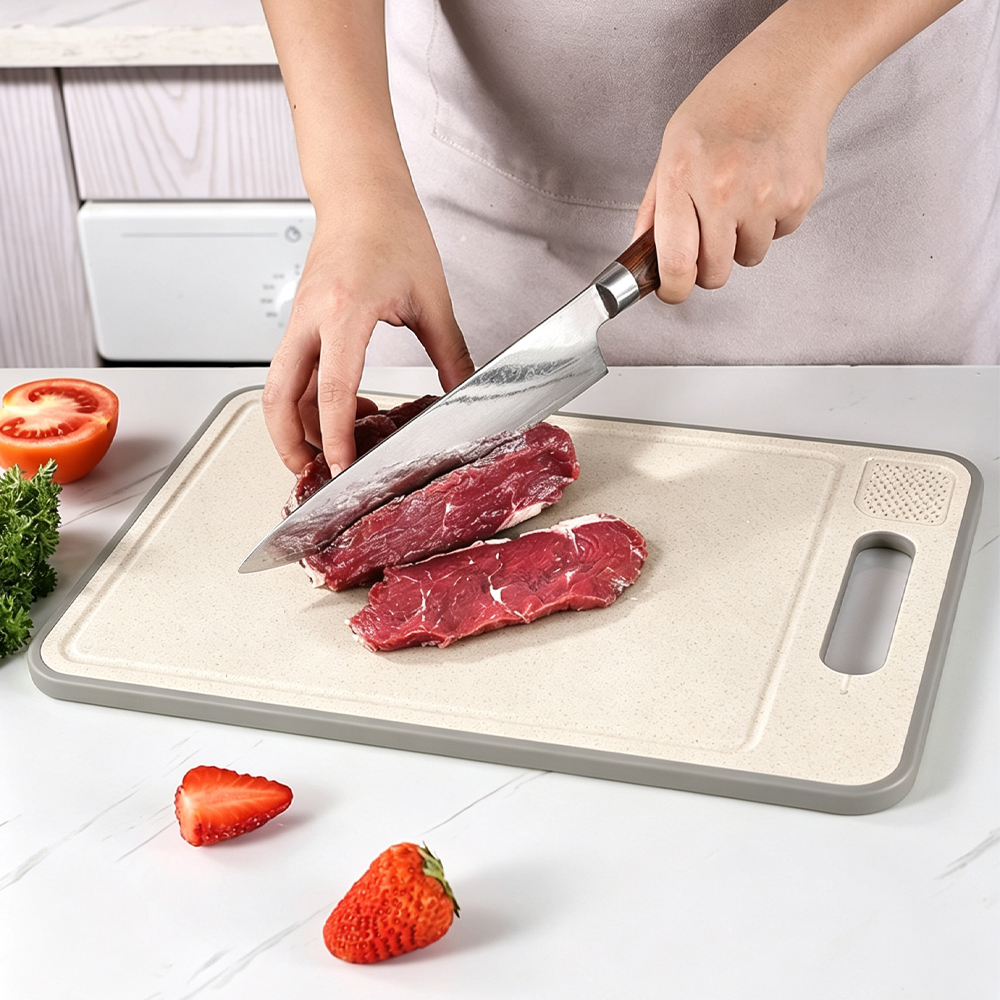
Many people worry that stainless steel cutting boards will damage knife edges. In fact, the food-grade 304 stainless steel used in high-quality products has moderate hardness. Matching with daily household Chef Knife, Santoku Knife, and Paring Knife, it will not cause excessive wear to the knife edge. On the contrary, the smooth surface can reduce friction loss during cutting, protect the knife body, and keep the knife edge sharp for a longer time. Another misunderstanding is that stainless steel cutting boards have loud cutting noise. The optimized modern cutting board adds a buffer structure and surface mute treatment, which effectively reduces the cutting noise and will not cause noise interference to the family environment.
To help consumers more comprehensively understand stainless steel cutting board and S/S304 cutting board products and solve purchase and usage doubts, we have sorted out 5 core common questions and professional answers:
Q1: Is an S/S304 cutting board completely antibacterial? A1: The food-grade S/S304 cutting board has excellent natural antibacterial performance. Its non-porous surface prevents bacterial adhesion and reproduction, with an antibacterial rate of over 99.9% for common kitchen harmful bacteria. It can realize long-term hygienic use and effectively avoid food cross-contamination compared with traditional wooden and plastic cutting boards.
Q2: Will a stainless steel cutting board rust after long-term use? A2: High-quality stainless steel cutting boards made of standard 304 food-grade stainless steel have excellent corrosion resistance and oxidation resistance. They will not rust in daily humid kitchen environments, after contact with salt water, fruit acid, and kitchen seasonings. Only inferior stainless steel products with unqualified materials are prone to rust.
Q3: Does using a stainless steel cutting board damage kitchen knives? A3: Qualified S/S304 cutting boards have scientifically adjusted surface hardness, which matches the hardness of mainstream household kitchen knives. Daily cutting, slicing, and chopping will not wear the knife edge sharply. Compared with wooden boards with hard impurities and plastic boards with easy-to-produce scratches, stainless steel cutting boards can better protect the sharpness of kitchen knives.
Q4: Can stainless steel cutting boards be cleaned in a dishwasher and disinfected at high temperature? A4: Yes. The S/S304 cutting board has high temperature resistance and high pressure resistance, supporting dishwasher integrated cleaning, high-temperature boiling disinfection, and steam disinfection. It will not deform, fade or precipitate harmful substances, and the cleaning and disinfection safety is far higher than traditional cutting boards.
Q5: What is the service life of a standard stainless steel cutting board? A5: Under normal household use and daily correct cleaning and maintenance, a high-quality S/S304 stainless steel cutting board can be used stably for 5-10 years, which is 5-8 times the service life of traditional wooden and plastic cutting boards, with ultra-high long-term cost performance


