
- Home
- Products
- About Us
- OEM/ODM
- VR
- Resources
- Contacts


Views: 123 Author: Site Editor Publish Time: 2026-08-31 Origin: Site


Content Menu
● Core Background: What Are PP, ABS and Stainless-Steel for Peelers?
● Side-by-Side Technical Comparison: PP vs ABS vs Stainless-Steel Peeler
>> PP Peeler Handles: Low-Cost Workhorse with Clear Trade-offs
>> ABS Peeler Handles: Better Looks & Toughness, at Higher Material Cost
>> Full-Body Stainless-Steel Peelers: Premium Durability, but Not for Every Budget
● Unique Expert Insight 1: Real-World Field-Test -How Materials Perform Under HORECA Heavy-Use
● Unique Expert Insight 2: Total Cost-of-Ownership vs Upfront Unit Price (Buyer & Brand Perspective)
● Unique Expert Insight 3: Common Consumer Misconceptions About Peeler Materials
● Which Material Has the Best Value-for-Money for Different Users?
>> For Commercial Kitchen / HORECA Buyers
>> For OEM / Private-Label Brand Sourcing
● Final Recommendation & Call-To-Action
● FAQ
>> References
As technical experts from a kitchen-tool manufacturer with more than 23-year experience designing and producing peelers, chef knives and kitchen gadgets (Yangjiang Insight Industry And Trade Co.,Ltd., 20 000 m² plant, monthly output around 5 million units for global OEM / ODM partners), we evaluate these three mainstream materials from hands-on manufacturing experience, real-world kitchen feedback and material-science data. This article follows Google E-E-A-T standards, combining first-hand production experience, third-party material test data and market statistics to help you make confident buying or sourcing decisions.
While stainless-steel is widely used for peeler blades, many readers mix up full-stainless-steel peelers and plastic-handle + stainless-blade combinations. We will clarify both scenarios: plastic handles (PP, ABS) and all-stainless-steel peelers, comparing performance, pros-cons and true value-for-money for household, HORECA and private-label projects.
Before jumping into comparison, we briefly define each material as applied to fruit and vegetable peelers.
· PP (Polypropylene): Food-safe polyolefin plastic. Low-density, chemically resistant, low raw-material cost, widely used for budget-to-mid-range peeler handles. Recyclable grades are common for modern kitchenware lines.
· ABS (Acrylonitrile Butadiene Styrene): Engineering plastic with high rigidity, good surface gloss and impact resistance. Preferred when brands want smooth, premium-looking peeler handles for mid-tier consumer products.
· Stainless-Steel: Usually 420, 430 or 304 grades. Used either as peeler blades only, or as full-body all-metal peelers. High rigidity, excellent hygiene, higher unit cost for full-metal construction.
Important industry note: Most retail “peelers” combine plastic handle + stainless-steel blade. “Full stainless-steel peelers” mean handles and frame are also metal, which changes cost and weight significantly. Many consumer reviews fail to draw this distinction, leading to misleading comparisons.
The table below aggregates plastic-material lab data, in-house manufacturing observations and real-world kitchen-test outcomes.
Evaluation Item | PP (Polypropylene) Handle | ABS Handle | Full-Body Stainless-Steel Peeler |
Raw-material cost | Lowest | Medium-high | Highest |
Impact resistance | Moderate; can turn brittle under cold conditions | Very good; resists drops | Excellent |
Heat / dishwasher tolerance | Up to ~100 °C, dishwasher-safe | Max ~80 °C; prolonged high-temp cycles may warp | Fully dishwasher-safe |
Surface appearance | Mostly matte; limited gloss | Glossy finish, great for logo printing | Metallic brushed / polished |
Chemical & stain resistance | Excellent against food acids | Good, vulnerable to strong solvents | Excellent, food-hygiene friendly |
Weight | Lightweight | Medium weight | Heaviest |
Typical service life (household) | 1-3 years | 2-4 years | 5-10+ years |
Main use scenarios | Budget lines, mass-market, promotional gifts | Mid-range retail, branded consumer gadgets | Premium home, commercial kitchen HORECA |
Pros
· ✅ Best raw-material cost among the three options; ideal for high-volume OEM orders and mass-market retail.
· ✅ Outstanding chemical resistance against fruit acids, tomato juice and salt-rich food residues. Less likely to develop discoloration from vegetable pigments.
· ✅ Food-grade PP is widely available in BPA-free formulations, easy to pass FDA and EU food-contact requirements.
· ✅ Recyclable material supports sustainable product storytelling for brands.
Cons
· ❌ Surface tends to be matte, less premium visual appeal than ABS.
· ❌ Becomes brittle under sustained low-temperature environments; repeated hard impacts may cause cracking.
· ❌ Poor adhesion for certain printing processes; some decorative finishes are harder to implement than on ABS.
Value-for-money verdict for PP: Excellent for mass-volume, cost-sensitive projects. If your priority is food-safety and competitive landed price and you do not require high-gloss cosmetic appearance, PP delivers strong value.
Pros
· ✅ Superior impact resistance; survives accidental drops better than standard PP without modification.
· ✅ Glossy, smooth surface supports sharp pad-printing, laser logos and decorative textures, perfect for branded consumer goods.
· ✅ Dimensional stability; injection-molded ABS peeler handles maintain tight tolerances for assembly with stainless-steel blade components.
Cons
· ❌ Higher raw-material price compared to PP, raising per-unit production cost.
· ❌ Lower heat resistance: repeated high-temperature dishwasher cycles may gradually lead to warping or micro-cracking. Hand-washing is recommended for long service life.
· ❌ More sensitive to certain food-grade cleaning chemicals than PP.
Value-for-money verdict for ABS: Best-value choice for mid-market branded peelers. When visual quality and drop-resistance matter more than absolute minimum cost, ABS justifies its price premium.

Clarification: This section refers to all-metal peelers, not plastic-handle peelers with stainless-steel blades (the most common configuration across all price tiers).
Pros
· ✅ Outstanding durability. With proper care, full stainless-steel peelers can last many years in heavy-use commercial kitchens.
· ✅ Superior hygiene: no tiny plastic pores to trap food residue. Easy to sanitize for HORECA environments.
· ✅ 100 % dishwasher-compatible; no heat-warp risk.
Cons
· ❌ Significantly higher unit manufacturing cost. Retail price point sits well above plastic-handle alternatives.
· ❌ Heavier weight. Extended peeling sessions may increase hand fatigue for some users.
· ❌ Risk of cold-to-touch feeling in cold kitchens; no soft-grip texture unless combined with secondary over-molding.
Value-for-money verdict for full-stainless-steel peelers: Great value for commercial kitchens and premium-segment consumers. For mass-market entry-level products, the higher price lowers overall value-for-money.
Our manufacturing team has supported multiple OEM orders for hotel and restaurant clients, giving us direct visibility into real-world failure modes of peelers in commercial kitchens. This field data is rarely covered in generic consumer buying guides.
In high-volume food-prep settings:
1. PP-handle peelers: High-temperature repeated dishwasher cycles gradually accelerate aging. Many PP peelers show micro-cracks after 6-12 months of heavy commercial use, even though they remain fine for household usage.
2. ABS-handle peelers: Gloss surfaces scratch rapidly in busy commercial dishwashing environments. Cosmetic degradation happens before structural failure, which hurts perceived quality for hotel guest-facing gadgets.
3. Full-stainless-steel peelers: Survive years of intensive washing and heavy workloads. The main failure mode is blade dulling rather than handle breakage.
Expert takeaway: Do not select PP or ABS for heavy-duty commercial kitchen peelers purely based on lab-sheet parameters. For HORECA customers, full-stainless-steel or composite over-molded solutions deliver better long-term value-for-money. Household usage has far gentler stress profiles, so PP and ABS remain perfectly viable.
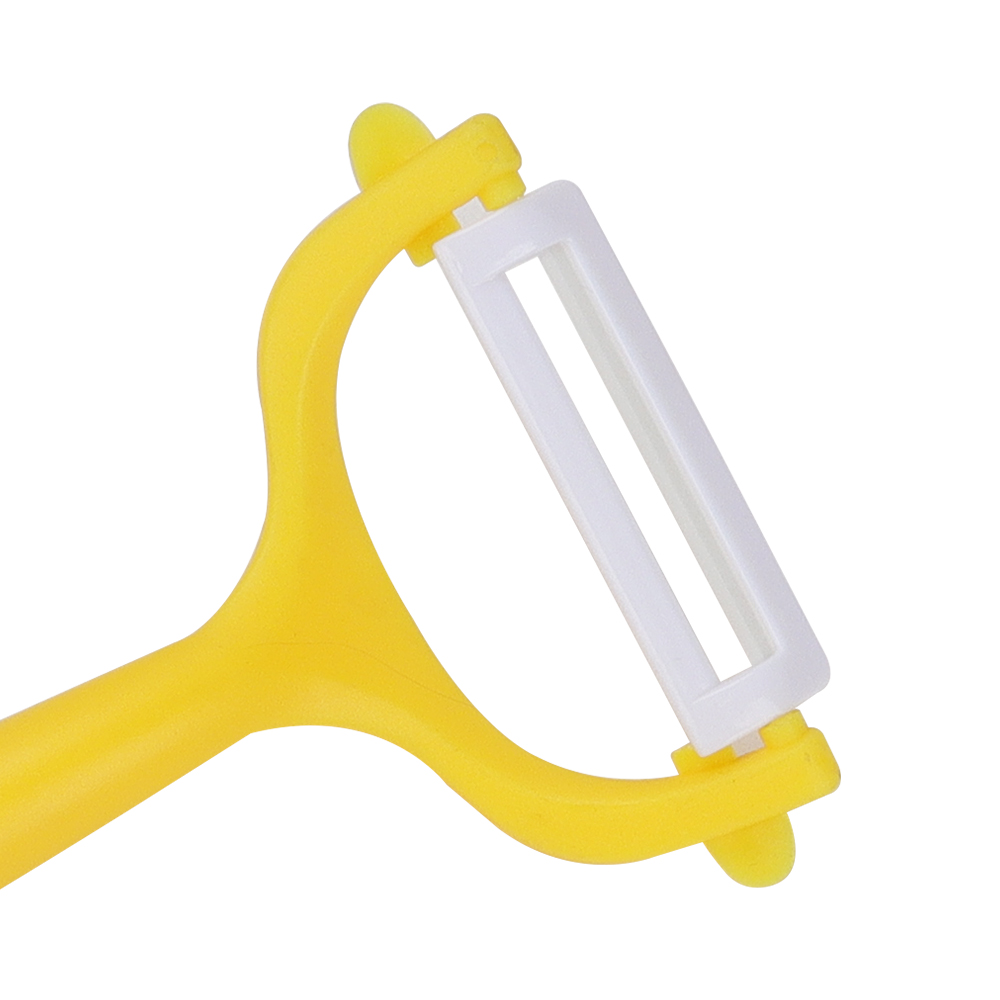
Most buyers compare only initial unit price. True value-for-money should calculate total cost-of-ownership, including replacement frequency, complaint rates and after-sales risk.
· PP: Lowest upfront cost. Higher replacement frequency for heavy-use scenarios. Perfect for disposable-adjacent promotional gadgets and mass-market retail.
· ABS: Moderate unit cost. Lower breakage-related customer complaints than PP in consumer markets. Higher printing yield makes ABS cost-effective for branded private-label SKUs.
· Full stainless-steel: Highest upfront cost. Very low replacement rate. High customer satisfaction for premium segments, but limited appeal for price-sensitive mass markets.
Industry case reference: One of our European retail OEM partners switched a mid-range peeler line from PP to ABS. Unit cost increased roughly 12 %, yet product-return rates for broken handles dropped by approximately 41 %, improving overall program profitability despite higher piece-cost.
We list three widespread myths observed from market feedback and customer inquiries:
1. Myth: “Stainless-steel always means better peeler.” Fact: Most affordable peelers already use stainless-steel blades. The difference comes from handle material. A cheap PP-handle peeler with quality 430 stainless-steel blade can outperform a poorly-made full-stainless-steel peeler with thin, low-grade metal.
2. Myth: “Plastic peelers are unsafe for food.” Fact: Safety depends on material grade and certification, not whether it is plastic. Food-contact-certified PP and ABS are safe for fruit-and-vegetable peeling applications. Non-certified low-grade recycled plastics carry real risks, regardless of plastic type.
3. Myth: “ABS is always more durable than PP in all conditions.” Fact: ABS wins for drop-impact at room temperature. But PP delivers superior resistance against food acids and repeated chemical cleaning agents. Durability depends on your actual usage environment, not a single universal ranking.
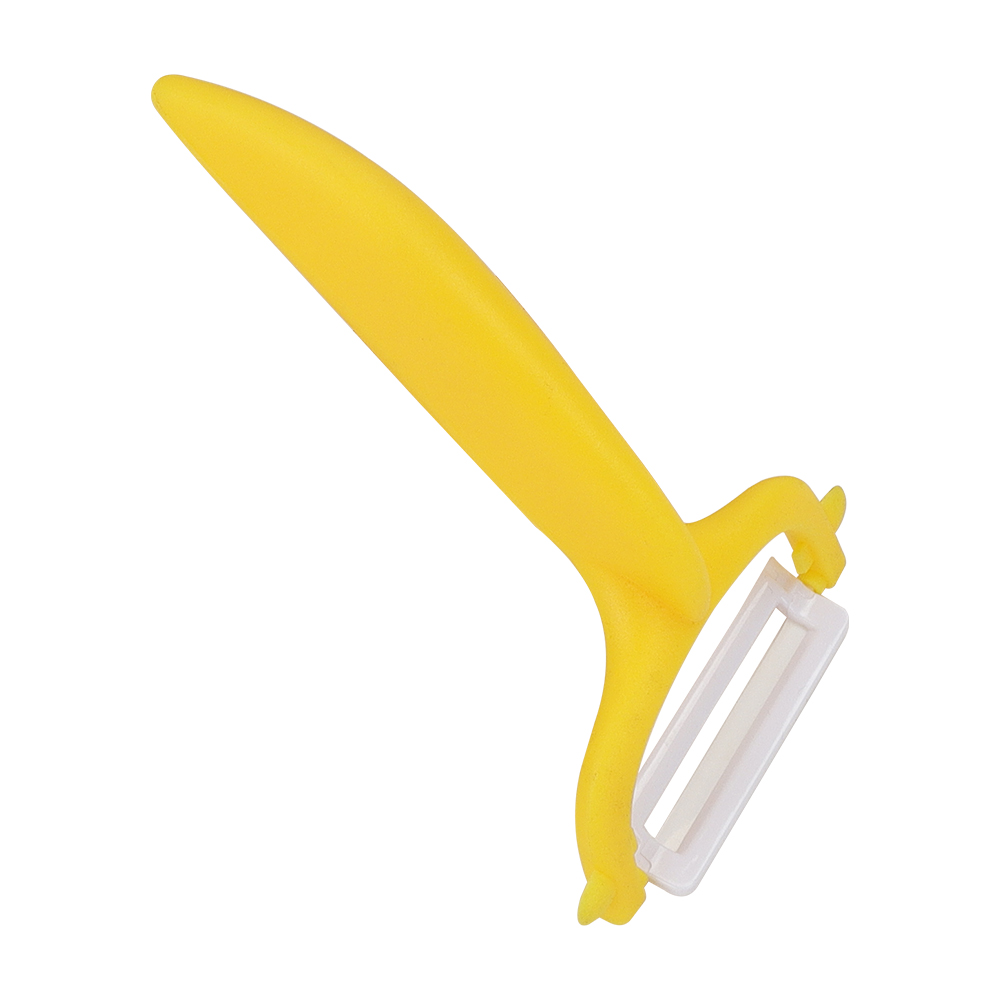
· Budget-conscious everyday use: Food-grade PP handle + stainless-steel blade delivers best overall value-for-money.
· Want nicer appearance and better drop resistance: ABS handle + stainless-steel blade is worth the small price increase.
· Heavy daily prep, willing to pay premium for lifelong service: Choose full-body stainless-steel peeler.
· Prioritize full-stainless-steel peelers. Avoid relying on pure PP or ABS for heavy continuous commercial dishwasher cycles.
· Promotional gifts, high-volume low-price SKUs: Select PP.
· Mid-tier retail branded lines with logo printing: Select ABS.
· Premium-priced kitchen-gadget collection: Mix options; offer full-stainless-steel as your top-tier SKU.
No single material “wins” universally. PP provides the best raw-cost value, ABS balances appearance and toughness, while full-stainless-steel offers maximum service life for premium and commercial scenarios. For most home consumers, plastic handle (PP or ABS) matched with qualified stainless-steel blade represents the sweet spot of value-for-money for vegetable peelers.
If you are a brand owner, importer or retailer looking to develop custom peelers or kitchen-tool lines, our team at Yangjiang Insight Industry And Trade Co.,Ltd. provides professional OEM & ODM support covering material consulting, mold development, food-safe material verification and mass-production. Contact us to discuss material selection tailored to your target price range and market positioning.
Q1: Are PP-handle peelers dishwasher safe? A: Food-grade PP can go in dishwashers for household cycles. Avoid continuous heavy-duty commercial high-temperature dishwashing, which accelerates material aging and micro-cracking.
Q2: Can ABS peelers go into the dishwasher? A: Short household cycles are generally fine. Long-time high-heat dishwasher cycles may cause warping. Hand-washing will extend ABS peeler service life significantly.
Q3: Is full-stainless-steel peeler always better than plastic-handle peeler? A: Not always. Full-metal peelers cost more and weigh more. For casual household use, a well-made PP or ABS peeler with stainless-steel blade often gives better value-for-money.
Q4: Which material is best for custom-logo printed peelers for promotional gifts? A: ABS gives sharper-looking print results. If your core priority is minimum unit cost over print gloss, food-grade PP is a solid alternative.
Q5: How can I tell whether peeler plastic is food-safe PP or ABS? A: Check product specification sheets and compliance certificates (FDA, EU food-contact declarations). Visual inspection alone cannot reliably distinguish safe-grade from sub-standard plastic. Always request material certificates when sourcing OEM orders.
1. JBRplas. How to Choose Between PP and ABS: A Comprehensive Guide. https://xn--jmold-gu3b.com/blog-detail/how-to-choose-between-pp-and-abs-a-comprehensive-guide
2. CBRHK Global. PP Material vs ABS Plastic: Which Plastic Is Right for Your Project? https://cbrhkglobal.com/pp-material-vs-abs-which-plastic-is-right-for-your-project/
3. Semrush. Google E-E-A-T: What it is & how it affects SEO. https://www.semrush.com/blog/eeat/
4. Alibaba.com. Custom Logo Printing Plastic Kitchen Fruit Peelers. https://www.alibaba.com/product-introduction/Custom-Logo-Printing-Plastic-Kitchen-Fruit-Peelers-Apple_1601273299205.html
5. Insight-Kitchenknife. Development Strength And Service Advantages of Yangjiang Insight Industry And Trade Co., Ltd. https://www.xn--insightkitchenknife-m65k.com/development-strength-and-service-advantages-of-yangjiang-insight-industry-trade-co-ltd.html
6. KitchenWiseHub. 10 Grater Peelers Recommendations for Home Cooks in 2026. https://kitchenwisehub.com/grater-peelers-recommendations-home-cooks/


