
- Home
- Products
- About Us
- OEM/ODM
- VR
- Resources
- Contacts


Views: 0 Author: Site Editor Publish Time: 2026-08-27 Origin: Site


Content Menu
● 1. Why Stainless Steel Cutting Boards Need Professional Maintenance
● 2. Daily Cleaning Maintenance for Stainless Steel Cutting Board (Everyday Care)
>> 2.1 Timely Residue Removal After Use
>> 2.2 Gentle Cleaning with Mild Detergent
>> 2.3 Thorough Rinsing and Immediate Drying
● 3. Weekly Deep Sanitization and Maintenance
>> 3.1 Baking Soda Stain Removal and Sanitization
>> 3.2 White Vinegar Disinfection and Deodorization
>> 3.3 Regular High-Temperature Sterilization
● 4. Solutions for Common Stains and Surface Problems
>> 4.1 Removal of Fruit and Vegetable Stains
>> 4.2 Elimination of Water Scale and White Spots
>> 4.3 Repair of Slight Surface Scratches
● 5. Key Usage Precautions to Protect Stainless Steel Cutting Board
>> 5.1 Avoid Long-Term Contact with Strong Acid and Strong Alkali Substances
>> 5.2 Prohibit Violent Impact and Overload Pressure
>> 5.3 Separate Raw and Cooked Food Cutting
● 6. Scientific Storage Methods for Long-Term Maintenance
● 7. Frequently Asked Questions About Stainless Steel Cutting Board Maintenance
Yangjiang Insight Industry And Trade Co.,Ltd. is a professional manufacturer with over 23 years of specialized experience in the design, production, and global distribution of premium kitchen knives and diverse kitchen tools. Based in Yangjiang, the world-renowned capital of kitchen utensils, our factory covers a spacious 20,000-square-meter production base and boasts a robust monthly production capacity of up to 5 million pieces. We specialize in high-quality OEM and ODM services for global kitchenware brands, delivering durable, hygienic, and finely crafted kitchen solutions that cater to both household and commercial kitchen scenarios. Among our core kitchenware products, the stainless steel cutting board has emerged as a top choice for modern kitchens worldwide, favored for its superior durability, food-grade safety, rust resistance, and easy-clean features compared to traditional wooden, plastic, and bamboo cutting boards.
A high-quality stainless steel cutting board is a long-term kitchen investment, but its service life, surface gloss, and hygienic performance heavily depend on scientific and daily maintenance. Many kitchen users mistakenly believe that metal chopping boards are completely maintenance-free due to their sturdy metal texture. In fact, improper daily use, irregular cleaning, and wrong storage methods can lead to surface stains, minor scratches, bacterial accumulation, and even localized oxidation over time. This comprehensive maintenance guide will elaborate on systematic care methods for metal cutting boards, covering daily cleaning, deep sanitization, stain removal, daily usage precautions, long-term storage skills, and common problem solutions, helping every user maximize the service life and keep their cutting board in perfect condition for years.
Before learning specific maintenance skills, it is essential to understand why regular care is indispensable for a stainless steel cutting board. Unlike disposable plastic cutting mats and porous wooden cutting panels that are prone to mold and mildew, food-grade stainless steel kitchen boards feature a dense, non-porous surface that effectively blocks food residue penetration and bacterial growth. This core advantage makes them the most hygienic option for modern family kitchens, restaurant kitchens, and catering studios.
However, stainless steel materials are not absolutely wear-resistant and corrosion-proof. Daily chopping, cutting, and kneading operations will inevitably produce tiny micro-scratches on the board surface. Although these subtle marks are invisible to the naked eye in the short term, accumulated scratches will form grooves that hide oil stains, food debris, and bacteria without regular maintenance. In addition, long-term contact with acidic foods (such as tomatoes, lemons, vinegar) and salty ingredients will cause chemical reactions on unmaintained metal surfaces, leading to dull luster, dark spots, and even slight rust marks.
As a professional Yangjiang-based factory focusing on kitchen tool production, Yangjiang Insight Industry And Trade Co.,Ltd. has summarized rich practical experience in product after-sales maintenance through decades of OEM and ODM production for global brands. We confirm that a well-maintained metal cutting board can maintain a smooth, hygienic, and brand-new state for 5–10 years, while improperly maintained products will lose their use value within 1–2 years. Therefore, standardized daily maintenance is the key to giving full play to the performance advantages of stainless steel cutting boards.
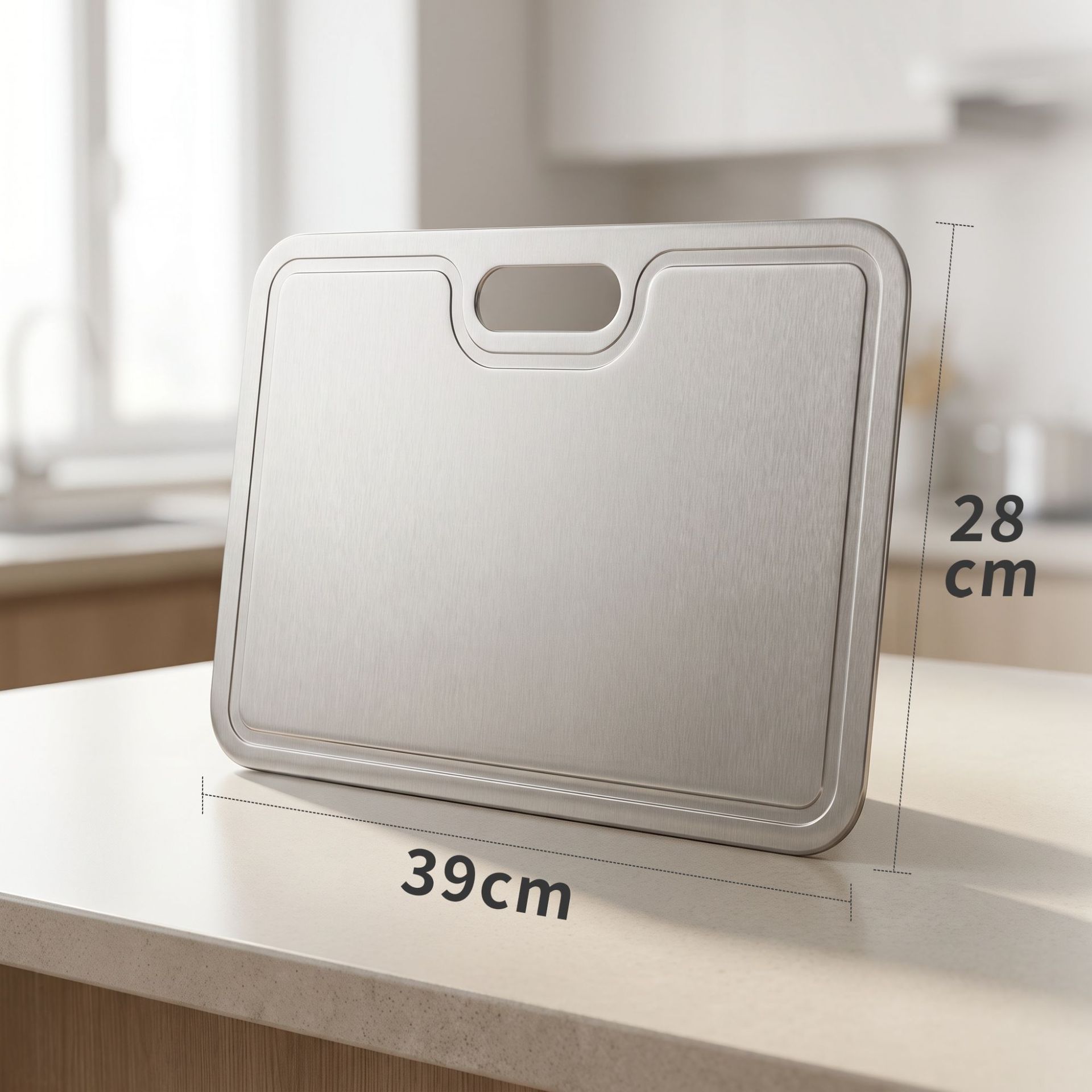
Daily cleaning is the most basic and critical part of cutting board maintenance. Timely cleaning after each use can completely avoid residue accumulation and prevent stubborn stains and bacterial breeding, laying a foundation for long-term use. The daily cleaning steps for metal cutting boards are simple, efficient, and suitable for daily family kitchen operations.
After finishing cutting vegetables, meat, fruits, or kneading dough, do not leave the cutting board idle for a long time. Food residues, especially meat protein, fruit acid, and salty seasonings, will adhere tightly to the metal surface after air-drying, increasing the difficulty of subsequent cleaning and causing local corrosion. It is recommended to rinse the stainless steel cutting board with warm water immediately after use. Warm water can soften oil stains and food residues quickly, making cleaning more labor-saving than cold water.
For ordinary daily stains and light oil stains, add a small amount of neutral mild dish soap to warm water, then wipe the board surface evenly with a soft sponge, microfiber cloth, or soft-bristled brush. Special attention should be paid to cleaning the edges, corners, and the junction of the board surface and the border, where food debris is most likely to accumulate. It is strictly forbidden to use hard cleaning tools such as steel wool, metal scouring pads, and hard plastic brushes. These abrasive tools will leave obvious deep scratches on the smooth metal surface, destroying the original anti-rust and antibacterial protective layer of the cutting board.
After scrubbing, rinse the entire cutting board repeatedly with clean running water to ensure no detergent residue remains on the surface. Detergent residue will corrode the stainless steel layer over time and affect food safety in subsequent use. After rinsing, wipe the board surface dry with a clean dry cloth immediately, or place it in a well-ventilated position for natural air drying. Never stack wet cutting boards or place them in closed kitchen cabinets without drying. Long-term humid environment will cause water scale accumulation and mold growth on the board surface, and even induce local oxidation and rust.
Daily cleaning can remove surface visible stains, but it cannot completely eliminate invisible bacteria and subtle residual dirt. To ensure the long-term hygienic performance of the stainless steel cutting board, regular deep sanitization and maintenance are required every week. This deep care can effectively remove hidden bacteria, decompose tiny residual oil stains, and restore the metal surface luster, keeping the cutting board in a sanitary standard suitable for direct food contact.
Baking soda is a natural, mild, and non-abrasive cleaning material, which is very suitable for deep maintenance of metal cutting boards. Mix baking soda and clean water in a 2:1 ratio to make a smooth paste, apply it evenly on the surface of the stainless steel cutting board, focus on smudged and dull areas, and let it stand for 10–15 minutes. The baking soda paste can effectively decompose organic residues, adsorb tiny dirt, and inhibit bacterial activity. After standing, gently scrub the board surface with a soft brush, then rinse thoroughly with warm water and dry it completely.
For cutting boards used to cut meat, seafood, and strong-flavored ingredients, odor residue is easy to remain after daily cleaning. White vinegar has excellent disinfection, sterilization, and deodorization effects. Prepare a mixed solution of white vinegar and clean water at a ratio of 1:10, soak a clean cloth in the solution, wipe the entire cutting board repeatedly, or spray the solution evenly on the board surface and let it air dry naturally. The weak acidic component of white vinegar can kill most common kitchen bacteria, decompose odor molecules, and soften faint water scale on the metal surface, making the cutting board cleaner and fresher.
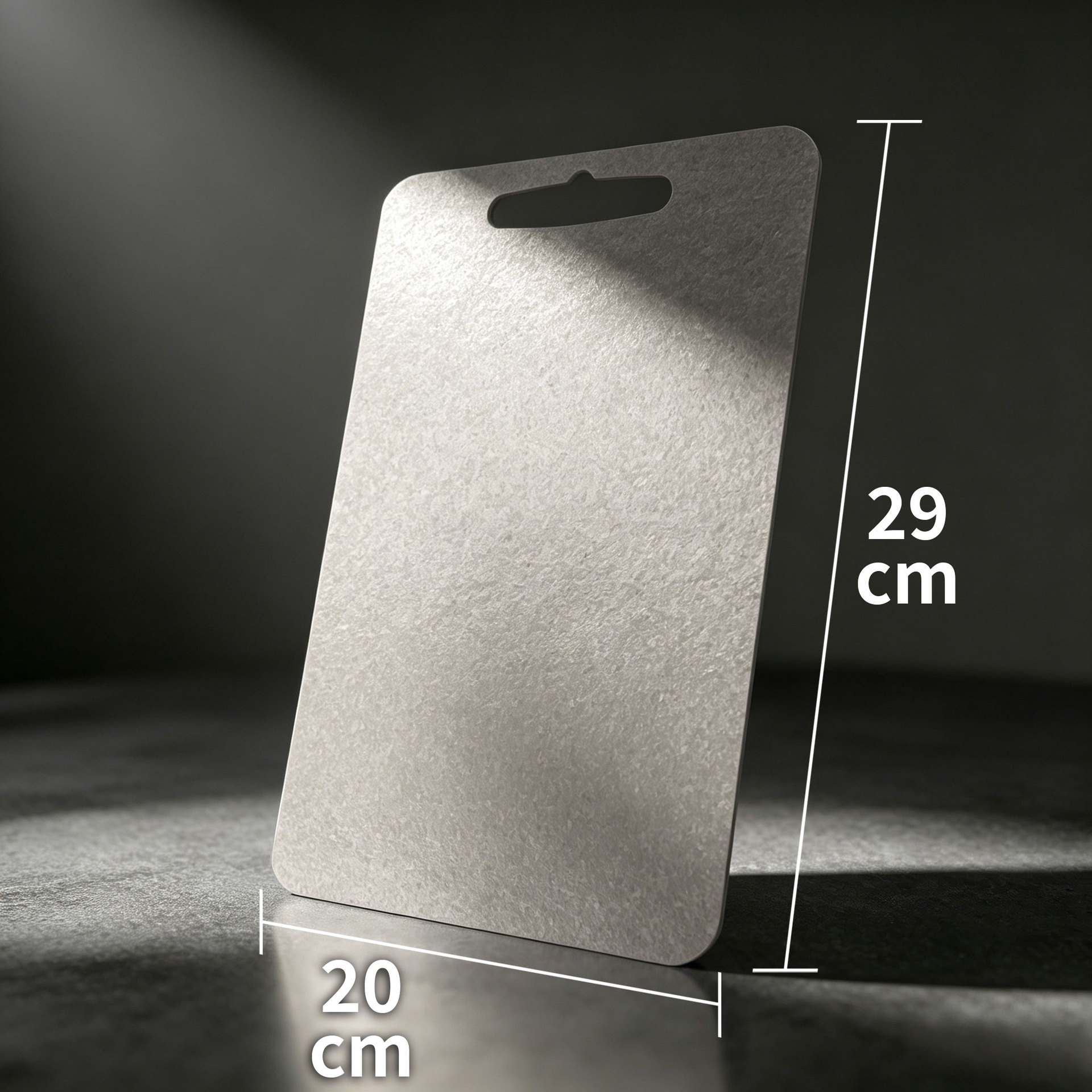
Food-grade stainless steel materials produced by Yangjiang Insight Industry And Trade Co.,Ltd. have high temperature resistance and high pressure resistance, supporting safe high-temperature sterilization. After daily cleaning and scrubbing, you can flush the cutting board with boiling water for high-temperature sterilization, or place it in a disinfection cabinet for high-temperature disinfection. It is recommended to perform high-temperature sterilization 1–2 times a week, which can completely eliminate hidden bacteria in micro-scratches and ensure the hygiene of food cutting operations. Note: Do not place the stainless steel cutting board on an open flame or high-temperature burner for direct baking, which will cause uneven heating and local deformation of the board body.
During long-term use, stainless steel kitchen boards may inevitably encounter stubborn stains, dark marks, water scale, and slight discoloration problems caused by special ingredients and environmental factors. Targeted maintenance methods can effectively solve these problems and restore the board’s original smooth and bright state without damaging the metal material.
Colorful fruits and vegetables such as strawberries, blueberries, carrots, and purple cabbage are easy to leave pigment stains on the metal cutting board. For such fresh pigment stains, wipe them with lemon slices directly after use. The natural citric acid in lemons can decompose plant pigments quickly. For aged stubborn pigment stains, apply baking soda paste and let it stand for 20 minutes, then scrub gently to remove the stains completely without leaving traces.
Long-term use of hard water for cleaning will lead to white water scale deposits on the surface of the stainless steel cutting board, affecting the appearance and smoothness of the board. Water scale is mostly mineral precipitation, which can be easily removed with weak acidic solutions. Wipe the water scale area with a white vinegar-soaked cloth, let it stand for 5 minutes, then scrub gently and rinse with clean water. After drying, the metal surface will restore uniform luster. To avoid repeated water scale accumulation, it is recommended to wipe dry in time after each cleaning to reduce residual water evaporation and mineral precipitation.
Long-term cutting operations will produce invisible micro-scratches on the cutting board surface. Slight scratches will not affect the use function and hygiene performance, but deep accumulated scratches will hide dirt. For minor scratches, you can use a special stainless steel polishing cream for gentle polishing and restoration. After polishing, clean and disinfect the cutting board completely to ensure the surface is smooth and clean again. It is worth noting that excessive polishing is not recommended to avoid thinning the surface protective layer.
Good maintenance starts with standardized use. Many damage problems of stainless steel cutting boards are caused by incorrect usage habits. As a professional Yangjiang factory with 23 years of kitchen tool manufacturing experience, we summarize the following core usage taboos to help users avoid unnecessary damage and extend the service life of cutting boards.
Although food-grade stainless steel has good corrosion resistance, long-term continuous contact with strong acid, strong alkali, and corrosive substances will damage the surface passivation layer. In daily use, avoid placing the cutting board in contact with concentrated vinegar, pickling brine, detergent stock solution, and chemical cleaning agents for a long time. After cutting acidic or salty ingredients, clean the board surface in time to avoid chemical corrosion.
Stainless steel cutting boards are tough and durable, but violent impact, heavy pressure, and arbitrary throwing will cause irreversible deformation, bending, and surface cracking. Do not knock bones violently on the thin metal cutting board, and avoid placing heavy objects on the cutting board for a long time. Flat and intact board body is the basis of long-term stable use.
To maintain the hygienic state of the stainless steel cutting board, it is recommended to implement separate cutting of raw and cooked food. Use the cutting board to cut raw meat and seafood first, then clean and disinfect it thoroughly before cutting cooked food, fruits, and ready-to-eat ingredients. This usage habit can avoid cross-contamination of bacteria and reduce the frequency of deep decontamination and maintenance.
Reasonable storage is an important part of stainless steel cutting board maintenance, which is often ignored by most users. Wrong storage methods will lead to moisture regain, mildew, rust, and deformation of the cutting board even if it is cleaned in place. Combining with the product design standards of our Yangjiang factory, we provide professional storage suggestions suitable for all types of metal cutting boards.
First, implement vertical storage. After cleaning and drying, place the stainless steel cutting board vertically on a special cutting board rack, keep the board body upright, and ensure that both sides are fully exposed to circulating air. Vertical storage can avoid long-term fitting and moisture accumulation caused by flat stacking, and effectively prevent mold and oxidation. Second, choose a dry and ventilated storage position, avoid placing it in damp corners, under the sink, or in closed cabinets for a long time. Humid kitchen environment is the main cause of metal surface rust and dullness.
In addition, for long-term unused cutting boards, after thorough cleaning, disinfection and complete drying, you can apply a thin layer of edible oil on the surface for isolation protection, then wrap it with dry dust-proof paper and store it in a dry cabinet. The edible oil isolation layer can effectively isolate air moisture and dust, prevent surface oxidation and discoloration, and keep the cutting board in good condition for the next use.
To solve users’ daily maintenance doubts more comprehensively, we sort out 5 most common questions and professional answers based on years of factory production and after-sales service experience, covering core problems such as cleaning, rust prevention, and service life.
Q1: Is it normal for a stainless steel cutting board to have slight scratches after use? A1: Yes, it is completely normal. Any cutting operation will produce micro-scratches on the surface of a metal chopping board. These subtle scratches will not hide bacteria or affect food safety, because the dense stainless steel material has no porous structure like wood and bamboo. Regular cleaning and disinfection can ensure hygiene, and slight scratches will not shorten the service life of the cutting board.
Q2: Can stainless steel cutting boards be cleaned in a dishwasher? A2: Most food-grade stainless steel cutting boards produced by regular Yangjiang factories support dishwasher cleaning. However, it is recommended to choose a mild cleaning mode and take out the cutting board immediately after the dishwasher finishes working to dry it manually. Long-term high-temperature humid environment in the dishwasher may cause water scale accumulation on the board surface, affecting the surface gloss.
Q3: Why does my stainless steel cutting board have rust spots? A3: Real food-grade stainless steel will not rust under normal use. Local rust spots are mostly caused by residual iron filings, long-term moisture accumulation, contact with corrosive substances, or damaged surface passivation layer. You can remove rust spots with baking soda paste, then disinfect and dry thoroughly, and standardize subsequent use and storage habits to avoid recurrence.
Q4: How often does a stainless steel cutting board need deep maintenance? A4: For daily family kitchen use, weekly deep sanitization and stain maintenance are sufficient. For commercial kitchens with high-frequency use such as restaurants and bakeries, it is recommended to conduct deep cleaning and disinfection every 2–3 days, and perform a comprehensive surface maintenance and polishing once a month to ensure long-term hygienic performance.
Q5: How long is the service life of a high-quality stainless steel cutting board? A5: The service life depends on material quality and maintenance habits. High-quality stainless steel cutting boards manufactured by Yangjiang Insight Industry And Trade Co.,Ltd. can be used for 5–10 years with standardized daily maintenance. Without regular maintenance, stains and scratches will accumulate rapidly, and the hygienic performance will decline, requiring replacement within 1–2 years.
A stainless steel cutting board is a practical, hygienic, and durable core kitchen utensil, and scientific daily maintenance is the best way to retain its performance advantages. From daily timely cleaning and regular deep sanitization to standardized usage habits and scientific storage methods, every maintenance detail can effectively avoid stains, scratches, oxidation, and bacterial growth, allowing the metal cutting board to maintain a smooth, safe, and brand-new state for a long time. As a professional Yangjiang-based kitchen tool factory with 23 years of manufacturing experience, Yangjiang Insight Industry And Trade Co.,Ltd. always adheres to strict production standards to provide global customers with high-quality, safe, and durable stainless steel cutting boards and kitchen tools. Combining high-quality products with standardized maintenance methods can bring users a healthier and more convenient kitchen experience.


