
- Home
- Products
- About Us
- OEM/ODM
- VR
- Resources
- Contacts


Views: 237 Author: insight-kitchenknife Publish Time: 2026-06-06 Origin: Insight knife(Isabella)


Content Menu
● Understanding >60 HRC High‑Hardness Blades
● What Is a Knife Sharpener Stick (Ceramic / Diamond)?
>> Core Definition and Working Principle
>> Why Regular Steel Rods Are Dangerous for >60 HRC
● What Is an Electric Knife Sharpener?
>> How Electric Sharpeners Affect High‑Hardness Steel
● Side‑by‑Side Comparison for >60 HRC Blades
● Recommended Usage Strategy for >60 HRC Knives
>> Daily Maintenance – Sharpening Stick as Primary Tool
>> Restricted Auxiliary Use – Electric Sharpeners
● Market Trends and Why This Choice Matters
>> Growing Demand for Sharpening Solutions
>> Expert Insight from a Knife Manufacturer
● Practical Step‑by‑Step Sharpening Workflow (Expert UX Perspective)
>> Daily Workflow with a Ceramic Stick
>> Corrective Workflow with a Premium Electric Sharpener
● OEM / ODM Perspective – Choosing the Right Sharpening Tool for Your Brand
● FAQ
Owning a high‑hardness knife (HRC 60+) transforms how you cook—but it also changes how you must sharpen. Blades made from SG2, VG10, powdered steels like M390 or S90V, and other premium alloys deliver outstanding edge retention but are more brittle and sensitive to overheating than standard stainless. In this guide, I'll compare ceramic/diamond sharpening sticks with electric knife sharpeners from both a daily user and manufacturing expert perspective, focusing on what actually protects >60 HRC blades in long‑term use.
High‑hardness blades (above 60 HRC on the Rockwell C scale) are common in Japanese chef knives, high‑carbon santoku knives, and premium stainless steel kitchen knives. At this hardness level, micro‑edge stability and heat management become decisive factors in sharpening strategy.
Key characteristics of >60 HRC blades:
- Exceptional edge retention for thin, razor‑sharp bevels in the 14–17° range.
- Higher brittleness, making the edge more prone to micro‑chipping under lateral stress.
- Greater sensitivity to thermal damage—overheating can reduce hardness and destroy temper.
From a manufacturer's perspective, factories like Yangjiang Insight Industry And Trade Co., Ltd. design and heat‑treat these blades precisely to balance hardness and toughness; careless sharpening can undo this fine‑tuned performance. That's why sharpening sticks and electric sharpeners must be evaluated not only for "sharpness" but for steel safety over the blade's lifetime.
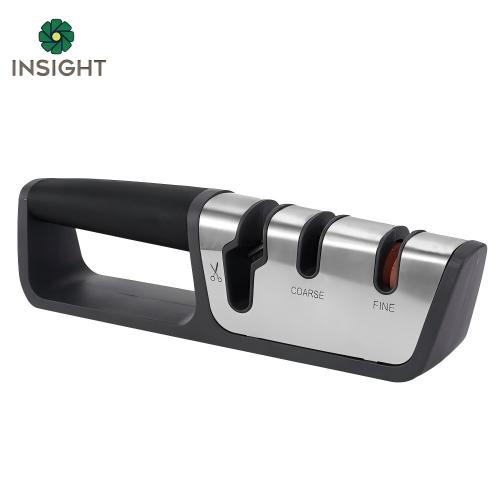
A modern knife sharpener stick for high‑hardness blades is typically:
- Ceramic stick (1000–3000 grit zirconia/alumina) – primary daily honing tool with Mohs hardness around 8.5, offering gentle micro‑abrasion and minimal metal removal.
- Diamond‑coated stick – a slightly more aggressive option, removing tiny burrs and minor edge damage for light reshaping without heavy stock removal.
Crucially, a ceramic stick mostly realigns the micro‑edge instead of grinding a new bevel, so your factory geometry stays intact. A diamond stick adds controlled abrasion when the edge needs more than simple realignment but still far less removal than an electric sharpener.
Traditional carbon‑steel honing rods are common in Western kitchens but should be avoided for high‑hardness blades above 60 HRC. Their hardness is too close to the blade, increasing the risk of micro‑fracturing the edge instead of straightening it. For SG2, VG10, or powdered steels, this can translate into visible chipping along the cutting edge.
Electric knife sharpeners fall into two broad tiers:
- Budget pull‑through electric ($30–$80) – fixed V‑slot carbide/alumina wheels, a single preset angle (usually ~20°), and aggressive metal removal.
- Premium multi‑stage electric ($150+) – systems like Chef'sChoice Trizor XV, using diamond abrasive wheels, adjustable 15°/20° guides, and staged coarse‑to‑fine grinding.
Market data shows electric sharpeners are gaining widespread adoption, especially in North America and commercial kitchens, due to their ease of use and consistent results. However, the same speed and automation that benefit softer Western steels can become a serious liability for >60 HRC blades.
Budget electric sharpeners create localized high heat at the edge because fast spinning wheels grind aggressively in a fixed slot. For high‑hardness blades, that can cause:
- Temper loss—softening the hardened steel near the cutting edge.
- Geometry distortion—forcing a 20° bevel onto a 14–17° Japanese profile, destroying the thin, laser‑like edge.
- Edge chipping due to brittle steel exposed to excessive pressure and heat.
Premium electric systems reduce but do not fully eliminate these risks; safe use requires careful control of angle, stage selection, and pass frequency.
| Aspect | Ceramic / Diamond Sharpening Stick | Electric Knife Sharpener |
|---|---|---|
| Core function | Daily honing: micro‑edge straightening, minimal metal removal. | Full sharpening: grinding a new edge, heavy stock removal on dull or damaged blades. |
| Blade safety (>60 HRC) | High safety; low heat, manual pressure control, preserves temper and geometry. | Risky, especially budget units; overheating and wrong angles can cause chipping and temper loss. |
| Angle flexibility | Fully adjustable freehand: 14–17° for Japanese, 20° for Western knives. | Mostly fixed machine angles, often locked at ~20°. |
| Material removal | Ultra‑low; ceramic ≈ zero, diamond very minimal per stroke. | High; budget devices remove 2–3× more steel per session than manual tools. |
| Edge finish | Fine polished micro‑edge with long retention (4–8 weeks post honing). | Budget: rough micro‑serrated edge, 2–3 weeks retention; premium: acceptable but coarser than sticks. |
| Speed & frequency | 3–5 strokes per side in under 2 minutes; ideal pre‑ and post‑cooking. | 1–3 minutes per knife; suited to occasional full resharpening, not daily use. |
| Cost & footprint | Compact, $15–$40, portable and power‑free. | Bulky, $30–200+, requires power and counter space. |
| Serrated compatibility | Tapered diamond stick can safely maintain serrations. | Many electric sharpeners damage serrated edges unless a dedicated slot exists. |
From a UX standpoint, sharpening sticks offer fine motor control and immediate feedback, ideal for users who value precision and edge longevity. Electric sharpeners optimize speed and convenience, which suits busy restaurants but demands strict discipline when high‑hardness blades are involved.
For high‑hardness blades, sticks should be your main maintenance solution:
1. Ceramic stick routine
- Use 5 gentle strokes per side at ~15° before or after cooking.
- Focus on consistent angle and light pressure to keep the edge aligned.
2. Diamond stick routine
- Reserve for minor chips or stubborn dullness when ceramic alone is insufficient.
- Apply light strokes every 1–2 months only, avoiding repeated heavy passes.
This approach maintains sharpness for weeks while preserving factory geometry, making it ideal for SG2, VG10, M390 and similar steels.
Guidelines for safe electric use on >60 HRC blades:
1. Budget pull‑through electric sharpeners
- For premium high‑hardness knives, they should not be used at all.
- Their fixed angle and aggressive grinding almost guarantee long‑term damage.
2. High‑end adjustable‑angle electric sharpeners
- Only consider them when a blade has serious, visible damage (broken edge, deep nicks).
- Skip coarse grinding stages and use a single slow pass per side in the fine diamond slot, at most once every six months.
In other words, sharpening sticks are the everyday tool; electric units are the emergency room.
The global knife sharpener and honer market was valued at USD 780 million in 2025 and is projected to grow to USD 1,087.79 million by 2031, with a CAGR of 5.7%. This growth is driven by rising adoption of premium kitchen knives, an expanding restaurant industry, and a surge in home cooking culture worldwide.
Electric sharpeners are gaining significant ground because they deliver consistent results without demanding specialized skills, especially in North America's high‑volume foodservice sector. At the same time, professional chefs still favor manual tools—sticks, stones, and guided systems—for precision, control, and steel safety, especially on high‑end blades.
Yangjiang Insight Industry And Trade Co., Ltd. has over two decades of experience in designing and producing high‑carbon santoku knives, stainless chef knives, and related kitchen tools, with a monthly capacity of about 5 million pieces for OEM and ODM clients worldwide. That scale forces manufacturers to think beyond basic "sharp vs. dull," focusing instead on:
- Edge lifecycle—how sharpening choices affect years of use.
- Compatibility—matching abrasive hardness and grit to blade steel and target HRC.
- User safety—reducing chipping and unexpected edge failures in both home and professional settings.
From this vantage point, sharpening sticks sit closer to the design intent of high‑hardness blades, while electric sharpeners must be treated as specialist gear, not everyday maintenance.
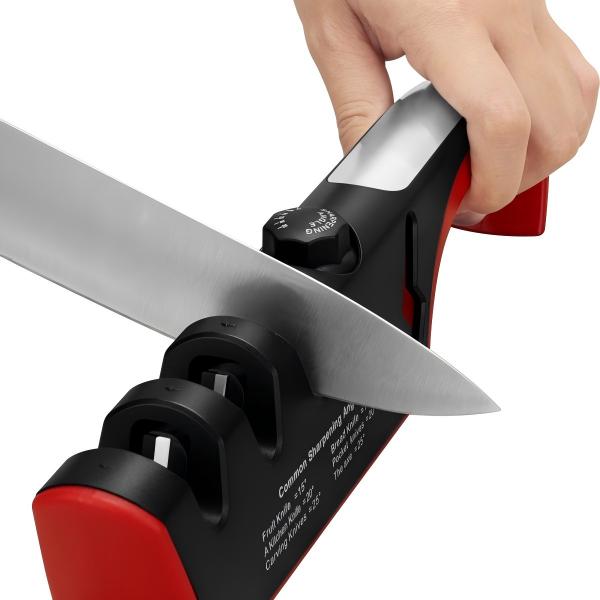
For a home cook or chef using >60 HRC knives:
1. Check the edge
Lightly slice a tomato or paper; if the blade snags, it needs honing.
2. Set the angle
Hold the knife at roughly 15° to the ceramic stick for Japanese or high‑hardness blades.
3. Controlled strokes
Apply 5 slow, even strokes per side, maintaining angle and minimal pressure.
4. Rinse and dry
Clean the blade to remove any residue and dry fully to avoid corrosion.
This simple loop keeps performance high while avoiding unnecessary steel removal or heat exposure.
If the knife has severe chips:
1. Confirm compatibility
Ensure the device offers a 15° setting and diamond fine stages.
2. Skip coarse stage
Use only fine or polishing wheels to minimize stock removal and heat.
3. Single slow pass
Draw the knife through each side once, monitoring temperature by touch; stop if the edge feels warm.
4. Return to stick maintenance
After geometry is restored, switch back to ceramic/diamond sticks for long‑term care.
For knife brands working with OEM/ODM partners like Yangjiang Insight, sharpening strategy is now part of product positioning. When configuring a premium >60 HRC line, manufacturers can:
- Bundle ceramic or diamond sticks as the standard maintenance accessory, aligning with the blade's hardness and angle.
- Provide clear usage guidelines warning against budget electric sharpeners and outlining safe scenarios for premium electric devices.
- Offer training content or QR‑linked videos showing correct stick techniques and emergency resharpening processes.
This not only protects the blade but also reduces warranty issues and reinforces the brand's image as a technical authority in high‑end knife care.
For >60 HRC high‑hardness blades, ceramic and diamond sharpening sticks should be your default, everyday maintenance tools, keeping edges sharp, geometry intact, and steel temper uncompromised. Electric knife sharpeners—especially budget models—should be either avoided or used only in tightly controlled, infrequent corrective scenarios with high‑end adjustable devices.
Q1: Can I use a budget electric sharpener on my >60 HRC Japanese knife?
A1: No. Budget electric sharpeners with fixed 20° slots and aggressive wheels carry a high risk of overheating and grinding away the thin 14–17° bevel on high‑hardness steel.
Q2: How often should I use a ceramic sharpening stick on a high‑hardness blade?
A2: For regular home or professional use, light honing with a ceramic stick before or after cooking—just a few strokes per side—is sufficient to maintain sharpness for weeks.
Q3: When is a diamond sharpening stick necessary?
A3: Use a diamond stick only when the edge shows minor chips or fails to respond to ceramic honing; it offers controlled abrasion for small repairs without resorting to full machine grinding.
Q4: Are electric sharpeners ever safe for >60 HRC knives?
A4: Premium electric units with adjustable angles and fine diamond stages can be conditionally safe if you skip coarse wheels and limit use to rare, serious damage cases.
Q5: Why do manufacturers recommend sticks over electric devices for high‑hardness blades?
A5: Because sticks preserve factory geometry, minimize thermal risk, and align with how >60 HRC steels are engineered to perform over their service life, reducing complaints and warranty issues.
1. Insight Kitchen Knife – *"Knife Sharpener Stick vs. Electric Knife Sharpeners for >60 HRC High‑Hardness Blades"* (2026). [https://www.insight-kitchenknife.com/knife-sharpener-stick-vs-electric-knife-sharpeners-for-60-hrc-high-hardness-blades.html] [insight-kitchenknife]
2. Deep Market Insights – *"Knife Sharpener and Honer Market Size, Share & Growth Report"* (2026). [https://deepmarketinsights.com/report/knife-sharpener-and-honer-market-research-report] [insight-kitchenknife]
3. Insight Kitchen Knife – *Company and OEM/ODM Service Overview*. [https://www.insight-kitchenknife.com] [insight-kitchenknife]
4. Parse.ai – *"What AI Says About Insight Kitchen Knife"* – manufacturer profile. [https://parse.gl/brands/insight-kitchenknife-com] [parse]
5. Mastergrade – *"Which Sharpening Sticks are Right for Your Professional Kitchen?"* (2023) – hardness and stick selection. [https://mastergrade.net/sharpening-sticks-right-professional-kitchen] [mastergrade]


