
- Home
- Products
- About Us
- OEM/ODM
- VR
- Resources
- Contacts


Views: 444 Author: Site Editor Publish Time: 2026-08-31 Origin: Site


Content Menu
● Vegetable Peeler VS Paring Knife: Head-to-Head Practical Comparison
>> Quantifying Food Waste: How Tool Choice Impacts Your Grocery Budget
● 5 Core Reasons Why a Vegetable Peeler Is a True Kitchen Essential
● Deep-Dive: Major Types of Vegetable Peelers & Their Best-Fit Scenarios
>> Y-Shaped (Y-Peeler / Swiss-Style Peeler)
● Special Section: Real-World Step-by-Step Peeler Best Practices (Unique Value-Add Section)
● Buying Guide: Key Criteria to Pick a Durable, High-Performance Vegetable Peeler
● Frequently Asked Questions (FAQ)
>> Q1: Can I just rely on my paring knife and skip buying a vegetable peeler?
>> Q2: How frequently should I replace my vegetable peeler?
>> Q3: Are expensive peelers always better than budget-priced options?
>> Q4: Can vegetable peelers go in the dishwasher?
>> Q5: Can a vegetable peeler make julienne strips for salad?
Every kitchen drawer holds dozens of tools, yet few receive less respect than the vegetable peeler. Many home cooks default to a paring knife to remove skin from potatoes, carrots, apples and squash, assuming a small sharp knife can handle every peeling job equally well. But industry chefs and kitchen-tool manufacturing experts agree: a quality vegetable peeler is not a luxury gadget, it is a core kitchen essential that saves time, cuts food waste, improves safety and delivers consistent results for daily meal prep.
This article compares vegetable peeler vs paring-knife peeling from real-world cooking performance, safety, food waste, ergonomics and long-term durability. Content draws on professional kitchen testing, global kitchen-tool market data, and manufacturing expertise from Yangjiang Insight Industry And Trade Co.,Ltd., a 23-year-old OEM & ODM producer of chef knives, santoku knives, bread knives, paring knives and kitchen prep tools with a 20 000 m² factory and monthly output up to 5 million pieces. By the end, you will understand exactly why a vegetable peeler belongs in every home and commercial kitchen, plus how to select one built for real-world use.

Many cooks treat peeling as a task any sharp small knife can complete. However, there are measurable gaps between using a dedicated vegetable peeler and peeling with a standard paring knife. Below is a side-by-side performance comparison covering daily-kitchen criteria.
Evaluation Item | Vegetable Peeler | Paring Knife for Peeling |
Peeling Thickness Control | Thin, uniform peel; removes only skin, minimal edible flesh loss | Hard to control depth; often slices off thick layers of usable produce |
Processing Speed | Fast for batch prep; long continuous strokes | Slow; requires repeated small knife cuts |
Safety Risk | Blade design keeps fingers offset from cutting edge; lower slip-cut risk | High injury risk; sharp exposed point, easy slippage on wet slippery produce |
Hand-Fatigue Level | Ergonomic handle shapes reduce wrist strain for large-volume prep | Pen-grip creates high wrist load over extended peeling sessions |
Result Consistency | Uniform peel suitable for salads, garnish ribbons | Uneven surface; more follow-up trimming required |
Multi-task Extra Functions | Zest citrus, create vegetable ribbons, julienne strips, remove potato eyes | Limited to trimming and cutting |
Clean-up Complexity | Simple rinse; many models dishwasher-safe | Peel scraps stick to blade; more post-task cleaning |
Key takeaway: A paring knife is brilliant for trimming, coring and fine detail work, but it is sub-optimal as your primary peeling tool. A vegetable peeler is purpose-built for skin-removal workflows.
Independent kitchen-prep testing indicates that peeling vegetables with a paring knife can generate up to 30 % more food waste compared to a well-tuned vegetable peeler, because users carve away significant edible flesh alongside skin. For households peeling root vegetables several times each week, that wasted produce adds measurable cost to monthly grocery spending. For restaurants and catering kitchens, this waste multiplies across high-volume ingredient batches, directly affecting food-cost margins.
Expert note (manufacturing perspective): Many cheap peelers on the market have misaligned or dull blades that mimic this same waste problem. Sharp, precisely-aligned blade geometry is the core engineering feature that separates low-cost throwaway peelers from reliable OEM-grade kitchen tools.
Beyond simple speed gains, a quality vegetable peeler solves multiple real-world pain points for home cooks and professional chefs alike.
1. Dramatically improves kitchen safety during food prep Sharp paring-knife slippage on wet potatoes, cucumbers or apples is one of the most common minor kitchen-cut accidents. Vegetable peelers position the cutting edge away from fingertips. Even beginner cooks can peel large quantities with far lower risk of lacerations.
2. Reduces food waste and protects nutrition Fruit and vegetable outer layers hold concentrated vitamins and phytochemicals. When you strip thick layers with a paring knife, you throw away valuable nutrition alongside flesh. A good peeler shaves only thin skin, preserving more edible, nutrient-rich material.
3. Versatility far beyond basic skin removal A high-performance vegetable peeler does much more than peel potatoes:
· Create zucchini or carrot ribbons for salads
· Shave hard-cheese flakes and chocolate garnish for desserts
· Zest citrus fruit without digging into bitter white pith
· Remove blemishes and potato eyes
· Julienne-style peelers produce fine match-stick vegetable strips for stir-fries
1. Ergonomic design lowers hand and wrist strain For meal-prep enthusiasts, family cooking or commercial kitchen shifts, repetitive peeling creates wrist stress. Modern peelers come with non-slip soft-touch handles engineered for long-duration use. This is especially meaningful for users with mild joint discomfort or arthritis-related grip limits.
2. Compact, affordable, high-return kitchen investment Unlike bulky electric prep gadgets, manual vegetable peelers occupy minimal drawer space. Premium well-built manual peelers deliver multi-year service without power consumption or complex maintenance. According to global kitchen-tool market analysis, manual vegetable peelers continue to dominate consumer purchases over electric alternatives, holding 46.2 % market share within the peeler category in 2025.
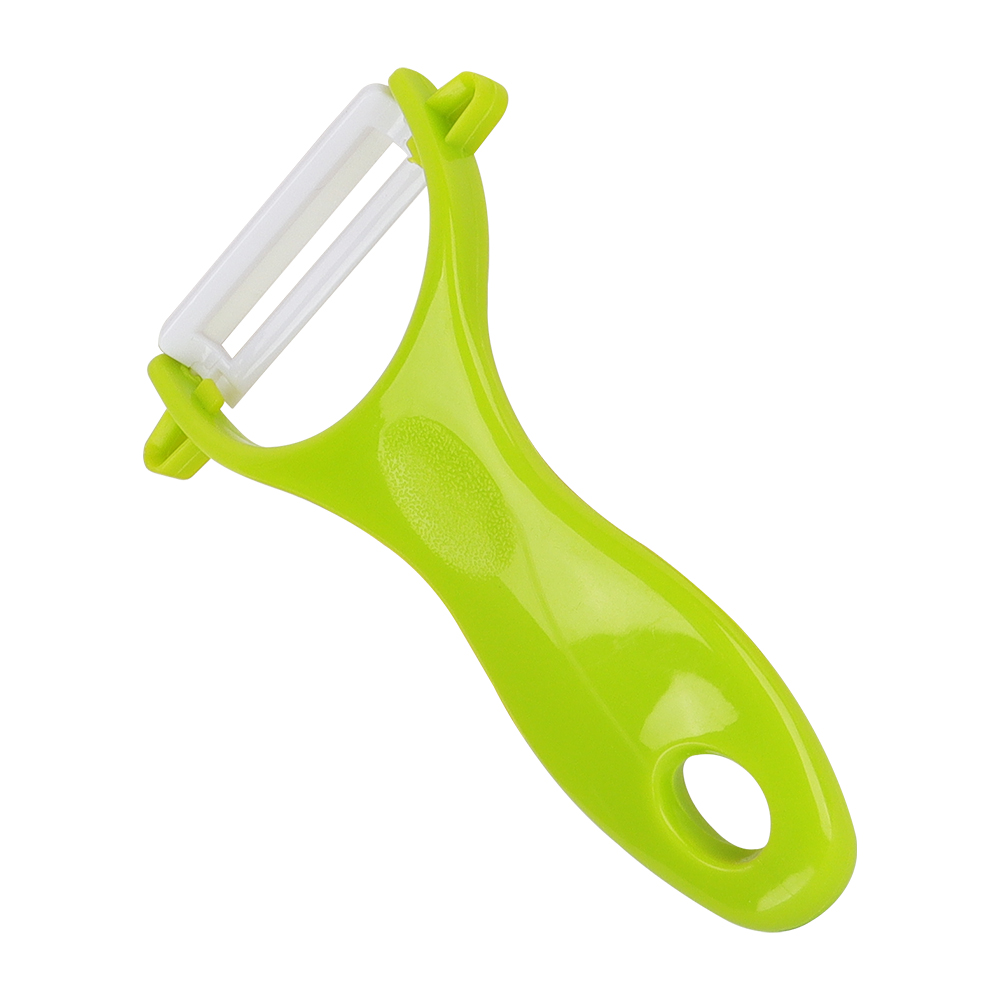
Not all vegetable peelers perform equally. The three dominant styles serve different cooking needs, and many serious kitchens keep two variants on-hand.
· Blade sits horizontally across a Y-frame; you pull towards your body
· ✅ Best for: large, firm root vegetables: butternut squash, sweet potato, large potatoes, carrots
· ✅ Pros: strong leverage, excellent for high-volume batch prep, fast on broad curved surfaces
· ❌ Cons: bulkier storage footprint; carbon-steel variants require hand-washing to prevent rusting
· Blade runs parallel to handle; swivels to follow produce contours
· ✅ Best for: apples, cucumbers, small round vegetables, general everyday home-kitchen use
· ✅ Pros: slim profile, drawer-friendly storage, intuitive pen-style grip for most users
· ❌ Cons: demands more wrist movement on very large, thick-skinned vegetables
· Saw-tooth cutting edge that bites slippery soft surfaces
· ✅ Best for: soft-skin produce: ripe tomatoes, peaches, plums, mangoes
· ✅ Pros: grips slippery fruit skins without crushing soft flesh
· ❌ Cons: poor performance on hard root vegetables; leaves textured surface on firm veggies
Industry practitioner insight (OEM manufacturing): Many brand owners commission mixed-set peeler packs containing swivel + Y-peeler + serrated blades to cover nearly all household peeling scenarios. At Yangjiang Insight Industry And Trade Co.,Ltd., we produce custom multi-function peeler sets for global kitchen-ware brands, with options for stainless-steel blades, PP / TPR ergonomic handles and custom laser-etched logos.
Even the highest-quality vegetable peeler delivers poor results with incorrect technique. Follow these simple steps to maximize performance and safety:
1. Secure your fruit or vegetable on a stable cutting-board surface. Hold firmly but do not expose fingertips in the path of the blade.
2. For Y-peeler: hold produce in one hand, pull the peeler steadily toward your body in long, smooth strokes.
3. For swivel peeler: glide along the vegetable surface, letting the swivel blade follow natural curves. Do not apply excessive force.
4. For soft fruits with serrated peeler: use light pressure; aggressive pressure will gouge flesh.
5. After finishing: use the small built-in tip notch to dig out potato eyes and dark blemishes.
6. Cleaning: Rinse immediately after use. Carbon-steel blades must be dried right after washing. Many stainless-steel-blade peelers support dishwasher cleaning, though hand-wash extends service life.
Warning sign to replace your peeler: When the blade skips across skin, tears produce instead of slicing cleanly, or requires heavy pushing to cut. A dull peeler is not just inefficient — it increases slip-and-cut accident risk.
The global vegetable-peeler market size reached USD 1.8 billion in 2025 and is projected to grow at a 5.4 % CAGR through 2034, driven by rising interest in home cooking, meal-prep culture and improved ergonomic gadget design. Manual peelers remain mainstream, while multi-function models with interchangeable blades show fast-growing OEM order volume.
As a 23-year-old Chinese kitchen-tool manufacturer, Yangjiang Insight Industry And Trade Co.,Ltd. observes clear customer trends from global brand partners:
· Buyers increasingly request food-safe PP / TPR non-slip handles instead of rigid plain plastic for improved grip comfort.
· Stainless-steel blade specifications dominate mass-market orders; carbon-steel Y-peelers target premium niche segments.
· Multi-blade 3-in-1 peelers combining standard, serrated and julienne functions are among the fastest-moving custom-ODM projects for both retail and HORECA hospitality clients.
This manufacturing-sector perspective confirms: consumers and commercial buyers recognize the vegetable peeler as a high-utility kitchen staple rather than a trivial impulse gadget.
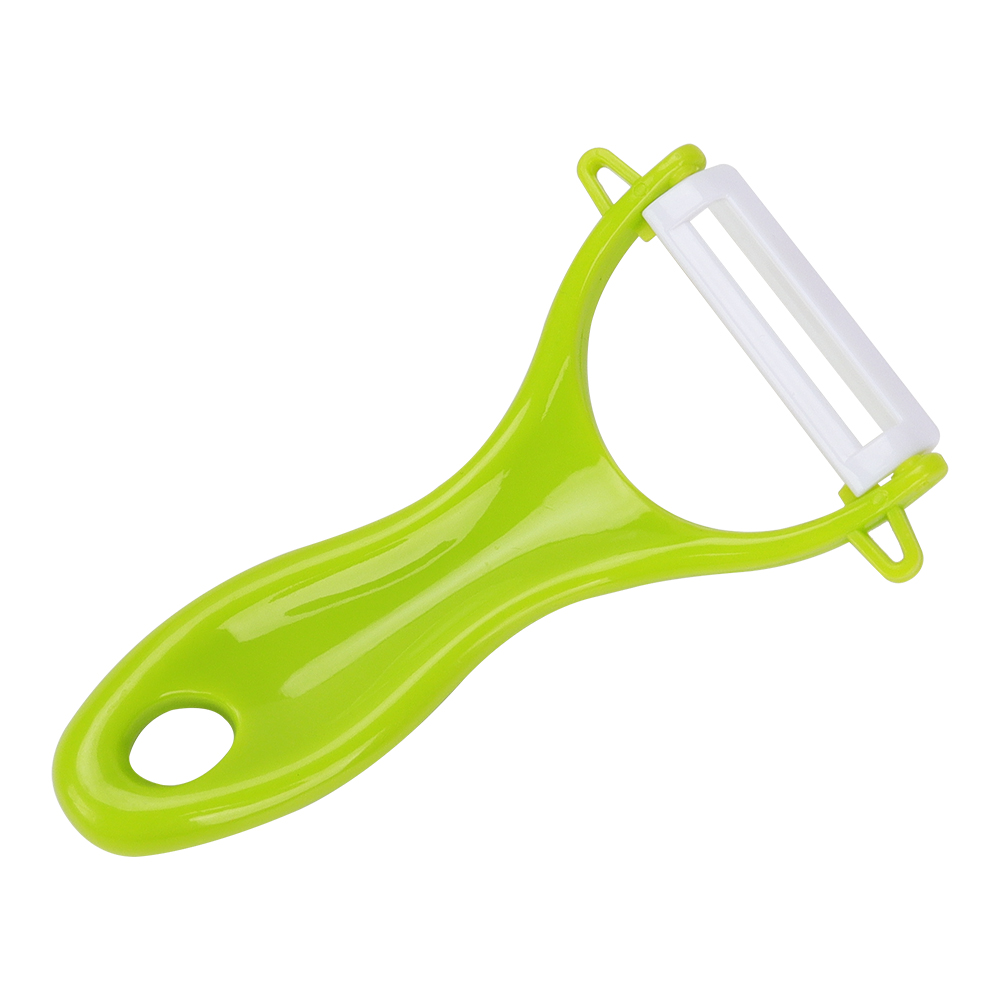
Avoid disposable-grade peelers that dull after a few weeks of use. Evaluate these points before purchasing:
· Blade material: Food-grade stainless-steel = low-maintenance; carbon-steel = exceptional sharpness but requires careful drying.
· Handle build: Prioritize non-slip ergonomic TPR or PP handles for secure grip when wet. Flimsy thin plastic handles fail quickly.
· Blade construction: Check smooth swivel movement for swivel-style peelers; no wobble on Y-peeler blade mounting.
· Use-case matching: Home users: consider one swivel peeler for daily tasks plus one serrated peeler if you regularly peel soft ripe fruit. Heavy-meal-prep users: add a Y-peeler.
· Safety details: Blade-storage guards, hanging loops for convenient drawer or hook storage are practical bonus features.
CTA (Call-to-Action): If you represent a kitchen-ware brand, retailer or HORECA buyer seeking reliable OEM & ODM vegetable peelers, paring knives and full kitchen-tool ranges, connect with Yangjiang Insight Industry And Trade Co.,Ltd. Our 20 000 m² production facility supports custom material selection, handle customization, laser-logo engraving and complete compliance documentation for global markets.
A: You can technically peel produce with a paring knife, but you accept higher injury risk, more food waste and slower prep speed. A paring knife excels at trimming and coring; a dedicated peeler is optimized for skin-removal tasks. Most cooking professionals recommend owning both tools.
A: For home cooks cooking 3-5 times weekly, a quality peeler lasts 1-2 years. Replace as soon as blades skip, tear skins or need heavy pressure to cut. Dull peelers are safety hazards.
A: Not exactly. Ultra-cheap low-end peelers often have poor-grade blades and brittle handles. A mid-range price bracket delivers most value. The most important factors are blade material and build quality, not brand-name premium pricing.
A: Many stainless-steel-blade peelers are dishwasher-safe. Carbon-steel peelers must be hand-washed and dried immediately to prevent rust. Always check product-spec labels for your specific model.
A: Only dedicated julienne-blade peelers can create clean match-stick strips. Standard straight or Y-peelers make broad thin ribbons, not narrow julienne cuts. Multi-blade combo peelers offer this functionality in one tool.
1. Food Network. (2026). 4 Best Peelers of 2026, Tested and Reviewed. https://www.foodnetwork.com/how-to/packages/shopping/product-reviews/best-vegetable-peelers
2. Kitcheninsides. (2025). Best Techniques for Using a Vegetable Peeler for Fruits and Vegetables. https://kitcheninsides.com/2025/12/06/best-techniques-for-using-a-vegetable-peeler-for-fruits-and-vegetables-the-ultimate-guide-to-mastering-your-kitchen-tool/
3. Quickkitchentools. (2026). How to Choose the Right Type of Peeler. https://quickkitchentools.com/food-prep-tools/how-to-choose-the-right-type-of-peeler/
4. Dataintelo. (2026). Vegetable Peeler Market Research Report 2034. https://dataintelo.com/report/global-vegetable-peeler-market
5. The Peak Dream. (2025). 5 Best Vegetable Peelers: Y-Peeler vs. Swivel. https://thepeakdream.com/2024/10/09/the-5-best-vegetable-peelers-on-amazon/
6. Search Engine Land. (n.d.). An SEO guide to understanding E-E-A-T. https://searchengineland.com/guide/google-e-e-a-t-for-seo


