
- Home
- Products
- About Us
- OEM/ODM
- VR
- Resources
- Contacts


Views: 666 Author: Site Editor Publish Time: 2026-07-16 Origin: Site


Content Menu
● 1. The Irreplaceable Core Value of Kitchen Knives
>> 1.1 Precision Control for Diversified Ingredient Processing
>> 1.2 Flexibility and Adaptability for Complex Cooking Scenarios
>> 1.3 Safety and Health Advantages of Manual Fine Cutting
● 2. Functional Classification of Professional Kitchen Knives and Their Unique Roles
>> 2.1 Multi-functional Chef’s Knife: The Core Tool of All Kitchens
>> 2.2 Paring Knife: Precision Tool for Fine Ingredient Processing
>> 2.3 Serrated Knife: Special Tool for Tough and Crispy Ingredients
>> 2.4 Boning Knife and Utility Knife: Professional Tools for Meat Processing
● 3. Why Modern Kitchens Cannot Abandon Traditional Kitchen Knives
>> 3.1 Incomparable Flexibility of Manual Knife Work
>> 3.2 Economic and Efficient Tool Attributes of Kitchen Knives
>> 3.3 Cultural Inheritance Value of Traditional Knife Skills
● 4. Professional OEM Kitchen Knife Manufacturing Empowers Global Kitchen Industry
>> 4.1 Professional Manufacturing Strength Ensures Product Quality
>> 4.2 Diversified OEM Customization Services Meet Global Market Needs
>> 4.3 Strict Quality Control and Efficient Supply Chain System
● 5. Common Questions About Kitchen Knives and Industry OEM Services
The kitchen is the heart of every home, restaurant, and food processing facility across the world. It is a space where raw ingredients transform into flavorful, nutritious, and visually appealing meals that sustain human life and enrich daily living. Among countless kitchen tools and appliances that support food preparation, kitchen knives stand out as the most fundamental, irreplaceable, and longstanding essential. From ancient primitive cutting tools to modern precision-engineered cutlery, kitchen knives have accompanied the evolution of cooking culture and culinary technology for thousands of years. This article deeply explores the indispensable role of kitchen knives in kitchen work, analyzes why no kitchen can operate efficiently and professionally without qualified cutlery, and introduces professional OEM kitchen knife manufacturing services that support global kitchen industry development, represented by Yangjiang Insight Industry & Trade Co., Ltd.
Many people mistakenly believe that modern electric kitchen appliances can completely replace manual kitchen knives. With the popularity of food processors, blenders, slicers, and choppers, a growing number of kitchen users tend to rely on automated equipment to complete ingredient processing work. However, no intelligent mechanical equipment can fully replicate the flexibility, precision, and diversity of manual knife work, nor can it replace the core value of kitchen knives in refined cooking. A qualified kitchen knife is not merely a cutting tool, but an extension of the cook’s hands and the foundation of all fine food production.
Different ingredients require completely different processing methods and cutting specifications to achieve the best cooking effect and taste performance. Vegetables, fruits, meat, seafood, and grains all have unique tissue structures, hardness, and water content, which demand targeted cutting techniques. Electric kitchen appliances often adopt single and fixed cutting modes, which can only complete rough chopping, crushing or slicing, and cannot meet the refined processing needs of complex cooking scenarios.
In professional culinary production, the size, thickness, and shape of ingredient cuts directly determine the heat absorption efficiency, flavor integration degree, and final taste of dishes. Fine shredding enables ingredients to fully contact seasonings and absorb flavors evenly; uniform slicing ensures consistent heating speed and avoids partial overcooking or undercooking; precise dicing guarantees the coordination of various ingredients in mixed dishes. Only manual cutting with high-quality kitchen knives can achieve such flexible and precise processing effects. Without kitchen knives, all refined ingredient processing will become impossible, and cooking will be reduced to simple rough processing, completely losing the delicacy and layering of gourmet food.
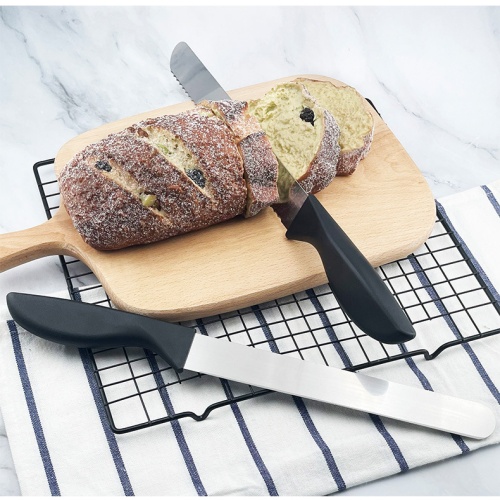
Kitchen cooking scenarios are highly diverse and changeable, covering simple daily home cooking, exquisite Western formal dining, complex Chinese stir-fry cuisine, professional restaurant batch production, and high-end dessert making. Different scenarios put forward personalized and variable requirements for ingredient processing, which cannot be fully adapted by fixed mechanical equipment.
Kitchen knives feature strong flexibility and wide adaptability. A single multi-functional chef’s knife can complete multiple operations such as chopping, slicing, dicing, mincing, and peeling, while matching professional paring knives, serrated knives, and boning knives can cope with all ingredient processing links from small fruit peeling to large meat deboning. In temporary and variable cooking demands, manual knife work can adjust cutting methods in real time according to ingredient states and cooking needs, which is far more flexible than mechanical equipment. For small-batch, diversified, and refined cooking scenarios, kitchen knives are the most efficient and practical tool choice that no equipment can replace.
Many people worry about the safety risks of using kitchen knives, but in fact, standardized manual knife operation is more conducive to food safety and health compared with mechanical processing. Electric processing equipment is prone to residual food residues in internal gaps, which are difficult to clean thoroughly and easy to breed bacteria and mold, bringing hidden dangers to food health. In addition, high-speed mechanical cutting will destroy the cellular structure of ingredients in large areas, leading to the loss of water, vitamins, and nutrients of ingredients, reducing the nutritional value and fresh taste of food.
High-quality kitchen knives with smooth blade surfaces and seamless structures are easy to clean and maintain, effectively avoiding bacterial growth. Standard manual cutting can accurately control the cutting depth and range, minimize the damage to ingredient cells, retain the maximum moisture and nutritional components of ingredients, and ensure the fresh taste and nutritional value of dishes. At the same time, reasonable knife operation can avoid excessive crushing of ingredients, prevent the mixing of ingredient juices and residual impurities, and make food production cleaner and healthier.
A complete kitchen tool system requires a variety of professional kitchen knives with differentiated functions. Different types of kitchen knives have been professionally designed for specific processing scenarios, forming a comprehensive ingredient processing system. Each type of kitchen knife has irreplaceable functional advantages, and the absence of any category will lead to missing links in kitchen processing work, making it impossible to complete standardized and refined cooking. As a professional Chinese kitchen knife OEM manufacturer, Yangjiang Insight Industry & Trade Co., Ltd deeply understands the functional differentiation of kitchen knives and provides customized production services of various professional cutlery for global brand merchants, wholesalers, and manufacturers.
The chef’s knife is the most versatile and essential tool in the entire kitchen knife system, suitable for most daily and professional cooking scenarios. It is designed with a balanced blade radian and scientific handle proportion, which can perfectly adapt to repeated chopping, slicing, and dicing operations of vegetables, fruits, and meat. High-quality chef’s knives adopt high-hardness steel materials and fine polishing technology, with sharp and durable blades, comfortable grip, and good stability during operation.
Whether it is family daily meal preparation or professional kitchen batch cooking, the chef’s knife can efficiently complete most ingredient processing work. Without a qualified chef’s knife, kitchen staff can only rely on crude alternative tools for processing, which is not only low in efficiency and uneven in cutting effect, but also easy to cause ingredient waste and affect the overall cooking progress. It is no exaggeration to say that the chef’s knife is the core pillar of kitchen cutting work and the most basic guarantee for smooth cooking.
The paring knife is a small precision kitchen knife specially used for fine processing of small ingredients. Its short and delicate blade is flexible and easy to control, suitable for fruit and vegetable peeling, core removing, fine slicing, and shape trimming. In gourmet cooking and exquisite dessert production, the fine processing of ingredients directly affects the appearance and taste of dishes, and the paring knife plays an indispensable role in this link.
Many delicate fruits and vegetables have fragile textures and complex shapes. Large knives and mechanical equipment are easy to cause ingredient damage and shape destruction during processing. Only the paring knife can complete precise and delicate processing operations, retain the complete shape of ingredients, and create exquisite dish styling. In high-end catering and creative cuisine production, the paring knife is an essential tool to reflect cooking refinement and professionalism.
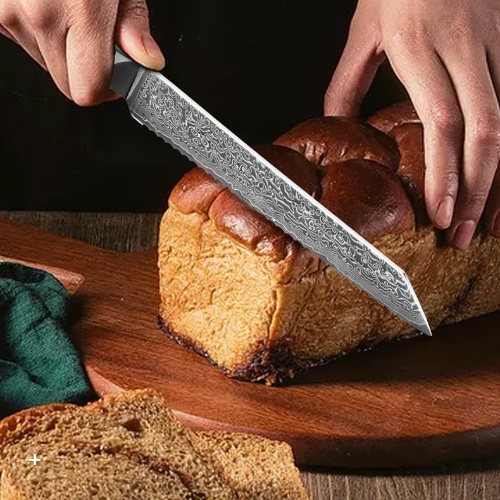
Serrated knives are professionally designed for cutting tough, crispy, and soft ingredients that are difficult to process with flat blades, such as bread, cakes, crusty pastries, and soft fruits. The serrated structure of the blade can bite the surface of hard and crispy ingredients, avoid sliding during cutting, and achieve flat and neat cutting sections without squeezing and damaging the internal soft texture of ingredients.
Ordinary flat blades are prone to crushing bread and pastries when cutting, resulting in messy sections and damaged taste. Mechanical cutting equipment cannot adapt to the soft and tough dual characteristics of such ingredients. The serrated knife perfectly solves this processing problem and is an essential professional tool for bakery kitchens, dessert shops, and daily family baking processing.
Boning knives and utility knives are specialized tools for meat and seafood processing. The boning knife features a thin, flexible, and sharp blade, which can closely fit the bone surface, accurately separate meat and bones, minimize meat waste, and is suitable for fine deboning of chicken, duck, fish, and various meats. The multi-functional utility knife integrates multiple processing functions and can complete medium-sized ingredient cutting, trimming, and finishing work, filling the functional gap between chef’s knives and small precision knives.
In commercial kitchens, meat processing is one of the core daily work contents. Professional boning knives and utility knives can greatly improve meat processing efficiency, reduce raw material waste, and ensure the neat and standardized shape of meat ingredients. Without these professional kitchen knives, meat processing can only rely on rough cutting, which will cause a large amount of raw material loss and fail to meet the ingredient standard requirements of professional catering production.
With the continuous upgrading of kitchen intelligence, many people believe that traditional manual kitchen knives will be gradually eliminated by automated equipment. But in fact, intelligent kitchen appliances only assist in partial rough processing work, and cannot replace the dominant position of kitchen knives in refined cooking and professional kitchen work. The combination of manual fine cutting and mechanical auxiliary processing is the most scientific and efficient kitchen operation mode, and kitchen knives will always be the irreplaceable core tool of the kitchen.
The core advantage of kitchen knives lies in humanized flexible operation. Cooking is a creative and experiential work, not a rigid mechanical repetition. Different ingredients have different freshness, hardness, and water content, and different dishes require different cutting textures and shapes. Experienced cooks can adjust cutting strength, angle, and speed in real time according to the actual state of ingredients through holding kitchen knives, so as to achieve the best processing effect.
Intelligent equipment can only operate according to fixed programs and parameters, lacking the ability of real-time adjustment and flexible adaptation. For ingredients with inconsistent individual states, mechanical processing is prone to uneven cutting, ingredient damage, or incomplete processing. Manual knife work can perfectly adapt to various variable ingredient states and cooking needs, ensuring the personalization and refinement of dish production, which is the core reason why modern professional kitchens still rely heavily on high-quality kitchen knives.
Compared with expensive, high-energy-consuming, and space-occupying intelligent kitchen equipment, kitchen knives have extremely high economic efficiency and practicability. A complete set of high-quality kitchen knives can meet all daily and professional cooking processing needs, with one-time purchase and long-term use, no subsequent energy consumption, and low maintenance cost. It is more convenient and faster to operate for small-batch and temporary ingredient processing, avoiding the tedious steps of equipment startup, parameter adjustment, and post-use cleaning and maintenance.
For family kitchens, small and medium-sized catering institutions, and food processing workshops, kitchen knives are the most cost-effective and efficient cutting tools. Even for large professional kitchens, kitchen knives are still the mainstream processing tools for refined operations, and intelligent equipment is only used for batch rough processing. The economic and practical attributes of kitchen knives determine that they will never be eliminated by the market and will always be essential tools for kitchen operation.
Cooking is a kind of traditional culture and craft inheritance, and knife skill is an important part of culinary culture. Whether it is Chinese traditional cuisine with exquisite knife skills or Western standardized fine cooking, unique cutting techniques and knife work aesthetics have been formed in the long-term development. Exquisite knife skills can not only optimize the taste and appearance of dishes, but also reflect the professionalism and artistic sense of cooking.
The inheritance of knife skills is based on professional kitchen knives. High-quality cutlery can help cooks better display cutting skills and inherit culinary culture. Abandoning kitchen knives and relying entirely on mechanical equipment will make cooking lose its manual craft attributes and cultural connotation, and culinary culture will lose its most important practical carrier. Therefore, from the perspective of cultural inheritance, modern kitchens cannot abandon kitchen knives.
As the global catering industry and family cooking market continue to expand, the market demand for high-quality, customized, and differentiated kitchen knives is increasing day by day. Global kitchen tool brands, wholesalers, and production enterprises have higher and higher requirements for kitchen knife quality, technology, and personalized customization. As a professional Chinese kitchen knife industry enterprise, Yangjiang Insight Industry & Trade Co., Ltd focuses on OEM customized production of kitchen knives, providing high-quality cutlery solutions for global customers and empowering the high-quality development of the global kitchen industry.
The company is rooted in Yangjiang, the famous Chinese cutlery manufacturing capital with profound industry accumulation, relying on local complete cutlery industrial chain resources and mature production technology, to carry out standardized and refined OEM production. The company has a professional production team and complete production equipment, covering all links of material selection, forging, polishing, heat treatment, surface treatment, and assembly. From raw material screening of high-hardness stainless steel to fine blade polishing and ergonomic handle design, every production link implements strict quality control standards.
All customized kitchen knife products maintain excellent sharpness, durability, balance, and comfort, meeting the high-standard use needs of family kitchens, professional catering kitchens, and food processing industries. The company’s products have stable quality and reliable performance, winning long-term trust and recognition from global customers.
Facing the differentiated market demands of different countries, regions, and customer groups, the company provides all-round personalized OEM customization services. It can carry out customized production according to customers’ brand positioning, product design requirements, functional specifications, and packaging standards, covering full-series products such as chef’s knives, paring knives, serrated knives, boning knives, and multi-functional knife sets.
The company supports customized adjustment of blade material, hardness, size, radian, handle material, color, and logo printing, and can create exclusive kitchen knife products that meet local market consumption habits and brand characteristics for customers. Whether it is high-end fine kitchen knives for high-end brand positioning or cost-effective practical cutlery for mass wholesale, the company can complete efficient and high-quality customized production, helping customers quickly occupy the market and enhance brand competitiveness.
Quality is the core competitiveness of kitchen knife products. The company has established a complete quality inspection system, conducting strict tests on product sharpness, wear resistance, corrosion resistance, balance, and safety performance to ensure that all products meet international industry standards and customer quality requirements. At the same time, relying on efficient supply chain management and standardized production processes, the company realizes rapid production response and stable delivery cycle, effectively solving customers’ problems of insufficient production capacity and unstable delivery.
For global brand merchants, wholesalers, and production enterprises, choosing the company’s OEM services can effectively reduce independent research and development and production costs, shorten product launch cycles, and obtain high-quality customized kitchen knife products with stable quality. It is a reliable long-term cooperative partner for global kitchen tool industry customers.
To help global customers and kitchen industry practitioners better understand the value of kitchen knives and professional OEM customization services, we have sorted out and answered five common industry questions as follows:
Q1: Can electric kitchen appliances completely replace kitchen knives in modern cooking?
A1: No. Electric kitchen appliances can only complete simple and rough ingredient processing such as crushing and coarse chopping, but cannot realize flexible and precise manual cutting operations. Refined cutting, personalized ingredient shaping, and high-precision ingredient processing that affect dish taste and appearance can only be completed by professional kitchen knives. Manual kitchen knives are still irreplaceable core tools in modern kitchens.
Q2: What core advantages do high-quality customized OEM kitchen knives have compared with ordinary mass-produced knives?
A2: OEM customized kitchen knives can realize personalized customization according to customer brand positioning and market demand, with more targeted functions, more ergonomic design, and more stable quality. Customized products can match the consumption characteristics of regional markets, form differentiated brand advantages, and have higher durability, safety, and use experience than ordinary mass-produced low-end knives.
Q3: What types of kitchen knife products can Yangjiang Insight Industry & Trade Co., Ltd provide OEM services for?
A3: The company provides full-series kitchen knife OEM customization services, including multi-functional chef’s knives, precision paring knives, serrated bread knives, boning knives, utility knives, and various combined knife sets. It supports personalized customization of product size, material, process, appearance, logo, and packaging to meet the diversified needs of global brand merchants and wholesalers.
Q4: How to maintain kitchen knives to ensure long-term sharpness and service life?
A4: Daily maintenance of kitchen knives mainly includes keeping the blade clean and dry after use to avoid long-term humid corrosion, regular sharpening to maintain blade sharpness, avoiding cutting hard sundries such as bones and metal, and placing them in special knife racks to avoid blade collision and damage. High-quality OEM customized kitchen knives have better material performance and can maintain stable use effect with simple daily maintenance.
Q5: Why choose Chinese professional kitchen knife OEM manufacturers for global kitchen tool brand cooperation?
A5: China has a complete and mature kitchen knife industrial chain, with advanced production technology, rich production experience, and strict quality control system. Professional manufacturers represented by Yangjiang Insight Industry & Trade Co., Ltd can provide high-quality, cost-effective, and highly customized products, with efficient supply chain and stable delivery capacity, which can help global customers reduce costs, improve product competitiveness, and quickly respond to market changes.


