
- Home
- Products
- About Us
- OEM/ODM
- VR
- Resources
- Contacts


Views: 660 Author: Site Editor Publish Time: 2026-08-11 Origin: Site


Content Menu
● 2. Unique Blade Geometry and Bevel Design
● 3. Lightweight and Ergonomic Overall Structure
● 4. Diversified Functional Classification for Scenario-Based Use
● 5. Exquisite Traditional Forging and Modern Precision Craftsmanship
● 6. Easy Maintenance and Long-Term Stable Performance
● Frequently Asked Questions About Japanese Knife Characteristics
>> Q1: What is the biggest difference between Japanese knives and Western knives?
>> Q2: Are Japanese-style cleavers suitable for daily household use?
>> Q3: How long can the edge of insight knife Japanese-style products keep sharp?
>> Q4: What customized services can your knife factory provide for Japanese knives?
>> Q5: Do Japanese knives need special sharpening tools and methods?
>> Q6: What scenarios are Japanese bread knives and paring knives suitable for?
Yangjiang Insight Industry And Trade Co.,Ltd., a professional knife factory with over 23 years of dedicated experience in kitchen utensil manufacturing, specializes in the design, production, and wholesale of premium Japanese-style kitchen knives, Western kitchen cutlery, and diversified kitchen tools. As a leading OEM and ODM manufacturer serving global kitchenware brands, our factory covers a 20,000-square-meter production base and boasts a monthly production capacity of up to 5 million pieces, enabling us to deliver high-quality insight knife series products and customized cleaver and kitchen knife solutions for clients worldwide. Japanese knives have long been revered by professional chefs and home cooking enthusiasts across the globe for their exceptional cutting performance, exquisite craftsmanship, and user-centric design. Unlike conventional Western kitchen knives that prioritize sturdy cutting power for heavy-duty chopping, Japanese-style cutlery focuses on precision cutting, food texture protection, and long-term edge retention. This article will comprehensively elaborate on the core characteristics of Japanese knives, covering material selection, blade geometry, structural design, functional classification, craftsmanship advantages, and maintenance features, while explaining why insight knife Japanese-style series has become a preferred choice for global kitchenware markets.
In addition, the high-quality steel materials used in Japanese knives have excellent corrosion resistance. After fine polishing and surface treatment, the blade can effectively resist oxidation and rust caused by long-term contact with water, oil, and food residues in the kitchen environment. This material characteristic greatly extends the service life of the knives, making Japanese-style insight knife products more cost-effective than ordinary kitchen cutlery in long-term use.

The geometric structure and bevel design of the blade are the core soul of Japanese knives, and also the key reason for their superior precision cutting performance. Traditional Western knives mostly adopt symmetrical double-sided bevel design, with thick blade bodies and large cutting resistance, suitable for rough chopping and cutting of ingredients. In contrast, Japanese knives have two classic bevel structures: single bevel (kataba) and optimized double bevel (ryōba), forming a unique cutting system that minimizes ingredient friction and damage.
Traditional professional Japanese kitchen knives such as sashimi knives and vegetable knives mostly adopt a single-sided bevel design, with only one side of the blade polished into a smooth inclined surface and the other side kept flat. This structural design makes the blade fit tightly with the cutting track during use, realizing one-time smooth cutting without repeated dragging, which can completely preserve the fiber structure and original taste of delicate ingredients such as sashimi, vegetables, and fruits. For civilian popular Japanese-style knives including Santoku Knife and Chef Knife, our knife factory optimizes the double-sided bevel structure, adopting a tiny asymmetric grinding process to reduce the blade thickness while ensuring cutting stability, balancing professional precision and daily practicality.
Another exclusive geometric feature of Japanese knives is the Hamaguri convex bevel and urasuki hollow blade design. Different from the flat grinding of ordinary cleaver products, the convex bevel makes the blade form a smooth arc transition, reducing the contact area between the blade and ingredients and greatly lowering cutting friction. The urasuki hollow design creates a tiny gap between the blade and food surface, effectively preventing ingredients from sticking to the blade during slicing, which is especially suitable for cutting soft ingredients such as tomatoes, onions, and fish meat. All insight knife Japanese-style products produced by Yangjiang Insight Industry And Trade Co.,Ltd. strictly follow this geometric design standard, ensuring that each blade has ultra-low resistance cutting performance and precise cutting control.
Different from the heavy and bulky design of traditional Western heavy-dutycleaver that relies on gravity for cutting, Japanese knives adhere to the design concept of "precision first, control-oriented", presenting lightweight, balanced, and ergonomic structural characteristics. The blade of Japanese knives is thinner and flatter, with a streamlined body that reduces unnecessary weight, while the handle adopts humanized size and material matching to realize optimal center of gravity balance.
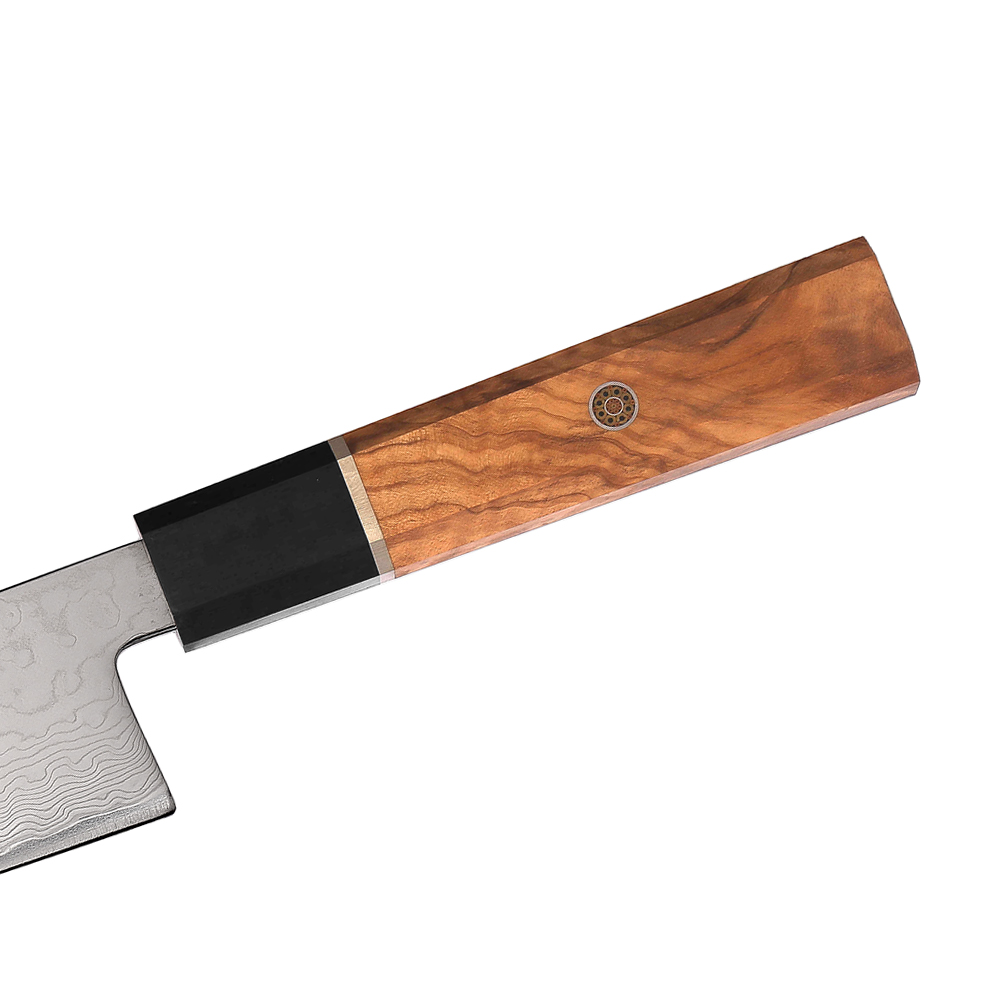
In terms of overall weight, Japanese-style kitchen knives are 20% to 30% lighter than Western knives of the same specification. This lightweight design greatly reduces wrist pressure during long-term cutting operations, effectively avoiding hand fatigue and soreness caused by long-time kitchen work, which is very suitable for professional chefs who need continuous cutting and household users with frequent cooking needs. The handle of Japanese knives is mostly made of solid wood, high-grade resin, and non-slip stainless steel materials, with a smooth and rounded grip, no edges and corners, and fits perfectly with the palm grip posture.
As a professional knife factory focusing on user experience optimization, Yangjiang Insight Industry And Trade Co.,Ltd. has further upgraded the ergonomic structure of insight knife Japanese-style series products. We adjust the blade-handle gravity ratio according to different knife types: Chef Knife and Santoku Knife adopt a slightly forward center of gravity to improve cutting efficiency, while Bread Knife and Paring Knife adopt a balanced center of gravity to enhance fine operation flexibility. At the same time, we optimize the handle anti-slip texture and radian to ensure stable gripping in wet kitchen environments, solving the pain points of slippery hands and poor control of ordinary kitchen knives.
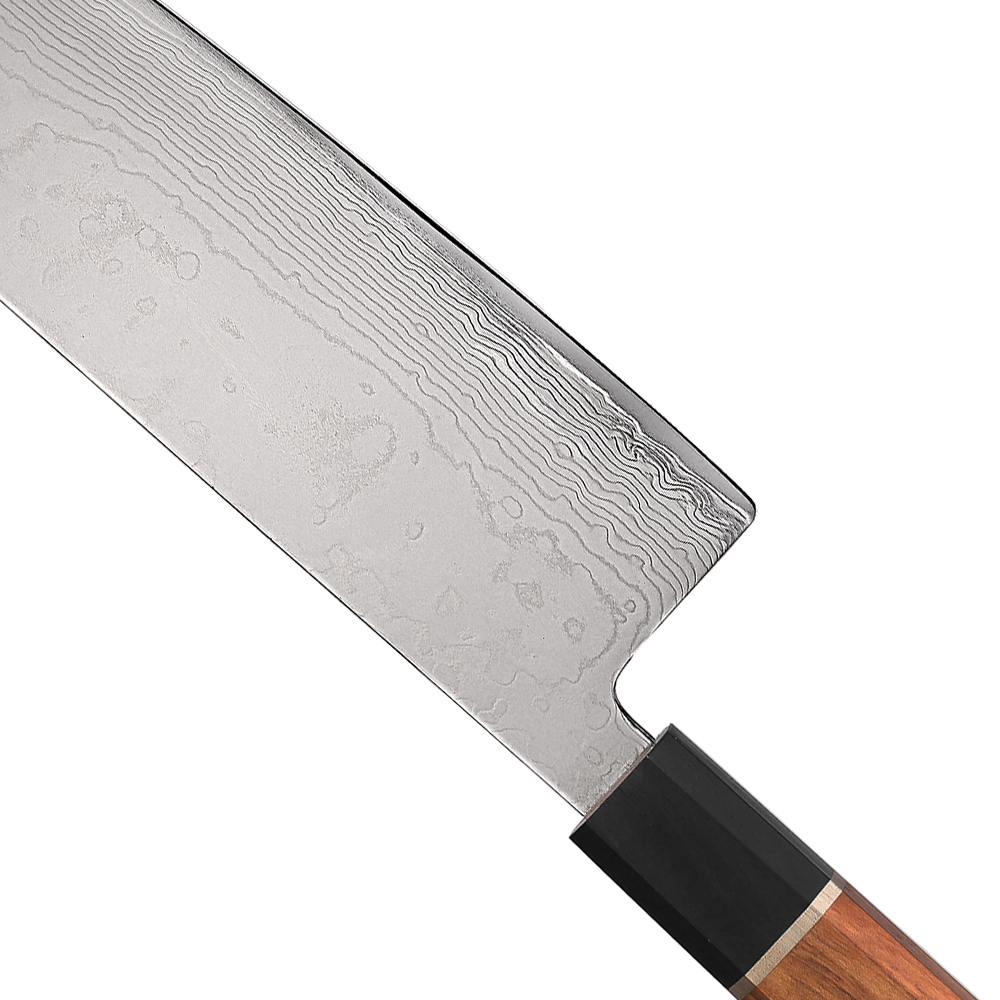
Japanese knives have extremely refined functional classification, and each type of knife is designed for specific ingredient processing scenarios, which is another major feature different from multi-functional ordinary cleaver products. After thousands of years of craftsmanship iteration and market verification, Japanese-style kitchen knives have formed a complete product system covering full-scene kitchen cutting, and our knife factory fully covers all mainstream Japanese knife types in OEM and ODM production, meeting the differentiated customization needs of global brands.
Chef Knife (Gyutou) is the all-round core model of Japanese-style knives, with a moderate blade length and curved cutting edge, suitable for cutting meat, vegetables, and fruits, and can complete most daily kitchen cutting work. Santoku Knife, a classic Japanese multi-purpose knife, is optimized for household scenarios, with a flat blade and wide cutting surface, integrating the functions of chopping, slicing, and dicing, and is known as the "universal household knife". Bread Knife adopts a serrated blade design, which can smoothly cut soft bread, cakes, and pastries without squeezing and damaging the food structure. Paring Knife is a mini precision knife, specially used for peeling, trimming, and fine cutting of small ingredients, with flexible operation and high precision.
In addition to civilian conventional models, our insight knife series also supports customized production of professional Japanese knives such as sashimi knives, vegetable knives, and bone removal knives. Each product has exclusive structural and blade design adjustments according to functional scenarios, realizing truly professional scenario-based cutting. This refined functional classification makes Japanese knives more targeted in use, greatly improving kitchen work efficiency and food processing fineness, and is deeply favored by high-end kitchenware markets and professional catering institutions.
The excellent performance of Japanese knives is inseparable from the combination of traditional hand-forging craftsmanship and modern industrial precision production technology. Traditional Japanese knife making inherits samurai sword forging techniques, adopting multi-layer folding forging, repeated hammering, and fine manual grinding processes, which make the steel structure denser and the blade toughness more outstanding. Modern high-quality Japanese-style knife manufacturers combine traditional craftsmanship with automated production equipment to realize stable product quality and mass production.
With 23 years of manufacturing experience, Yangjiang Insight Industry And Trade Co.,Ltd. has perfectly integrated traditional Japanese knife craftsmanship with modern factory production standards. Our knife factory introduces advanced precision grinding machines, heat treatment production lines, and quality testing equipment, and retains manual fine polishing and edge trimming processes for core links. Different from ordinary manufacturers that pursue output and ignore details, we conduct strict layer-by-layer screening from steel cutting, forging, heat treatment, grinding, polishing to assembly. Each insight knife product undergoes multiple precision grinding to ensure the blade edge is smooth and sharp, with uniform radian and stable quality.
In terms of cleaver and Japanese knife customization, we support personalized craftsmanship upgrades such as Damascus pattern forging, laser engraving, and special surface treatment. The combination of traditional craftsmanship and modern technology not only retains the unique texture and excellent performance of Japanese knives but also solves the problems of unstable quality and low output of pure hand-made products, enabling us to stably supply high-quality Japanese-style knife products for global customers with a monthly output of 5 million pieces.
Many people think that high-precision Japanese knives are difficult to maintain, but in fact, standardized Japanese-style knives produced by professional knife factory have excellent maintenance tolerance and long-term stable performance. Thanks to high-quality steel materials and standardized heat treatment processes, qualified Japanese knives have strong oxidation resistance and edge stability. Daily maintenance only needs to avoid violent chopping of hard objects such as bones and metal, and clean and dry the blade in time after use to maintain long-term sharpness.
The insight knife Japanese-style series produced by Yangjiang Insight Industry And Trade Co.,Ltd. has been optimized for maintenance performance. We improve the blade surface smoothness through fine polishing, reducing food residue adhesion and making daily cleaning more convenient. At the same time, we adjust the steel toughness ratio to enhance the blade's anti-chipping and anti-falling performance, avoiding accidental edge damage caused by daily use errors. Compared with ordinary low-quality cleaver and kitchen knives that are prone to rust, blunt, and deform, our Japanese-style knives can maintain stable cutting performance for many years with simple daily maintenance, with extremely high cost performance.
The core differences lie in material hardness, blade design and use positioning. Japanese knives adopt higher hardness steel (60-65 HRC) with thinner blades and precision bevel design, focusing on precise cutting and protecting food texture; Western knives have lower hardness (55-58 HRC) with thicker and heavier blades, focusing on heavy-duty chopping and strong applicability. In addition, Japanese knives have more refined functional classification, while Western knives are more multi-functional and generalized.
Absolutely yes. The civilian Japanese-style cleaver and multi-purpose knives represented by Santoku Knife and Chef Knife produced by our knife factory are fully optimized for household scenarios. They abandon the overly professional single-sided bevel design, adopt user-friendly double-sided bevel grinding, balance sharpness and fault tolerance, and can cope with daily cutting of vegetables, fruits, meat and other ingredients, which is very suitable for family kitchen use.
Under normal daily use and standardized maintenance, theinsight knife Japanese-style series can maintain stable sharpness for 3-6 months without repeated sharpening. Thanks to high-hardness steel and precision grinding technology, its edge retention is 1.5-2 times that of ordinary kitchen knives. Professional heavy-duty use can also maintain good sharpness for more than 2 months, with excellent durability.
As a professional OEM/ODM knife factory, Yangjiang Insight Industry And Trade Co.,Ltd. provides one-stop customized services for Japanese knives, including material selection optimization, blade pattern customization, handle material and color customization, logo laser engraving, packaging customization, and functional structure adjustment. We support small-batch trial production and large-scale mass production, with a monthly output of 5 million pieces to meet global brand order needs.
Household Japanese-style knives (double-sided bevel) can be sharpened with ordinary sharpening stones and sharpeners, consistent with daily knife sharpening methods. Professional single-sided bevel Japanese knives need matching single-sided sharpening skills. All insight knife civilian products adopt universal sharpening design, no special tools and professional skills are required, which is convenient for daily user maintenance.
Japanese Bread Knife features a fine serrated blade, which is specially used for cutting soft bread, cakes, toast and pastries, realizing flat cutting surface without squeezing deformation. Japanese Paring Knife is compact and flexible, suitable for fruit peeling, ingredient trimming, flower cutting and fine auxiliary cutting. The two types of knives are essential supplementary tools for refined family kitchens and professional catering kitchens.


