
- Home
- Products
- About Us
- OEM/ODM
- VR
- Resources
- Contacts


Views: 789 Author: Site Editor Publish Time: 2026-07-25 Origin: Site


Content Menu
● 1. What Is Kitchen Knife Sanding in Professional Cutlery Manufacturing?
● 2. The Complete Step-by-Step Kitchen Knife Sanding Process
>> 2.1 Rough Sanding: Remove Defects and Shape the Blade Foundation
>> 2.2 Medium Sanding: Level Texture and Standardize Edge Angle
>> 2.3 Fine Sanding: Refine Surface and Precisely Sharpen the Edge
>> 2.4 Wet Sanding: Deep Polishing and Rust Resistance Optimization
>> 2.5 Post-Sanding Inspection and Deburring Finishing
● 3. Core Functions and Benefits of Kitchen Knife Sanding
>> 3.1 Optimize Blade Sharpness and Cutting Stability
>> 3.2 Improve Blade Surface Smoothness and Anti-Rust Performance
>> 3.3 Eliminate Potential Safety Hazards and Improve Grip Comfort
>> 3.4 Enhance Product Aesthetics and Commercial Grade
>> 3.5 Improve Blade Structural Stability and Durability
● 4. Frequently Asked Questions About Kitchen Knife Sanding (Q&A)
>>> Q1: What is the difference between factory industrial sanding and household knife sharpening?
>>> Q2: Do all types of kitchen knives require the same sanding process?
>>> Q3: How does sanding affect the service life of kitchen knives?
>>> Q4: Is wet sanding necessary in kitchen knife manufacturing?
>>> Q5: Can unqualified sanding process cause knife quality problems?
● Article Word Count Statistics
● Article Brief Introduction (200 Characters)
Yangjiang Insight Industry And Trade Co.,Ltd. is a professional and experienced kitchen knife factory with over 23 years of specialized experience in the design, production, and global sales of premium kitchen cutlery and kitchen tools. As a leading kitchen utensil manufacturer, we specialize in a comprehensive range of products, including Chef Knife, Santoku Knife, Bread Knife, Paring Knife, and various customized kitchen tools. Covering a modern production plant of 20,000 square meters and boasting a monthly production capacity of up to 5 million pieces, our factory provides high-quality OEM and ODM services for well-known kitchen knife brands worldwide. In the precision manufacturing of kitchen cutlery, sanding is one of the most indispensable core processes that directly determines the blade’s sharpness, surface durability, touch comfort, and overall product quality. For every professional kitchen knife factory and cutlery manufacturer, standardized and refined knife sanding technology is the key to producing high-performance kitchen knives that meet global market standards. This article will deeply explore the complete workflow of kitchen knife sanding, its core functional values, technical essentials, and its critical role in professional kitchen knife manufacturing.
Kitchen knife sanding refers to the precision surface treatment and edge refining process that uses professional abrasive tools, sand belts, and grinding equipment to polish, grind, and smooth the blade surface, edge line, and knife body of forged or stamped kitchen knives. As a core post-processing procedure in every reliable kitchen knife factory, sanding runs through the entire knife-making process after blade forming and heat treatment, serving as a bridge between rough blade processing and finished product polishing. Unlike simple household knife sharpening, industrial knife sanding in commercial cutlery production focuses on standardized precision, uniform surface texture, stable edge angle, and long-term structural durability.
A professional kitchen cutlery factory strictly classifies sanding processes according to knife types, including chef knives, santoku knives, bread knives, and paring knives. Different kitchen tools require targeted sanding parameters such as abrasive grit size, grinding angle, and sanding pressure. For example, the serrated edge of a bread knife needs segmented fine sanding to protect serration sharpness, while the flat blade of a chef knife requires full-surface uniform sanding to ensure consistent cutting performance. High-quality sanding technology distinguishes premium commercial kitchen knives from ordinary civilian cutlery, making it a core technical symbol of a professional kitchen knife factory.
Formal industrial knife sanding in a standardized kitchen utensil manufacturing plant is a systematic and layered process from coarse grinding to fine polishing. Each step has strict operational standards and quality inspection requirements to ensure every finished kitchen knife has a smooth surface, sharp and durable edge, and comfortable grip. The complete process is divided into five core stages, all of which are strictly implemented in our kitchen knife factory to guarantee product consistency.

Rough sanding is the first step of industrial knife sanding, mainly targeting newly formed blades after stamping, forging, and heat treatment. After high-temperature heat treatment and preliminary cutting forming, the blade surface often has rough burrs, welding marks, oxide layers, uneven forging textures, and tiny edge cracks. The core purpose of rough sanding is to remove these surface defects and initially shape the basic outline of the blade.
In this stage, professional production workshops of a kitchen knife factory usually adopt 40 to 60 grit high-hardness sand belts for large-area rough grinding. The equipment runs at a stable speed to uniformly polish the blade surface, remove excess metal edges, smooth irregular blade lines, and eliminate residual oxide layers generated during heat treatment. This step does not pursue surface smoothness but focuses on leveling the overall blade structure, eliminating potential structural defects, and laying a flat and stable foundation for subsequent fine sanding. For thick-blade chef knives and heavy-duty kitchen tools, rough sanding also needs to adjust the preliminary blade thickness to meet product design standards.
After rough sanding removes major defects, medium sanding is carried out for secondary refinement, which is the key transition step between rough shaping and fine polishing. This stage uses 120 to 180 grit fine sand belts to further grind the blade surface and edge. Different from rough sanding’s large-scale grinding, medium sanding focuses on repairing uneven textures left by coarse sanding and standardizing the blade’s cutting edge angle.
Professional technicians in a formal kitchen knife factory strictly control the sanding angle and pressure according to different knife types. Western-style chef knives usually maintain a 20-degree unilateral edge angle, while Japanese-style santoku knives adopt a 15 to 18-degree balanced angle design. During medium sanding, workers uniformly polish both sides of the blade to ensure symmetrical edge lines, consistent thickness on both sides, and no offset or tilt. Meanwhile, this step further removes tiny burrs on the blade edge, makes the blade texture uniform, and eliminates coarse scratch marks left by rough sanding, greatly improving the blade’s flatness and aesthetics.

Fine sanding is the core precision processing step in the entire sanding process and directly determines the initial sharpness and surface delicacy of the kitchen knife. In this stage, the kitchen knife factory switches to 220 to 600 grit ultra-fine sand belts and adopts low-pressure and uniform-speed sanding technology for full-blade refinement. For different specialized kitchen knives, fine sanding adopts differentiated processes: flat blades of paring knives for precise fruit and vegetable cutting need full-surface mirror fine sanding; serrated bread knives focus on fine polishing of serration gaps to ensure no residual burrs while maintaining serration cutting force; multi-functional santoku knives need balanced sanding of flat surface and edge to adapt to cutting, chopping, and slicing scenarios.
Fine sanding effectively removes tiny scratches and granular textures on the blade surface, makes the metal texture smooth and delicate, and further polishes the blade edge to form a uniform and sharp cutting line. After fine sanding, the blade basically achieves commercial sharpness, with smooth surface without obvious flaws, and the overall texture of the kitchen knife is significantly improved. This step is also the key process to improve the comfort of subsequent hand polishing and final finished product quality.
Most high-end kitchen knife manufacturers add a professional wet sanding process after dry fine sanding, which is an important technical difference between high-quality commercial knives and ordinary household knives. Wet sanding uses water as a cooling and lubricating medium, matched with 1000 to 3000 grit ultra-fine waterproof sandpaper for slow and uniform polishing. In the standardized production workshop of our kitchen knife factory, wet sanding is a mandatory process for all mid-to-high-end kitchen cutlery products.
The water in wet sanding can effectively take away the heat generated by friction during high-precision grinding, avoid blade metal overheating and annealing softening, and protect the blade’s hardness and toughness. At the same time, water flow washes away metal debris and abrasive powder generated by sanding, preventing fine particles from scratching the polished blade surface. After wet sanding, the blade surface presents a uniform matte or semi-mirror effect, with extremely smooth touch, no fine pores or granular protrusions on the metal surface, which effectively enhances the blade’s anti-fouling and anti-rust performance.
The final step of the kitchen knife sanding process is manual fine inspection and secondary deburring finishing. Even with precise mechanical sanding, tiny burrs may remain at the blade edge, knife shoulder, and blade root. Professional technicians in the kitchen knife factory conduct full inspection of each knife, use professional fine abrasive tools to remove residual tiny burrs, trim irregular edge lines, and check the uniformity of blade surface sanding texture.
After inspection and finishing, the kitchen knife will enter the cleaning and drying process to remove residual water stains and abrasive powder on the surface, preparing for subsequent surface coating, logo printing, and assembly packaging. This final finishing step ensures that every kitchen knife leaving the factory has zero defects in sanding quality and fully meets international export quality standards.
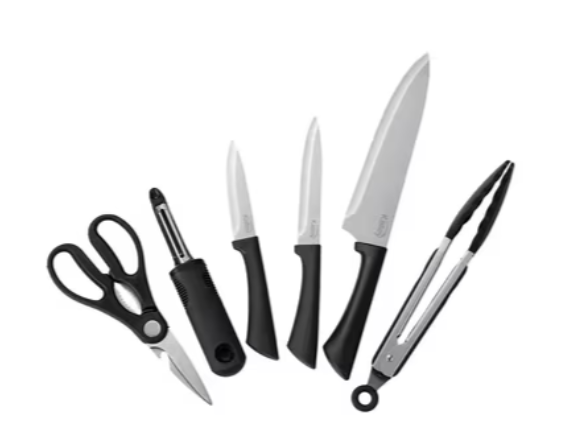
As a key precision process in the production of every kitchen knife factory, sanding is not a simple cosmetic polishing process but a functional processing technology that comprehensively improves the performance, durability, safety, and aesthetics of kitchen knives. Its core functions cover product performance optimization, user experience improvement, and product quality upgrade, which are irreplaceable in professional cutlery manufacturing.
The most core function of knife sanding is to shape a precise, uniform, and sharp blade cutting edge. Rough blades after forging and stamping have irregular edge lines and uneven thickness, resulting in unstable cutting, easy jamming, and rapid dulling. Through layered sanding from coarse to fine, the kitchen knife factory can precisely control the blade edge angle and thickness, form a smooth and continuous cutting edge, and maximize the cutting performance of the blade material.
Well-sanded kitchen knives have uniform force during cutting, smooth slicing and chopping, no food sticking, and stable sharpness retention. Whether it is a chef knife for heavy-duty chopping, a santoku knife for fine slicing, a bread knife for soft food cutting, or a paring knife for delicate peeling, standardized sanding can make each tool exert the best cutting effect and avoid the problems of uneven cutting and easy edge damage caused by unpolished blade edges.
Unpolished knife blade surfaces have many tiny pores, scratches, and oxide gaps, which easily accumulate food residues, oil stains, and moisture during use, leading to bacterial growth and blade rusting. After multi-layer fine sanding and wet sanding treatment in a professional kitchen knife factory, the blade surface becomes dense and smooth, with greatly reduced surface gaps, effectively reducing the adhesion of oil stains and food residues.
The smooth sanded surface makes daily cleaning and maintenance of kitchen knives more convenient. Simply rinsing with clean water can remove surface stains, avoiding long-term residue corrosion. Meanwhile, the uniform sanding texture forms a protective layer on the blade surface, enhancing the oxidation resistance and corrosion resistance of stainless steel blades, greatly extending the service life of kitchen knives, and adapting to long-term high-frequency use in family kitchens and commercial catering scenarios.
Blades without professional sanding often have sharp burrs, rough edges, and uneven surface textures, which are easy to scratch hands during use and cleaning, bringing potential safety hazards to users. The standardized sanding process of a formal kitchen knife factory completely removes all residual burrs and sharp protrusions on the blade, knife shoulder, and blade root, making all edge lines smooth and round without scratching risks.
In addition, uniform sanding optimizes the overall hand feel of the kitchen knife. The delicate and non-slip sanding texture avoids the slippery problem of overly smooth mirror blades during use, ensuring stable grip during cutting operations. For long-time kitchen cooking work, a well-sanded knife can effectively reduce hand fatigue and improve the safety and comfort of daily use.
As an important part of kitchen supplies, the appearance texture of kitchen knives directly affects product grade and market competitiveness. The layered sanding process adopted by professionalkitchen knife factory can form uniform and delicate metal texture on the blade surface, avoiding rough and messy grinding traces of ordinary processing. Different sanding processes can also create diversified surface effects such as matte, semi-mirror, and brushed textures to meet the personalized aesthetic needs of different brands and markets.
High-quality sanding texture makes kitchen knives look more sophisticated and professional, improving the overall grade of products. For OEM and ODM customized kitchen knife products, exquisite sanding technology is also an important core advantage to help brand customers enhance product competitiveness and gain market recognition.
In the blade forging and heat treatment process, internal metal stress and surface structural defects are easily generated. The professional sanding process of the kitchen knife factory can release residual internal stress of the blade, repair tiny surface cracks and structural gaps, and optimize the overall structural stability of the blade. Blades after standardized sanding are not easy to deform or crack during long-term use, with stronger toughness and wear resistance.
Compared with knives with simple rough grinding, finely sanded kitchen knives have more uniform blade thickness and balanced stress distribution, which can withstand long-term high-intensity cutting operations, effectively delaying blade dulling speed and reducing the frequency of daily sharpening, bringing longer service life and more stable use effect to users.
To help customers and industry practitioners better understand the professional sanding technology of the kitchen knife factory, we have sorted out 5 core common questions and detailed professional answers based on our 23 years of kitchen knife manufacturing experience.
A1: The essential difference lies in standardization, precision, and comprehensiveness. Household sharpening only focuses on temporary edge sharpness with single grit grinding and unstable angle control. Industrial sanding in a professional kitchen knife factory adopts layered coarse-medium-fine-wet multi-stage processing, with standardized edge angles, uniform surface texture, and comprehensive removal of blade defects. It not only improves sharpness but also optimizes blade durability, anti-rust performance, and safety, realizing permanent quality improvement rather than temporary sharpening.
A2: No. Professional kitchen cutlery manufacturers adopt differentiated sanding processes according to knife functions and structures. Flat-blade knives like chef knives and santoku knives need full-surface uniform layered sanding; serrated bread knives focus on targeted fine sanding of serration gaps to protect serration integrity; small paring knives pursue ultra-fine surface polishing for delicate hand feel. Different grit combinations and sanding parameters are configured for different products to match their usage scenarios and performance requirements.
A3: Standardized professional sanding greatly extends the service life of kitchen knives. It removes surface defects and residual stress, improves blade wear resistance and corrosion resistance, and makes the edge angle more stable to avoid rapid dulling. Knives produced by a formal kitchen knife factory through complete sanding process can maintain stable cutting performance for a long time, with lower failure rate and longer service cycle than ordinary roughly ground knives.
A4: Wet sanding is a necessary process for mid-to-high-end kitchen knives. It effectively avoids blade annealing and softening caused by high-temperature friction during dry fine sanding, protects blade hardness, and removes tiny surface particles to make the blade surface denser and smoother. Although low-end ordinary knives may omit this process to reduce costs, formal professional kitchen knife factory will retain wet sanding for high-quality products to ensure stable performance and high-grade texture.
A5: Yes. Unstandardized sanding such as uneven grinding, excessive pressure, unreasonable grit matching, and incomplete deburring will lead to many quality problems: inconsistent blade sharpness, easy edge curling and breaking, residual burrs causing hand scratching, rough surface easy to rust and accumulate dirt, and unbalanced blade stress causing deformation. This is why regular kitchen knife factory strictly implements standardized sanding processes and full quality inspection.


