
- Home
- Products
- About Us
- OEM/ODM
- VR
- Resources
- Contacts


Views: 777 Author: Site Editor Publish Time: 2026-08-06 Origin: Site


Content Menu
● 1. Why Stainless Steel Kitchen Knives Need Regular Maintenance
● 2. Daily Cleaning Rules for Stainless Steel Kitchen Knives
>> 2.1 Avoid Dishwasher Cleaning
>> 2.2 Hand Wash with Mild Detergent Immediately After Use
>> 2.3 Natural Decontamination and Odor Removal Skills
● 3. Correct Drying and Daily Storage Methods
>> 3.1 Thorough Drying After Each Cleaning
>> 3.2 Scientific Storage to Avoid Blade Damage
● 4. Professional Sharpening and Edge Maintenance
>> 4.1 Distinguish Between Honing and Sharpening
>> 4.2 Standard Sharpening Tools and Operation Methods
>> 4.3 Avoid Wrong Sharpening Behaviors
● 5. Seasonal and Long-Term Maintenance Tips
● 6. Frequently Asked Questions About Stainless Steel Kitchen Knife Maintenance
Yangjiang Insight Industry And Trade Co.,Ltd., a professional and reliable knife factory with over 23 years of dedicated experience in kitchen tool manufacturing, specializes in the design, production, and global sales of premium stainless steel kitchen knives and kitchen accessories. As a leading manufacturer and OEM/ODM service provider for worldwide kitchenware brands, our product lineup covers Chef Knife, Santoku Knife, Bread Knife, Paring Knife, and a full range of household and commercial kitchen tools. With a 20,000-square-meter production plant and a monthly production capacity of up to 5 million pieces, our Insight kitchen knife series is crafted with high-quality stainless steel materials, featuring excellent hardness, corrosion resistance, and edge retention. However, even the finest stainless steel kitchen knives cannot maintain optimal performance permanently without scientific and daily maintenance. Proper care is the key to extending blade service life, preserving cutting sharpness, and avoiding common problems like rust, stains, and blade dullness. This comprehensive guide will walk you through every detail of stainless steel kitchen knife maintenance for long-term reliable use.
Many kitchen users hold a misunderstanding that stainless steel knives are completely rust-proof and maintenance-free, which is the primary cause of premature blade damage. High-quality stainless steel adopted by professional knife manufacturers like our knife factory contains chromium, nickel, and other alloy elements that endow the blade with superior oxidation and corrosion resistance compared to carbon steel knives. Yet, “stainless” does not mean “stain-proof forever”. Long-term exposure to acidic food residues, moisture, high temperature, and harsh cleaning chemicals will gradually erode the blade surface, destroy the passive protective film of stainless steel, and lead to surface rust, dark stains, edge warping, and reduced cutting efficiency.
Insight kitchen knife products are strictly polished and heat-treated during production to balance hardness and toughness. Regular scientific maintenance can fully retain the original craftsmanship performance of the knives, keep the blade sharp and smooth, ensure safe cutting experience, and avoid frequent replacement caused by improper use. Whether it is household daily-use chef knives and paring knives or commercial bread knives and santoku knives for catering scenarios, standardized maintenance is essential for long-term stable use.
Cleaning is the most basic and core step of stainless steel knife maintenance, and correct daily cleaning habits can avoid 80% of common blade damage problems. Many users’ knife damage is caused by incorrect cleaning methods rather than product quality issues. As a professional kitchen knife supplier, our knife factory summarizes standardized cleaning guidelines suitable for all Insight kitchen knife models.
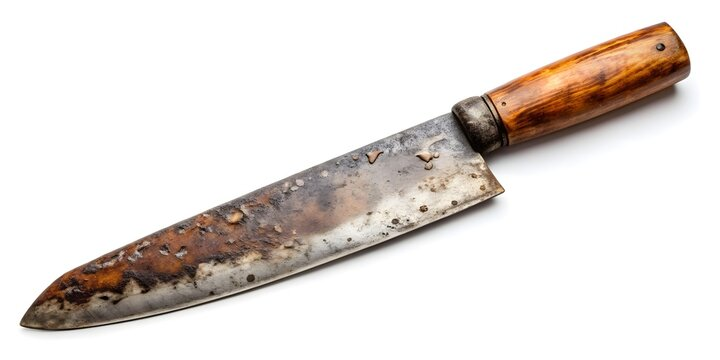
The first rule of stainless steel knife maintenance is to refuse automatic dishwasher cleaning. Most household dishwashers use high-temperature hot water, strong alkaline detergents, and high-pressure water flow for cleaning. The high temperature above 60℃ will accelerate the aging of the knife handle material and cause thermal deformation of the blade; strong alkaline chemicals will corrode the stainless steel surface, resulting in blade discoloration and dull luster. In addition, knives will collide with tableware in the dishwasher, causing blade edge chipping, surface scratches, and damage to the polished finish of Insight kitchen knife products.
After each use, clean the stainless steel knife immediately with warm water and mild neutral detergent. Food residues such as tomato juice, lemon juice, onion juice, and meat blood water contain acidic and corrosive ingredients. If attached to the blade overnight, they will erode the stainless steel protective layer and form stubborn rust spots and dark marks. When cleaning, use a soft sponge or cotton cloth to gently wipe the blade surface, blade back, and the gap between the blade and the handle, avoid using hard steel wire balls, which will leave irreversible scratches on the blade surface and affect the anti-rust performance and appearance.
For stubborn stains, peculiar smells, and slight oxidation marks on Insight kitchen knife blades, you can use natural and safe household cleaning methods. Mix equal parts of white vinegar and warm water, soak a clean cloth in the solution, and wipe the blade repeatedly. The mild acidity of vinegar can effectively decompose oxide layers and food stains, remove peculiar smells left by cutting garlic, fish, and other ingredients, and restore the blade’s metallic luster. After wiping, rinse thoroughly with clean water to avoid residual vinegar liquid causing secondary corrosion. For minor rust spots, a small amount of baking soda mixed with water into a paste can be used for gentle polishing and rust removal.
Cleaning without thorough drying and proper storage is equivalent to no maintenance. Moisture accumulation is the biggest enemy of stainless steel kitchen knives. Many knives get rusty not because of poor material quality, but because they are stored in a humid environment for a long time. Our knife factory’s professional after-sales maintenance team has summarized targeted storage standards for all series of Insight kitchen knife products.
After cleaning the stainless steel knife, use a dry, soft cotton towel to wipe the entire blade and handle dry immediately, especially the blade edge, the gap between the bolster and the handle, and the rivet parts, which are easy to hide water stains. Do not place the knife in a wet sink or air-dry naturally in a humid kitchen environment. Long-term water residue will destroy the stainless steel passivation film and cause local rust and discoloration. For long-term unused Insight kitchen knives, after cleaning and drying, you can apply a thin layer of food-safe mineral oil on the blade surface for isolation and protection.

The worst storage habit is to put stainless steel knives randomly in kitchen drawers mixed with forks, spoons, and other tableware. Frequent friction and collision will scratch the blade surface, blunt the sharp edge, and even cause edge chipping. The most recommended storage methods for household and commercial scenarios include wooden knife blocks, magnetic knife strips, and independent knife sheaths. The wooden knife block can keep the knife dry and ventilated, avoid moisture accumulation, and fix the blade position to prevent collision damage. The magnetic strip is space-saving, keeps the knives neatly arranged, and allows quick access while avoiding blade friction. When using a magnetic strip, gently attach the knife with the blade back facing the magnet to prevent edge wear. For portable small-sized paring knives, independent knife sheaths can effectively protect the blade edge.
Sharpness is the core performance of stainless steel kitchen knives. Even high-hardness stainless steel blades will gradually become dull with long-term cutting use. Timely and correct sharpening maintenance can restore the cutting performance of Insight kitchen knife products and avoid laborious cutting, ingredient crushing, and unsafe cutting caused by dull blades. As a professional knife factory focusing on blade craftsmanship, we share systematic sharpening and edge maintenance methods suitable for daily users.
Many users confuse honing and sharpening, which are two completely different maintenance steps. Honing is daily edge straightening, which corrects the slightly bent blade edge caused by daily cutting, removes tiny burrs, and restores temporary sharpness. It does not consume blade metal and can be operated once a week. Sharpening is deep grinding, which polishes the worn and passivated blade edge to form a new sharp cutting edge, which needs to be carried out every 2 to 6 months according to the frequency of use. Frequent cutting of hard ingredients will shorten the sharpening cycle.
For household maintenance, a double-sided whetstone with 1000/6000 grit is the most practical choice for stainless steel knives. The 1000-grit coarse surface is used for grinding severely dull blades to repair edge wear, and the 6000-grit fine surface is used for fine polishing to make the blade edge smooth and sharp. When sharpening Insight kitchen knife series products, keep the blade angle stable at 15° to 20° (15° for Japanese-style santoku knives and paring knives, 20° for European-style chef knives and bread knives), grind evenly on both sides, and avoid single-sided excessive grinding leading to unbalanced blade edge. After sharpening, clean the blade thoroughly to remove grinding residue and dry it for storage.
Do not use rough grinding tools such as grinding wheels casually for stainless steel kitchen knives. Excessive high-speed friction will generate high temperature, cause blade metal annealing, reduce blade hardness and toughness, and make the knife easier to become dull and chip in subsequent use. In addition, do not sharpen the knife on rough stone surfaces, ceramic edges, or iron sheets, which will cause irregular blade edge gaps and damage the original cutting angle of professional Insight kitchen knife products.
Kitchen environmental humidity and temperature change with seasons, so stainless steel knife maintenance needs targeted seasonal adjustment. In humid summer and rainy seasons, kitchen air humidity is high, and stainless steel blades are more prone to oxidation and mildew. It is necessary to strengthen drying and ventilation maintenance, wipe the knife storage position regularly to keep it dry, and appropriately increase the frequency of blade oil maintenance for unused knives.
For long-term stored stainless steel kitchen knives, take them out regularly for inspection and maintenance every 1 to 2 months. Wipe the blade to remove floating dust and slight oxide layers, reapply a thin layer of food-grade protective oil, and check whether the handle is loose or moldy. For commercial kitchen knives with high frequency of use, such as restaurant chef knives and bread knives, it is recommended to conduct a comprehensive deep maintenance including cleaning, polishing and sharpening every month to ensure stable working performance.
Based on years of manufacturing and after-sales service experience as a professional knife factory, Yangjiang Insight Industry And Trade Co.,Ltd. sorts out 5 most frequently asked maintenance questions and professional answers to solve users’ daily maintenance confusion of Insight kitchen knife products.
Q1: Will stainless steel kitchen knives rust? Why do new knives have rust spots?
A1: Stainless steel knives can rust under extreme conditions. Although high-quality stainless steel materials used by Insight kitchen knife have excellent anti-rust performance, long-term attachment of acidic residues, un-dried water stains, and storage in humid environments will destroy the blade’s protective film and cause local rust spots. New knife rust spots are mostly floating rust caused by residual polishing powder and moisture contact, which can be removed by simple cleaning and drying, and will not affect the service life.
Q2: Is it okay to clean stainless steel knives in the dishwasher occasionally?
A2: It is not recommended absolutely. Dishwasher high temperature, alkaline detergent and collision friction will cause blade discoloration, handle aging, edge wear and scratch damage. Long-term dishwasher cleaning will greatly reduce the sharpness and service life of Insight kitchen knife products. Hand washing is the only standardized cleaning method for stainless steel kitchen knives.
Q3: How often should stainless steel kitchen knives be sharpened?
A3: It depends on the use frequency and cutting ingredients. Household daily-use knives need honing once a week and formal sharpening every 3 to 6 months. Commercial high-frequency use knives need sharpening every 1 to 2 months. If the knife feels laborious when cutting vegetables and meat or crushes ingredients easily, it means the blade is dull and needs timely sharpening maintenance.
Q4: How to remove stubborn black stains and oxidation marks on stainless steel knife blades?
A4: Mix white vinegar and baking soda into a mild cleaning paste, wipe the stained area gently with a soft cloth, let it stand for 3 to 5 minutes to decompose oxides, then rinse with warm water and dry thoroughly. Do not use strong corrosive cleaning agents or hard abrasive tools to avoid damaging the blade surface polishing layer.
Q5: Is it necessary to oil stainless steel kitchen knives for daily maintenance?
A5: Daily used knives do not need frequent oiling. Only long-term unused stainless steel knives need to be coated with a thin layer of food-safe mineral oil or camellia oil for anti-rust isolation. Frequent oiling of daily used knives will cause oil residue to adhere to food and affect use experience.


