
- Home
- Products
- About Us
- OEM/ODM
- VR
- Resources
- Contacts


Views: 336 Author: INSIGHT-KITCHEN KNIFE Publish Time: 2026-06-06 Origin: INSIGHT-KITCHEN KNIFE


Content Menu
● Understanding Crispy Pork Belly (Cantonese Siu Yuk)
● Damascus Cleaver vs Slicer Knife: Core Design Differences
● Damascus Cleaver: Best for Cubed Siu Yuk Portions
>> Why cleavers dominate traditional Cantonese Siu Yuk
>> Drawbacks of Using a Cleaver for Crispy Pork Belly
● Damascus Slicer Knife: Best for Long, Neat Plated Slices
>> Why a slicer knife is a game‑changer for plated crispy pork belly
>> Limitations of a Slicer for Crispy Pork Belly
● Practical Cutting Rules for Crispy Roast Pork Belly (Siu Yuk Style)
● My Expert Experience: Knife Choice Across Service Scenarios
● Manufacturing Perspective: Why Damascus Geometry Matters (Yangjiang Insight)
● Step‑by‑Step Cutting Technique for Hard Glassy Crackling
>> Using a Damascus Slicer Knife
● Damascus Cleaver vs Slicer Knife: Use‑Case Comparison Table
● Unique Expert Insights: Matching Knife to Brand Concept
● FAQs about Damascus Cleaver vs Slicer Knife for Crispy Pork Belly
Damascus cleavers and slicer knives both cut crispy Cantonese Siu Yuk beautifully, but they serve two completely different cutting goals: the cleaver excels at chunky bite‑size cubes, while the slicer is built for ultra‑neat plated slices with intact crackling.
Cantonese crispy roast pork belly traditionally has three distinct layers: shattering glassy crackling, a liquefied rendered fat layer, and tender seasoned lean meat underneath.
The knife you choose determines how cleanly these layers stay intact when you cut, how much juice is preserved, and whether the crackling breaks into crumbs or snaps in satisfying, crisp pieces.
Both knives can be made from Damascus steel with a hard VG10 core (around 60–62 HRC) for edge retention, but their geometry and cutting mechanics are very different.
Blade Design & Cutting Mechanics
| Feature | Damascus Cleaver | Damascus Slicer Knife |
|---|---|---|
| Blade build | Thick spine (3–4 mm), heavy, wide rectangular blade, robust ~20° edge bevel. | Ultra‑thin tapered blade, narrow long profile, fine ~12–15° micro‑bevel; often Granton hollow indent to reduce sticking. |
| Cutting mechanics | Gravity‑driven downward chop / press cut that uses weight, not sawing. | Long smooth draw‑slice that glides through meat and crackling with minimal compression. |
| Portion style focus | 2–3 cm bite‑size cubes (traditional Cantonese serving style). | Neat, uniform long slices for Western‑style plating and main courses. |
| Crackling impact | Sudden but controlled snap, ideal for brittle hard crackling. | Gradual slicing action, better for preserving a continuous crackling top on each slice. |
In Cantonese restaurants, chefs almost universally use Chinese‑style cleavers to portion Siu Yuk into small 2–3 cm cubes.
The cleaver's heavy blade lets you flip the belly meat‑side down and chop straight down from meat through fat to crackling, producing one clean snap with minimal crackling fragmentation.
Key Advantages of a Damascus Cleaver for Hard Glassy Crackling
- One‑shot vertical chops minimize crackling crumbs: Cutting from meat toward skin avoids micro‑cracking on the surface, so you get tidy, crunchy caps on each cube instead of scattered shards.
- Effortless cutting through soft bone, cartilage, and rib tips: The thick spine and robust edge geometry tolerate minor bony spots without flexing or chipping, important for belly pieces with uneven rib trimming.
- Stable handling for speed service: Wide blade doubles as a scoop for transferring cubes onto serving plates or into takeaway boxes efficiently.
- Not ideal for thin, uniform slices: The heavy blade tends to compress the rendered fat layer and deform fine slices, which is unsuitable for elegant Western‑style plating.
- Higher skill requirement for perfectly even cuts: Getting identical cube sizes with consistent crackling coverage requires practice in posture, angle, and chop force.
Damascus slicer knives shine when you want restaurant‑style long slices of pork belly with a perfectly intact crackling top.
Their thin blades and narrow profiles enable long, controlled draw cuts across rested belly, creating slices with repeatable ratios of crackling, fat, and lean meat.
Key Advantages of a Damascus Slicer for Hard Glassy Crackling
- Gliding saw‑cut that preserves continuous crackling caps: When you let the belly rest 20–30 minutes at room temperature to firm up the fat and crackling, the slicer can run in a single smooth stroke, slowly easing through skin for intact crackling on every slice.
- Precise control of slice thickness: It's easier to target ideal thickness ranges (around 3–12 mm) for main‑course plating, balancing crackling crunch and fat richness in each serving.
- Less compression of rendered fat: A thinner blade displaces less fat as it cuts, which helps keep the slices juicy instead of squeezing out moisture.
- Poor performance on bone or tough cartilage: Fine, hard edges are more vulnerable to micro‑chips if you repeatedly saw through very dry, glass‑hard crackling or unexpected bone fragments.
- Higher risk of random crackling shattering when cutting skin‑side down: If you slice with the crackling facing up and attack the skin first, the knife can skip and break the surface unevenly.
For everyday kitchen or restaurant use, you can follow simple decision rules to choose between a Damascus cleaver and a slicer knife.
1. For bite‑size cubes → Choose the Damascus cleaver, flip meat‑side down, and use vertical chops for fast service and classic Cantonese presentation.
2. For neat long plated slices → Choose the Damascus slicer, again flip meat‑side down, and cut with long draw strokes to keep crackling intact across the slice length.
3. Always rest the cooked belly for 20–30 minutes at room temperature before cutting: firmer crackling and fat will make both knives perform cleaner cuts with less mess.
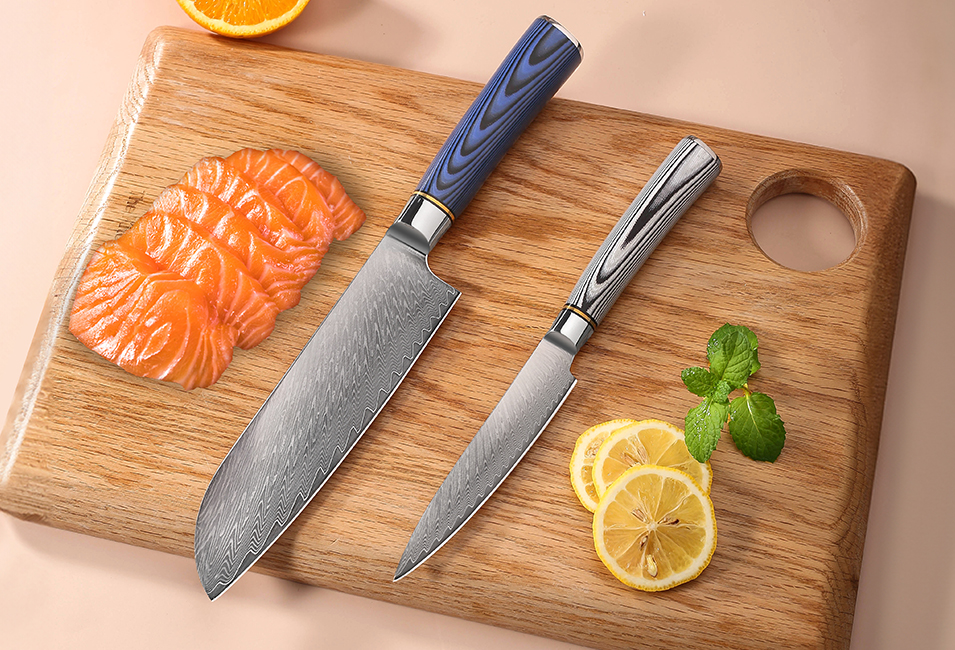
From a chef and OEM knife consultant perspective, the optimal knife depends on your menu and plating style.
- For Cantonese roast shops and fast‑casual Asian outlets, the Damascus cleaver is usually the primary workhorse because they prioritize speed and cube portions over ultra‑fine presentation.
- For modern fusion or Western restaurants serving crispy pork belly as a plated main with structured sides, a Damascus slicer becomes essential to match fine‑dining standards of uniformity and clean edges.
- Many professional kitchens now keep both tools on the line: the cleaver for initial breakdown and rough cuts, the slicer for final plating of chef's specials, tasting menus, or photo‑ready dishes.
Yangjiang Insight Industry and Trade Co., Ltd. is a specialized kitchen knife manufacturer with over two decades of experience, providing OEM and ODM services for brands worldwide.
With factory capacity reaching around 5,000,000 pieces per month and thousands of square meters of production space, we are able to fine‑tune blade geometry, heat treatment, and finishing to match specific cutting use‑cases like crispy roast pork belly and Siu Yuk.
How OEM/ODM Design Choices Enhance Performance for Pork Belly
- Custom blade thickness and spine profile: For cleavers, we can optimize spine thickness and balance to deliver strong downward chopping power while keeping hand fatigue manageable in commercial settings.
- Edge angle calibration: We can set cleaver edges around ~20° for durability and slicer edges around ~12–15° for sharper, lower‑resistance cuts on crackling and tender meat.
- Surface treatments and Granton hollows: On slicers, Granton indentations and polished surfaces reduce sticking of fat and protein, making long slices cleaner and more efficient.
To get maximally crisp yet tidy results, knife choice must be paired with correct technique.
1. Rest and position: Allow pork belly to rest 20–30 minutes; place meat‑side up (crackling down) on a stable wooden or polyethylene board.
2. Mark portions with the tip: Lightly score the meat layer where you want cube widths (around 2–3 cm).
3. Vertical chop through meat and fat: Lift the cleaver and bring it straight down in one controlled chop, letting the weight drive through meat and fat before snapping crackling.
4. Rock and separate: Use a gentle rocking motion only if needed to complete the cut; avoid sawing through the crackling to prevent surface shattering.
1. Rest and chill slightly: Rest for 20–30 minutes; for ultra‑precise slices, some chefs briefly chill the belly to firm the fat surface further.
2. Crackling down, meat up: Place meat‑side up again to start the cut from the softer layers.
3. Long smooth draw‑cut: Set the heel of the slicer near you, then push and draw the blade in one continuous stroke across the belly, finishing through the crackling gently.
4. Avoid aggressive sawing: Short, aggressive sawing actions increase crackling shatter; maintain controlled, low‑pressure strokes instead.
| Use Case / Factor | Damascus Cleaver | Damascus Slicer Knife |
|---|---|---|
| Ideal portion style | Cubed Siu Yuk bites (2–3 cm). | Long thin plated slices. |
| Crackling behavior | Clean snap with minimal crumbs when chopping from meat to skin. | Continuous intact crackling top along each slice. |
| Bone/cartilage handling | Excellent; can handle minor rib tips and cartilage. | Poor; risk of edge damage on hard inclusions. |
| Speed in service | Very high for bulk chopping and take‑away portions. | Moderate; optimized for precision plating, not mass volume. |
| Presentation level | Rustic, traditional, visually bold cubes. | Refined, balanced cross‑sections ideal for upscale plating. |
| Skill demands | Medium; requires control of chop angle and force. | High; demands consistent stroke length and pressure. |

To align knife choice with brand positioning and UX, consider how your guests eat and photograph crispy pork belly.
- Casual, sharing‑style outlets: Guests often pick up pieces with chopsticks or fingers; cleaver‑cut Siu Yuk cubes better match this tactile, social experience.
- Social‑media‑driven restaurants: Long slices with clean cross‑sections photograph better for Instagram and menu visuals; slicer‑cut pork belly gives you more consistent "stacked slice" shots.
- OEM/ODM brand strategy: Knife brands serving both Chinese and Western markets frequently develop paired Damascus cleaver + slicer sets, offering end‑users the full spectrum of portion options.
For Yangjiang Insight's global OEM clients, we often recommend positioning Damascus cleaver and slicer knives as complementary tools, not competitors, to help consumers understand that each knife fits a specific serving ritual and recipe style.
If you're a chef, restaurant owner, or kitchenware brand looking to optimize how you cut and present crispy roast pork belly, consider partnering with a specialist Damascus knife OEM/ODM manufacturer like Yangjiang Insight.
You can develop a custom Damascus cleaver and slicer pair tuned to your exact portion sizes, cutting techniques, and brand aesthetics, ensuring every plate of Siu Yuk delivers both visual impact and perfect crackling texture.
1. Is a Damascus cleaver or slicer knife better for home cooks making Cantonese Siu Yuk?
For most home cooks making Siu Yuk to share family‑style, a Damascus cleaver is more forgiving and versatile, as it handles cube portions and occasional cartilage more easily.
2. Can I use a serrated bread knife instead of a Damascus slicer for crispy pork belly?
Some pitmasters and home cooks do use serrated slicers or bread knives to cut pork belly cleanly, but a well‑designed Damascus slicer offers smoother cuts and better control of slice thickness.
3. How should I maintain the edge on Damascus cleavers and slicer knives used for pork belly?
Maintain cleavers with moderate sharpening angles and periodic honing to preserve robustness, while slicer knives should be sharpened to finer angles with gentle use to prevent edge chipping on hard crackling.
4. Does resting time really make a difference when cutting crispy pork belly?
Yes. Resting cooked pork belly for 20–30 minutes firms up both crackling and fat, making cuts cleaner and minimizing crackling shatter, regardless of whether you use a cleaver or slicer.
5. Can Yangjiang Insight customize Damascus knives specifically for my restaurant or brand?
Yangjiang Insight offers OEM and ODM kitchen knife manufacturing services and can adjust blade geometry, handle design, branding, and packaging to match your pork belly recipes and brand requirements.
1. INSIGT KITCHENKNIFE – *Damascus Cleaver vs Slicer Knife for Crispy Roast Pork Belly (Hard Glassy Crackling) Crispy pork belly (Cantonese Siu Yuk style)[insight-kitchenknife]
2. INSIGT KITCHENKNIFE – *Video – Yangjiang Insight Kitchen Knife Manufacturer Introduction[insight-kitchenknife]
3. HouseHold Expo – *Yangjiang Insight Hardware Products Co., Ltd. company profile[hhexpo]
4. Reddit – *Knife for cutting through cooked Pork Belly and Crackling?[reddit]
5. TikTok – Chris H (@thesmokerbaker): *I usually prefer a serrated knife slicer for nice clean slices of pork belly[tiktok]


