
- Home
- Products
- About Us
- OEM/ODM
- VR
- Resources
- Contacts


Views: 299 Author: Insight Publish Time: 2026-03-27 Origin: Insight


Content Menu
● A Kid's Cooking Knife: The Gateway to Culinary Confidence
>> Why Introduce Knife Skills Early?
>> Understanding the Progression of Tools
>> Setting Up a Safe Kitchen Workspace
>>> Creating the Safety Circle
>>> The Importance of a Stable Foundation
>>> Lighting and Distraction-Free Zones
>> Foundational Techniques and Habits
>>> The Proper Grip
>> Cultivating Responsibility and Respect
>>> The Importance of "Putting It Down"
>> Final Thoughts on the Journey
>> Summary
Introducing children to the kitchen is one of the most rewarding experiences a parent can foster. It goes beyond merely preparing food; it is an exercise in patience, creativity, motor skill development, and independence. Among the various skills a child can learn, mastering the use of a kid's cooking knife stands out as a foundational milestone. It transforms a child from a passive observer of meal preparation into an active participant. However, the prospect of handing a sharp tool to a young child often induces anxiety in parents. This apprehension is natural, but with the right tools, proper education, and a structured approach, using a kid's cooking knife can be a safe, empowering, and profoundly educational endeavor.
The kitchen is often referred to as the heart of the home, and for good reason. It is a space where nourishment is created and shared. When children are involved in this process, their relationship with food changes dramatically. They become more adventurous eaters, more willing to try vegetables they helped chop themselves, and more appreciative of the effort required to prepare a meal.
Learning to handle a knife is a significant confidence booster. As children refine their motor skills, they gain a sense of mastery over their environment. They learn that they are capable of performing complex tasks that were previously reserved for adults. This empowerment spills over into other areas of their lives, fostering a "can-do" attitude that is invaluable. Furthermore, these skills are practical life lessons. As they grow, these early experiences with a knife evolve into the ability to cook independently, an essential skill for their future well-being.
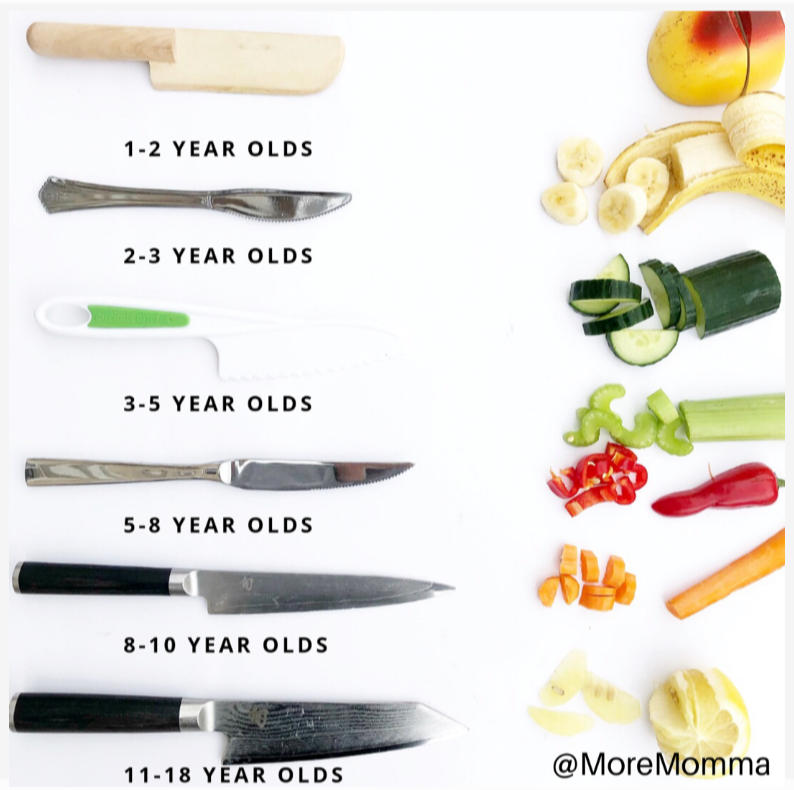
One of the most critical aspects of teaching knife skills is matching the tool to the child's developmental stage. Not all kid's knives are created equal, and using the wrong tool can be counterproductive or even dangerous.
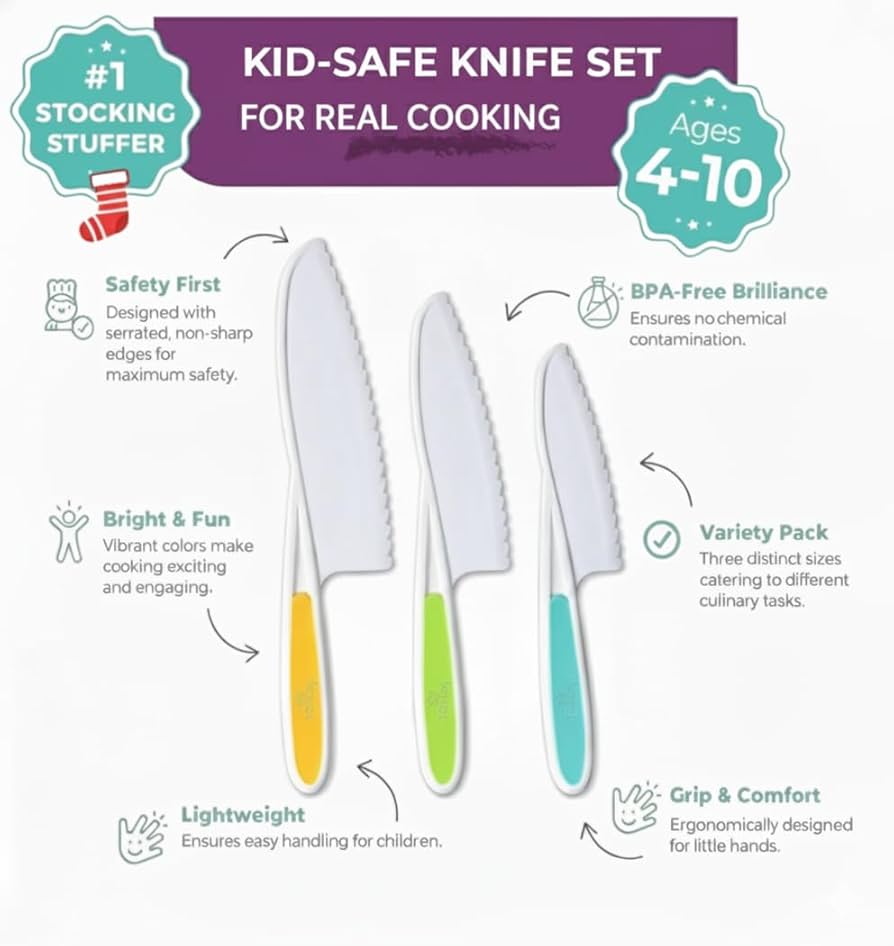
For the youngest budding chefs, safety is the absolute priority. Plastic nylon knives are designed specifically for toddlers. These tools often have serrated edges that are capable of slicing through soft fruits and vegetables like bananas, strawberries, or cucumbers, but they lack the sharpness to penetrate human skin. They are lightweight, colorful, and easy for small hands to grip. While they do not teach the nuances of blade sharpness, they are excellent for developing the hand-eye coordination required for rhythmic chopping.
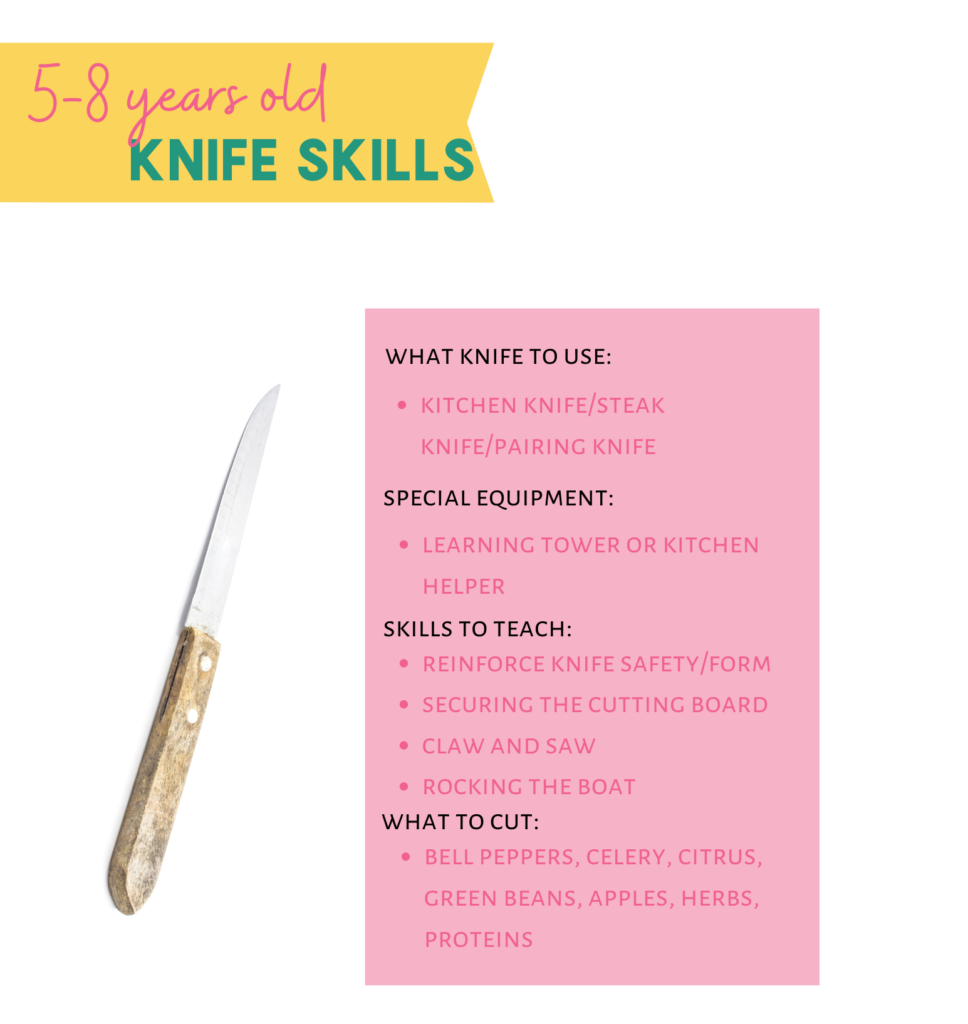
As children grow older, generally around the age of six to nine, they may be ready to move beyond plastic tools. At this stage, you can introduce blunt-tipped metal knives. These knives are sharper than their nylon counterparts, allowing for a cleaner cut, but they lack the dangerous, piercing tip found on adult chef knives. This design helps children focus on the cutting motion itself, rather than worrying about accidentally stabbing themselves or others. It provides a tactile experience closer to a "real" kitchen knife while maintaining a generous safety margin.
By the time a child reaches their pre-teen years, provided they have demonstrated maturity and consistent adherence to safety rules, they may be ready to graduate to a smaller, professional-grade chef's knife. A smaller blade, perhaps five inches in length, is often easier for a younger hand to maneuver with control and precision than a standard, full-sized eight-inch chef's knife. At this stage, the emphasis shifts from safety-focused design to proper technique, maintenance, and respectful handling of sharp tools.
The environment in which a child learns is just as important as the tool they use. Before you ever place a knife in your child's hand, you must establish a secure, predictable workspace.
The "safety circle" is a fundamental concept in knife safety. It is an imaginary space around the child, roughly an arm's length in every direction. The rule is simple: no one is allowed to enter this space while the child is holding a knife. This prevents accidental bumps from siblings, pets, or distracted adults, ensuring that the child has the physical space they need to focus.
A slipping cutting board is a recipe for disaster. Always use a large, heavy cutting board that provides plenty of surface area. A small board can feel cramped and claustrophobic for a child learning new motor skills. To ensure stability, place a damp paper towel or a non-slip silicone mat underneath the cutting board. This simple trick prevents the board from sliding across the counter, allowing the child to apply controlled pressure without fear of the work surface shifting.
Ensure that the kitchen is well-lit so the child can clearly see what they are cutting. Minimize distractions. While cooking should be fun, the initial stages of learning knife skills require concentration. Turn off the television, put away mobile devices, and focus entirely on the task at hand. By treating the activity with importance, you convey to the child that using a knife is a serious task that deserves their full attention.
Teaching technique is about more than just how to slice a carrot. It is about instilling habits that will make the child a safe and efficient cook for the rest of their lives.
Before making any cuts, ensure the child has a secure grip on the handle. Teach them to wrap their fingers firmly around the handle, rather than placing them on the blade or the spine. A loose or incorrect grip can lead to the knife slipping during a cut. Demonstrate how to hold the handle with a firm but comfortable pressure, emphasizing that control is the key to safety.
The most common injury when using a knife occurs to the hand that is holding the food, not the hand holding the knife. To prevent this, teach the "claw" or "bear claw" technique. The child should curl their fingertips inward toward their palm, using their knuckles to guide the blade of the knife safely against the food. This natural barrier prevents the sharp edge from coming into contact with the fingertips. The goal is to keep the fingertips tucked away, making it physically impossible to cut them.
For younger children, the traditional slicing motion can be difficult to coordinate. A great alternative is the "top chop." After the child has learned to hold the knife with a firm grip and protect their free hand using the claw, show them how to place their free hand—still in a protective claw or flat palm position—on top of the spine of the knife. This allows them to apply downward pressure evenly and safely to get through harder vegetables, rather than relying solely on a sawing motion.
A knife is not a toy, and the message must be reinforced consistently. From the first time you hand your child a knife, emphasize that even though these tools are designed for them, they must be treated with the same respect as a professional chef's blade.
Create simple, non-negotiable rules. For example, a knife is only for cutting food, never for playing or gesturing. If a child begins to wave the knife around, get distracted, or use it disrespectfully, the activity stops immediately. This teaches them that the privilege of using a knife is contingent upon responsible behavior.
One of the most important things you can teach is knowing when to put the knife down. If a child needs to walk across the kitchen, talk to someone, or get a new ingredient, the knife must be placed safely on the cutting board or in a designated spot. Never walk around with a knife in hand. Modeling this behavior yourself is the most effective way to ensure your child adopts it as a habit.
It is important to be realistic: minor cuts can and will happen, even when following every rule. Approach the possibility of a cut with calm preparation rather than fear. Keep a first aid kit easily accessible in the kitchen. If a cut occurs, treat it calmly. Explain what happened, how to treat it, and what can be done differently next time to avoid it. By demystifying the injury and focusing on learning, you prevent the child from developing an irrational, paralyzing fear of the knife.
Teaching your child to use a cooking knife is a journey, not a destination. It requires patience, consistency, and a deep understanding of your child's unique pace of development. There will be days when the progress feels slow, and there will be days when your child surprises you with their dexterity and confidence. Embrace both.
By equipping your child with the right tools, a secure workspace, and, most importantly, the knowledge of how to handle a knife with respect and responsibility, you are giving them much more than a culinary skill. You are giving them a sense of autonomy, a deeper connection to the food they eat, and a foundation for a lifetime of confident, safe, and joyful cooking. The kitchen will become a place not just for work, but for connection, laughter, and the shared joy of creation.
1. At what age should I start teaching my child knife skills?
Children can start learning basic skills with nylon knives as young as three or four. The key is to start with soft ingredients and focus on hand coordination. As they demonstrate maturity and follow rules, you can gradually introduce more complex tools and techniques.
2. What are the best foods for a child to start cutting?
Begin with soft items that do not require much pressure. Bananas, strawberries, cucumbers, bell peppers, and zucchini are excellent choices. As their skills improve, you can progress to slightly firmer vegetables like carrots or potatoes using the "top chop" technique.
3. How do I know if my child is ready for a real kitchen knife?
Readiness is based on maturity rather than just age. Your child is ready if they consistently follow safety rules, show respect for the tool, use the "claw" technique automatically, and can focus on the task without distraction. Always supervise them during this transition.
4. What should I do if my child cuts themselves?
Stay calm. Treat the cut immediately with proper first aid, such as washing the area and applying pressure with a clean cloth. Use the moment as a calm, educational opportunity to discuss what happened and how to safely adjust their technique next time, rather than making it a scary or shameful event.
5. How can I make knife skills practice more engaging for kids?
Turn it into a fun, collaborative activity. Allow your child to choose the recipe, let them help "prep" the salad or snacks, and frame it as an exciting milestone in their culinary journey. Using colorful tools and wearing a special apron can also make the experience feel more official and rewarding.


