
- Home
- Products
- About Us
- OEM/ODM
- VR
- Resources
- Contacts


Views: 265 Author: Insight Publish Time: 2026-04-10 Origin: Insight


Content Menu
● How to Buy a Good Cooking Knife
>> Understanding the Basics of Knife Anatomy
>>> The Blade
>> Key Factors in Choosing Your Knife
>> Navigating Different Knife Types
>>> Essential Supplemental Knives
>> Practical Tips for Your Purchase
>>> Don't Be Overwhelmed by Price
>>> Consider Your Cutting Surface
>> Summary
A great dish always begins with the right preparation, and at the heart of every kitchen task lies one essential tool: the cooking knife. Whether you are a novice cook just starting your culinary journey or an experienced home chef looking to upgrade your gear, understanding how to select a high-quality knife is crucial. A good knife is not merely a piece of equipment; it is an extension of your hand that transforms the way you interact with ingredients, making cooking more efficient, safe, and enjoyable.

To buy a good knife, you must first understand what makes one. A knife is composed of several key parts, each playing a role in its overall performance and comfort.
The blade is the business end of the knife. It is generally crafted from stainless steel, carbon steel, or ceramic. When shopping, look for high-carbon stainless steel. This material offers a superior balance of edge retention, toughness, and ease of maintenance, ensuring it remains sharp while resisting rust and staining. Forged blades, which are hammered into shape from a single piece of metal, are typically more durable, weighted, and balanced than stamped blades, which are cut out from a sheet of metal.
The handle provides the grip and control necessary for precise cutting. Whether you prefer a Western-style grip or a Japanese Wa-handle, the most important factor is that it feels natural in your hand. Look for a knife with a full tang, meaning the metal of the blade extends all the way into the handle. This provides better balance, stability, and longevity, preventing the blade from snapping at the connection point.
Beyond the basic anatomy, several functional aspects dictate whether a knife will serve you well for years to come.
Balance is highly subjective. Some cooks prefer the substantial heft and weight of a classic German-style knife, which utilizes its weight to do the work, while others prefer the lightweight, agile feel of a Japanese blade. Test the knife by holding it in a pinch grip. If it feels balanced and comfortable rather than straining your wrist, it is a good fit for your hand.
The sharpness and geometry of the edge determine how the knife cuts. A flatter edge profile is often better for chopping and dicing, while a curved belly facilitates a rocking motion for mincing herbs. Some modern knives are hybrids, blending the sharp, thin edges of Japanese steel with the durable, robust construction of German manufacturing to offer the best of both worlds.
While there are many specialized knives available, you do not need an entire arsenal to be an effective cook.
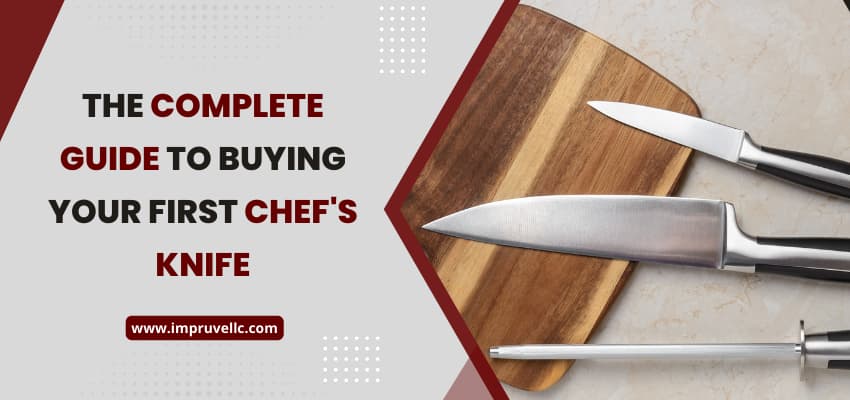
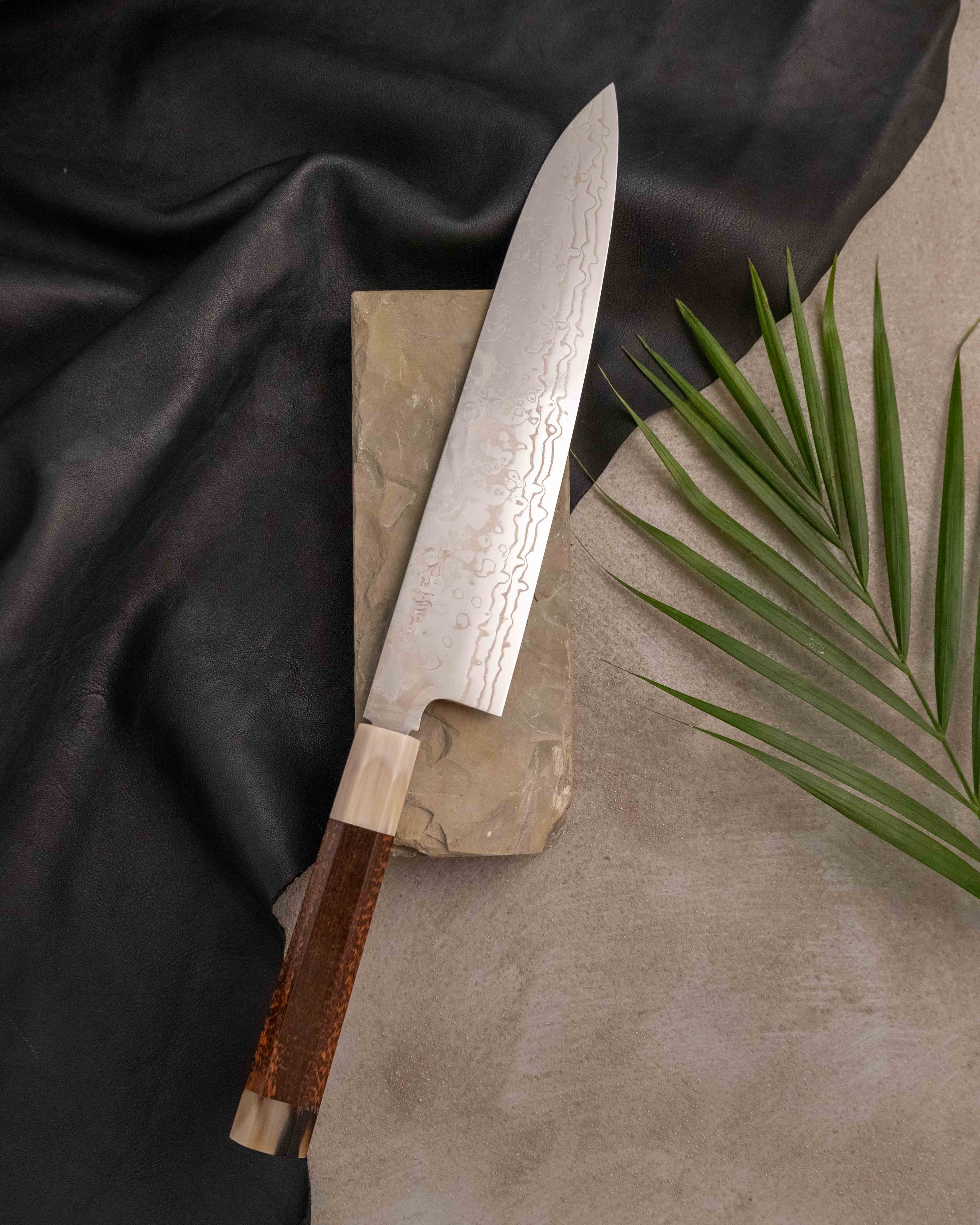
For most tasks, a standard Chef's Knife or a Santoku will be your most valuable tool. A Chef's Knife features a curved blade perfect for versatile cutting styles, while the Santoku has a straighter edge and a flatter tip, excellent for precise, clean cuts. These two types cover the vast majority of your kitchen needs, from slicing vegetables to prepping meat.
Once you have a reliable primary knife, you may consider adding purpose-specific tools to your set. A paring knife is indispensable for delicate work like peeling or trimming, while a serrated bread knife makes short work of crusty loaves without crushing them. A flexible boning knife is a great addition for those who frequently butcher meat or poultry at home.
Selecting the right knife is only the first step. To ensure you get the most out of your investment, follow these guidelines.
While quality is important, expensive knives are often more of a luxury than a necessity. You can find excellent, reliable knives at a reasonable price point. Focus on the steel quality, the construction process, and how it feels in your hand rather than the brand name or the price tag.
A common mistake is buying a high-end knife and using it on a glass, ceramic, or stone cutting board. These surfaces will instantly dull or damage your edge. Invest in a quality wooden or high-density plastic cutting board to protect your knife and keep it performing at its best.
Even the finest knife will become dull over time. Develop a routine of honing your blade regularly with a steel to keep the edge aligned, and have your knives professionally sharpened at least once or twice a year. Regular maintenance keeps your tools safe and effective, ensuring your kitchen remains a place of joy rather than frustration.
What is the main difference between German and Japanese knives?
German knives are generally heavier, thicker, and made from softer, more durable steel, while Japanese knives are lighter, thinner, and made from harder, sharper steel that requires more careful maintenance.
Why is a full-tang knife considered better?
A full-tang knife, where the blade metal extends through the entire handle, provides superior balance, strength, and durability, reducing the risk of the blade separating from the handle during heavy use.
How often should I sharpen my cooking knife?
While you should use a honing steel before or after every major use to keep the edge aligned, professional sharpening is recommended once or twice a year to restore the blade's original sharpness.
Is it worth buying a complete knife block set?
Often, pre-assembled sets include knives you may rarely use. It is usually more economical and practical to purchase a high-quality chef's knife first, then add specialized knives as you identify your specific needs.
What is the best cutting board to use with a good knife?
Wood or high-density polyethylene boards are ideal. They are softer than the metal of your knife blade, allowing the edge to bite into the surface without being immediately dulled or chipped.


