
- Home
- Products
- About Us
- OEM/ODM
- VR
- Resources
- Contacts


Views: 267 Author: Insight Publish Time: 2026-03-14 Origin: Insight


Content Menu
>> The Foundation: Choosing and Maintaining Your Tools
>>> The Importance of Sharpness
>>> Selecting the Right Knife for the Job
>> Mastering Essential Handling Techniques
>>> The Proper Grip
>>> The Guiding Hand: The Claw Technique
>>> Stabilizing Your Cutting Board
>>> Organization and Awareness
>> Responsible Cleaning and Storage
>>> Proper Storage
>> Final Thoughts on Culinary Safety
>> Summary
Cooking is a fundamental life skill that brings joy, nourishment, and creativity into our daily routines. At the heart of most culinary endeavors lies the kitchen knife, an indispensable tool for chopping, slicing, dicing, and mincing ingredients. However, the very sharpness that makes a knife efficient also renders it a potential hazard if handled improperly. For home cooks and culinary enthusiasts alike, cultivating a deep respect for knife safety is not merely a technical necessity; it is a vital practice that transforms cooking from a stressful task into a refined, enjoyable craft. This comprehensive guide outlines the essential principles and techniques to ensure your time in the kitchen remains productive and, above all, safe.

Before you ever make the first slice, your commitment to safety begins with the quality and condition of your equipment. A common misconception among beginners is that a dull knife is safer than a sharp one. In reality, the opposite is true. A dull blade requires significantly more physical pressure to penetrate food, which increases the likelihood of the blade slipping off the ingredient and causing an accidental injury.
Maintaining a sharp edge is the most critical aspect of kitchen safety. A sharp knife acts as an extension of your hand, gliding effortlessly through vegetables, fruits, and proteins with minimal force. This controlled movement allows you to dictate precisely where the blade travels. Conversely, a dull knife is unpredictable and prone to "skating" across surfaces, especially when cutting items with tough skins like tomatoes or onions. You should develop a habit of honing your knives regularly with a honing steel to realign the blade edge and scheduling periodic professional sharpening to ensure the geometry of the blade remains optimal.
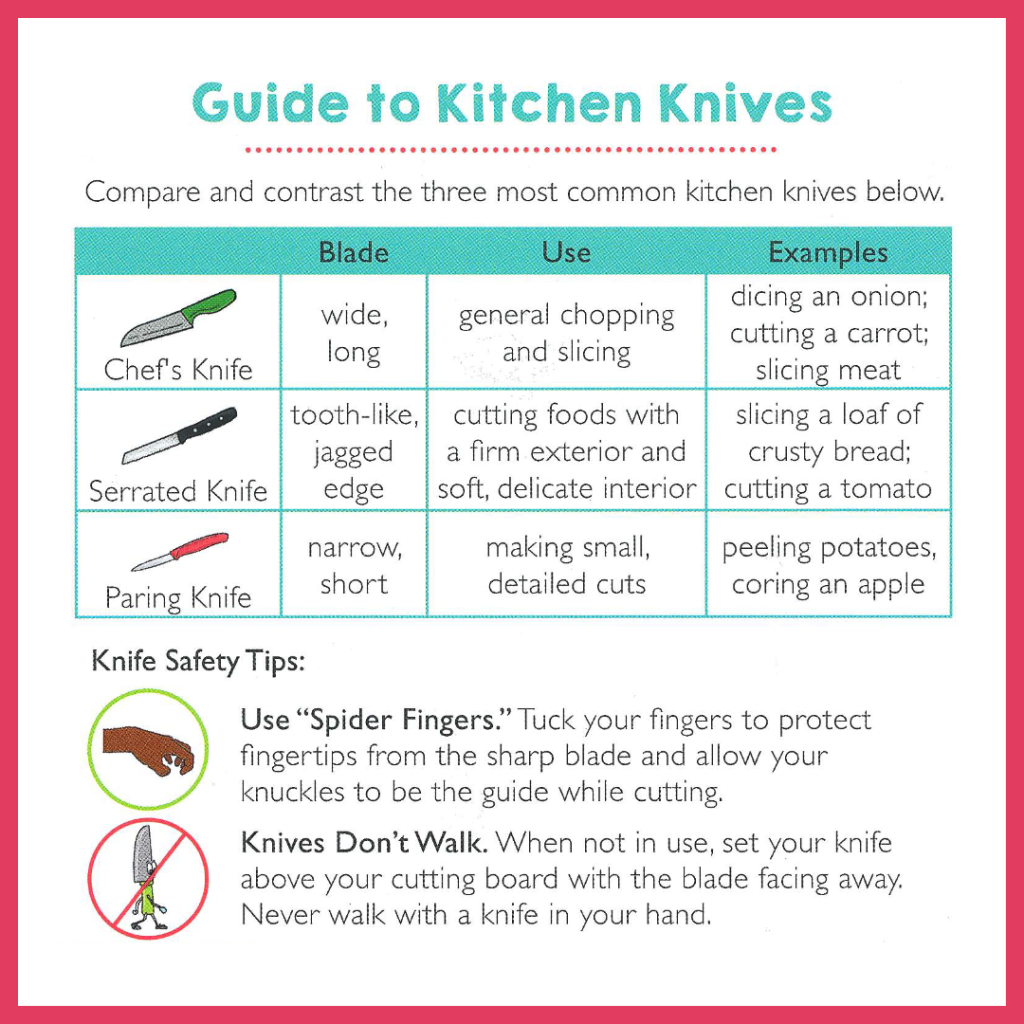
Safety is also closely linked to using the appropriate tool for the specific task at hand. Utilizing a large chef's knife for intricate, delicate work, or trying to use a small paring knife for heavy-duty chopping, creates unnecessary risks. A chef's knife is designed for versatile tasks, including chopping and dicing. A serrated knife is essential for bread and items with delicate skins, while a paring knife is perfect for small, controlled peeling and trimming tasks. Always select a knife that feels comfortable and balanced in your hand, as a tool that is too heavy or awkwardly shaped will lead to faster fatigue and reduced control.
Once you have high-quality, sharp tools, the next step involves mastering the physical interaction between your hands, the knife, and the ingredient. Your posture, grip, and guiding hand are the three pillars of safe knife work.
Many novices make the mistake of holding a knife solely by its handle, with the index finger pointing along the spine. While this may feel intuitive, it actually reduces stability and control. The professional "pinch grip" is widely regarded as the safest and most efficient method. To execute this, place your thumb and index finger on the blade itself, just forward of the handle, while wrapping your remaining fingers securely around the handle. This grip gives you superior leverage and keeps the knife aligned with your arm, effectively making the blade a natural extension of your hand.
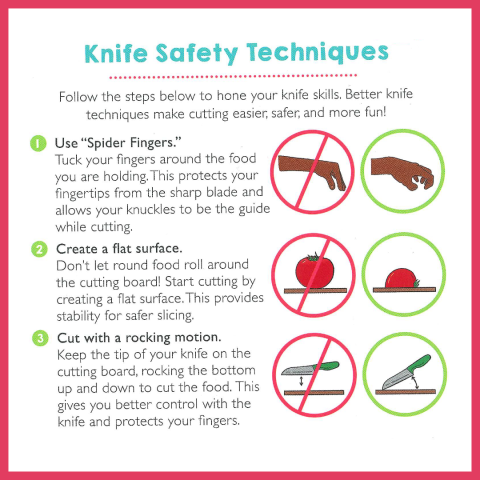
The hand that holds the food is the one most at risk of injury. To protect your fingers, you must master the "claw technique." Instead of laying your fingers flat against the ingredient, tuck your fingertips inward toward your palm, creating a "claw" shape. The side of the knife blade should rest gently against your knuckles as you slice. Your knuckles act as a guide for the blade, ensuring that the knife never rises above the level of your protected fingertips. As you move your hand backward along the ingredient while cutting, keep your fingertips tucked securely away from the path of the blade.
The environment in which you work is just as important as your technique. A cluttered or unstable kitchen is a recipe for disaster when knives are involved.
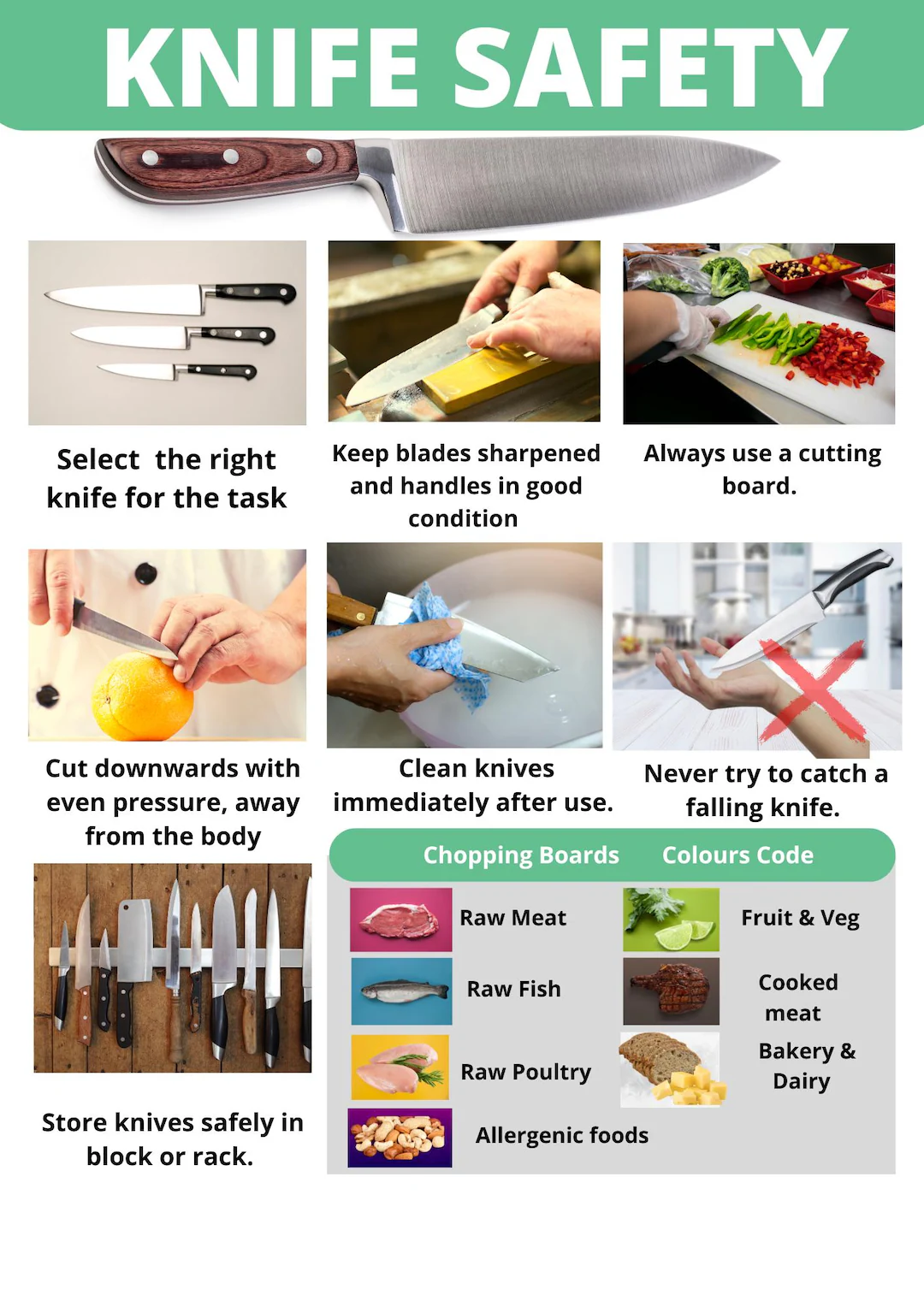
Never cut on a smooth or slick surface. If your cutting board slides across the counter, your control over the knife is immediately compromised. Always place a damp paper towel or a non-slip silicone mat underneath your cutting board to anchor it firmly to the countertop. A stable foundation allows you to focus entirely on your knife skills rather than worrying about the board shifting unexpectedly.
Maintain a tidy workstation by clearing away ingredients and debris as you finish with them. When you are distracted, accidents happen. Stay focused on the task at hand. If you need to walk away from your station, even for a brief moment, always set your knife down in a secure, visible location—never leave it buried under a pile of ingredients or precariously close to the edge of the counter. Furthermore, never try to catch a falling knife. If your knife begins to slip off the counter, step back immediately and let it fall. Your safety is worth far more than the potential damage to the blade.
The dangers associated with knives extend beyond the active cutting process; many accidents occur during cleaning and storage.
Never drop your knives into a sink full of soapy water, as they become invisible hazards to anyone reaching in. Always wash your knives immediately after use, keeping the sharp edge pointed away from your body and your fingers. Hold the knife by the handle and carefully wipe the blade with a sponge or cloth, moving from the spine toward the edge, rather than directly along the sharpened edge.
Storing knives properly protects both your fingers and the blades themselves. Avoid throwing knives loose into a kitchen drawer, which dulls the edges and poses a significant risk to anyone rummaging for utensils. Instead, utilize a dedicated knife block, a magnetic wall strip, or individual blade guards. These storage solutions keep your knives organized, protected, and out of the way when they are not in use. If you use a dishwasher, follow the manufacturer's guidelines, but generally, it is best to wash high-quality knives by hand to preserve the edge and handle integrity.
Knife safety is an evolving practice that demands consistent mindfulness. By maintaining sharp blades, utilizing proper grips and guiding techniques, ensuring a stable workspace, and observing rigorous cleaning and storage habits, you can significantly reduce the risk of injury. Remember that every master chef was once a beginner who learned these fundamentals through patience and repetition. As you integrate these habits into your daily cooking routine, you will find that safety does not restrict your culinary creativity—rather, it provides the solid foundation required for confidence, speed, and precision in the kitchen.
1. What should I do if I accidentally cut myself while cooking?
First, stop cutting immediately and apply firm, direct pressure to the wound with a clean cloth or bandage to stop the bleeding. If the cut is shallow, clean it thoroughly with mild soap and water, apply an antibiotic ointment, and cover it with a bandage. Seek professional medical attention if the cut is deep, continues to bleed after several minutes of pressure, involves numbness, or shows signs of infection.
2. Is it really safer to use a sharp knife than a dull one?
Yes. A sharp knife cuts through food with minimal resistance, giving you precise control over the blade's path. A dull knife requires excessive force, which makes the blade prone to slipping off the food and hitting your fingers. Consistent maintenance, such as honing and professional sharpening, is essential for safety.
3. How can I keep my fingers safe while chopping vegetables?
The most effective way is to use the "claw technique." Curl your fingertips inward toward your palm, using your knuckles to guide the side of the blade. This creates a physical barrier that prevents your fingertips from coming into contact with the sharp edge of the knife.
4. How should I carry a knife when walking across the kitchen?
Always hold the knife firmly by the handle at your side, with the blade pointing straight down toward the floor and the sharp edge facing behind you. Never walk with the tip of the knife pointing forward or outward. If you are passing a knife to someone else, set it down on a stable surface and let them pick it up, or offer the handle to them while ensuring the blade is directed away from both of you.
5. What is the best way to keep my cutting board from sliding?
Place a damp paper towel, a damp kitchen towel, or a non-slip silicone mat underneath your cutting board. This simple step creates friction, preventing the board from shifting on the countertop while you work and significantly improving your overall safety and control.


