
- Home
- Products
- About Us
- OEM/ODM
- VR
- Resources
- Contacts


Views: 277 Author: Insight Publish Time: 2026-05-11 Origin: Insight


Content Menu
● Factory vs Trading Company: How to Tell the Difference
>> Key Differences in Business Models
>> Evaluating Pricing and Profit Margins
>> Communication and Service Levels
>> How to Distinguish Between Them
>> Choosing the Right Partner for Your Business
>> Conclusion
>> Abstract
When sourcing products from international markets, particularly from manufacturing hubs like China, one of the most critical decisions you will make is whether to partner with a factory or a trading company. This choice can significantly impact your profit margins, production quality, communication efficiency, and overall supply chain stability. Many buyers assume that dealing directly with a manufacturer is always the superior option, but the reality is more nuanced. Understanding the distinct characteristics, advantages, and drawbacks of each entity is essential for making an informed strategic decision for your business.
To navigate the supply chain effectively, it is first necessary to define what these entities actually are. A factory, or manufacturer, is the physical facility where products are produced. They operate the machinery, employ the workers, and manage the direct production processes of raw materials into finished goods. Their expertise lies in manufacturing, technical engineering, and managing production lines. When you work with a factory, you are engaging with the source of the product.
A trading company, on the other hand, does not manufacture goods. Instead, they act as intermediaries or merchants. They source products from various manufacturers and resell them to international buyers. Their core competence lies in trade, logistics, export compliance, and market outreach. They often represent multiple factories, offering a wide array of products, and they essentially bridge the gap between local manufacturers who may lack export experience and global buyers who need reliable, consolidated supply sources.
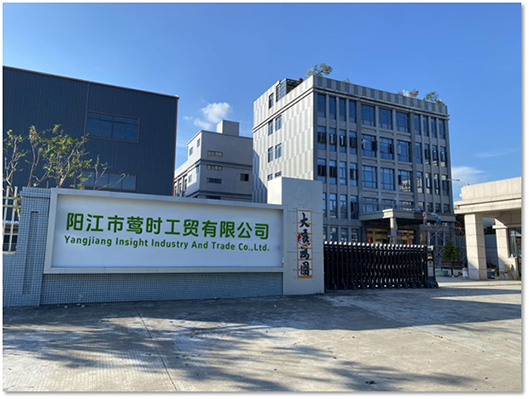
The operational models of these two entities are fundamentally different. A factory is deeply invested in its production capacity, equipment maintenance, and labor management. Their primary concern is the efficient operation of their manufacturing floor. Because they are production-focused, their ability to offer a diverse range of products is limited by their existing machinery and specialization.
In contrast, a trading company possesses a much more flexible and diverse product portfolio. They are not tied to a single production line. If a buyer needs a variety of different items—for example, a complete set of office stationery—a trading company can source the pens, paper, staplers, and desk organizers from several specialized factories and consolidate them into a single shipment. This capability for consolidation is a significant advantage for buyers who do not want to manage relationships with dozens of individual suppliers.
One of the most commonly cited reasons for choosing a factory direct model is the potential for cost savings. By eliminating the middleman, buyers often expect to access lower wholesale prices. While it is true that you are removing the trading company's markup, it is not always guaranteed that the factory price will be lower. Trading companies often source in high volumes, which allows them to negotiate better rates with factories than an individual importer could achieve. Furthermore, trading companies often have established, efficient logistics and export processes that can sometimes be more cost-effective than a factory attempting to manage international shipping on their own.
Communication style is often a clear indicator of the supplier type. Trading companies typically employ staff with stronger language skills and international business experience, as their primary business model relies on effective communication with global clients. They are often faster at responding to inquiries, more flexible with minimum order quantities, and more adept at navigating cross-cultural business nuances.
Factories, particularly those that are more traditional or engineering-focused, might be less responsive to non-technical emails or might have staff with limited international trade expertise. Their communication is often centered on technical specifications, production schedules, and material requirements rather than the broad service-oriented approach common in trading companies.

Distinguishing between a factory and a trading company requires careful due diligence. First, examine their product range. A supplier offering a highly specialized set of items—such as only LED lights—is more likely to be a factory. If a supplier offers a vast, unrelated catalog of products—such as electronics, home decor, and clothing—they are almost certainly a trading company.
Second, request a site visit or a video call. A genuine factory will be able to show you their production floor, machinery, and warehouse. If a supplier is evasive about video tours, or if they constantly change their location, it is a red flag. Third, look at their business registration and export documentation. A quick check of their company name or registration documents can reveal whether they are categorized as a manufacturer or a trading company.
There is no inherently better choice between a factory and a trading company. The ideal partner depends entirely on your specific business goals, scale, and requirements. If your business is large enough to negotiate directly, has a focused product line, and requires strict quality control at the source, a direct factory relationship is likely the best strategy.
However, if you are a smaller importer, need product consolidation, or require a partner who can manage the complexities of export documentation and logistics, a reputable trading company can be an invaluable asset. Often, the most successful strategy involves vetting both types of suppliers and choosing the one that best aligns with your long-term sourcing objectives.
Successfully identifying whether a supplier is a factory or a trading company is a fundamental skill in global sourcing. While factories offer the appeal of being closer to the source and potentially lower costs, trading companies offer convenience, flexibility, and broader service capabilities. By understanding their distinct business models, evaluating their communication styles, and conducting thorough due diligence, you can align yourself with the right partners, mitigate risks, and build a more resilient and profitable supply chain.
1. Is it always cheaper to buy directly from a factory?
Not necessarily. While you save on the trading company's margin, factories often have higher minimum order requirements and may lack the logistics efficiencies that experienced trading companies provide.
2. How can I confirm if a supplier is a real factory?
You can request a video call to see their production floor, verify their business registration documentation, or hire a professional third-party inspection service to conduct a factory audit.
3. Why would I choose a trading company over a factory?
A trading company is better for smaller buyers, those needing to consolidate different product types into one shipment, or buyers who need superior communication and international trade expertise.
4. Can a factory also act as a trading company?
Yes, some factories have their own export departments or subsidiary trading entities to help sell their products and sometimes even bundle them with complementary products from other local manufacturers.
5. What is the most common mistake buyers make when sourcing?
The most common mistake is assuming that a supplier is a factory based on a website or profile description without conducting independent verification, leading to unexpected costs and communication issues.


