
- Home
- Products
- About Us
- OEM/ODM
- VR
- Resources
- Contacts


Views: 666 Author: Site Editor Publish Time: 2026-07-30 Origin: Site


Content Menu
● 1. The Core Scientific Principle: Why Stainless Steel Is Not 100% Rust-Proof
● 2. Internal Material Factors Leading to Stainless Steel Knife Rust
>> 2.1 Insufficient Chromium Content or Unqualified Alloy Ratio
>> 2.2 Defects in Production and Polishing Processes
>> 2.3 Iron Contamination During Production and Processing
● 3. External Usage and Environmental Causes of Stainless Steel Knife Rust
>> 3.1 Long-Term Residue of Humid and Acid-Base Food Stains
>> 3.2 Long-Term Placement in Humid and Unventilated Environments
>> 3.3 Mechanical Scratches and Surface Damage
>> 3.4 Long-Term Non-Use and Lack of Regular Maintenance
● 4. Misconceptions About Stainless Steel Knife Rust Resistance
● 5. FAQ About Stainless Steel Knife Rusting
>> Q1: Is it normal for brand-new stainless steel knives to have tiny rust spots?
>> Q2: Can rusty stainless steel knives continue to be used for food cutting?
>> Q3: How to prevent stainless steel chef knives and santoku knives from rusting in daily use?
>> Q4: What is the difference in rust resistance between bread knives, paring knives and chef knives?
>> Q5: Will stainless steel knives rust permanently after being corroded once?
Yangjiang Insight Industry And Trade Co.,Ltd. is a professional manufacturer with over 23 years of dedicated experience in the design, production, and global sales of premium kitchen cutlery and kitchen tools, including chef knives, santoku knives, bread knives, paring knives, and a full range of specialized kitchen utensils. Boasting a 20,000-square-meter production workshop and a robust monthly production capacity of up to 5 million pieces, the company delivers reliable OEM and ODM services for renowned kitchenware brands worldwide. For decades, most consumers and even some industry practitioners have held a fixed misconception that stainless steel cutlery is completely rust-proof and maintenance-free. In fact, stainless steel knives also rust, and rust spots, pitting corrosion, and surface discoloration are extremely common problems in daily use and long-term storage of stainless steel cutlery. This in-depth guide will systematically elaborate on the essential reasons why corrosion occurs on stainless steel kitchen knives, distinguish the core differences between ordinary carbon steel knives and rust-resistant stainless steel cutlery, and analyze external environmental factors, improper usage habits, and material characteristics that trigger stainless steel knife rusting, helping users fully understand the anti-corrosion principle and maintenance logic of high-quality kitchen cutlery.
To figure out why stainless steel cutlery develops rust, we first need to clarify the anti-corrosion mechanism of stainless steel materials, which is the fundamental basis for explaining all rust phenomena on stainless steel knives. Unlike pure iron or ordinary carbon steel cutlery that is prone to rapid oxidation and corrosion, qualified food-grade stainless steel for kitchen knives contains more than 10.5% chromium element, which is the core component that endows stainless steel with corrosion resistance. When stainless steel is exposed to air, the chromium element on its surface will preferentially react with oxygen in the environment to form an ultra-thin, dense, and stable chromium oxide passivation film, with a thickness of only a few nanometers. This invisible protective layer tightly covers the metal surface, isolating the internal iron alloy from external oxygen, moisture, and corrosive substances, thereby preventing the oxidation reaction that produces rust.
However, this protective passivation film is not indestructible, which is the key reason why stainless steel knives can still rust. The passivation film is extremely thin and fragile, and once it is damaged, worn, or fails to regenerate in time, the internal iron matrix of the stainless steel will be directly exposed to external corrosive environments. Without the barrier protection of the chromium oxide layer, iron elements will undergo oxidation and electrochemical reactions with water, oxygen, and corrosive ions in the air, generating iron oxide deposits, namely the reddish-brown rust spots we see on knife surfaces. It is critical to emphasize that the term “stainless steel” only means the material has excellent rust resistance and slow corrosion rate, rather than absolute rust-proof performance. All stainless steel kitchen tools, including premium chef knives, sharp paring knives, serrated bread knives, and multi-functional santoku knives, face the risk of rusting under specific conditions.
2. Internal Material Factors Leading to Stainless Steel Knife Rust
Many people attribute knife rust entirely to improper daily use, but in fact, the inherent material quality and production process of stainless steel cutlery are the primary internal causes of rust problems. Different grades of stainless steel have huge differences in chromium content, molybdenum additives, carbon content, and alloy ratio, which directly determine the anti-corrosion performance of finished kitchen knives.
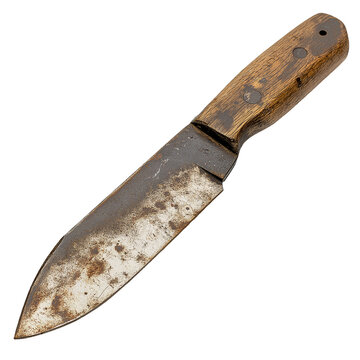
As mentioned earlier, 10.5% chromium content is the minimum standard for stainless steel to form a stable passivation film. Some low-cost inferior stainless steel cutlery on the market cuts corners in material configuration, with chromium content lower than the national food-grade standard, or excessive carbon impurities in the alloy. Excess carbon will combine with chromium to form chromium carbide during the forging and heat treatment process of kitchen knives, resulting in the loss of effective chromium elements on the metal surface. This leads to incomplete or unstable passivation film formation on the knife surface, making the cutlery lose basic anti-rust ability and develop rust spots quickly after short-term use.
The surface finish of stainless steel knives is closely related to their corrosion resistance. High-precision polished kitchen cutlery has a smooth and flat surface with no tiny gaps or scratches, which is conducive to the uniform formation of the passivation film and reduces the adhesion of corrosive substances. In contrast, inferior knives with rough polishing, uneven grinding marks, or surface pores will form tiny dead spaces on the surface. These micro-defects cannot be completely covered by the passivation film, and moisture, food residues, and dust will accumulate in the gaps, triggering localized pitting corrosion and gradually expanding into obvious rust areas. As a professional OEM and ODM cutlery manufacturer, Yangjiang Insight Industry And Trade Co.,Ltd. strictly controls the polishing and heat treatment process of every chef knife, santoku knife, and bread knife, ensuring uniform surface finish and complete passivation film protection to avoid process-induced rust risks.
In the mass production of kitchen tools, cross-contamination of iron impurities is a common hidden risk. If the production equipment, grinding tools, or cleaning devices are not thoroughly cleaned, tiny iron filings and iron dust will adhere to the surface of stainless steel knives. These exogenous iron particles do not have anti-corrosion properties and will oxidize and rust when exposed to moisture. The rust generated by iron contamination will gradually spread to the surrounding stainless steel surface, destroy the local passivation film, and induce secondary corrosion of the knife body, forming scattered rust spots that are difficult to remove.
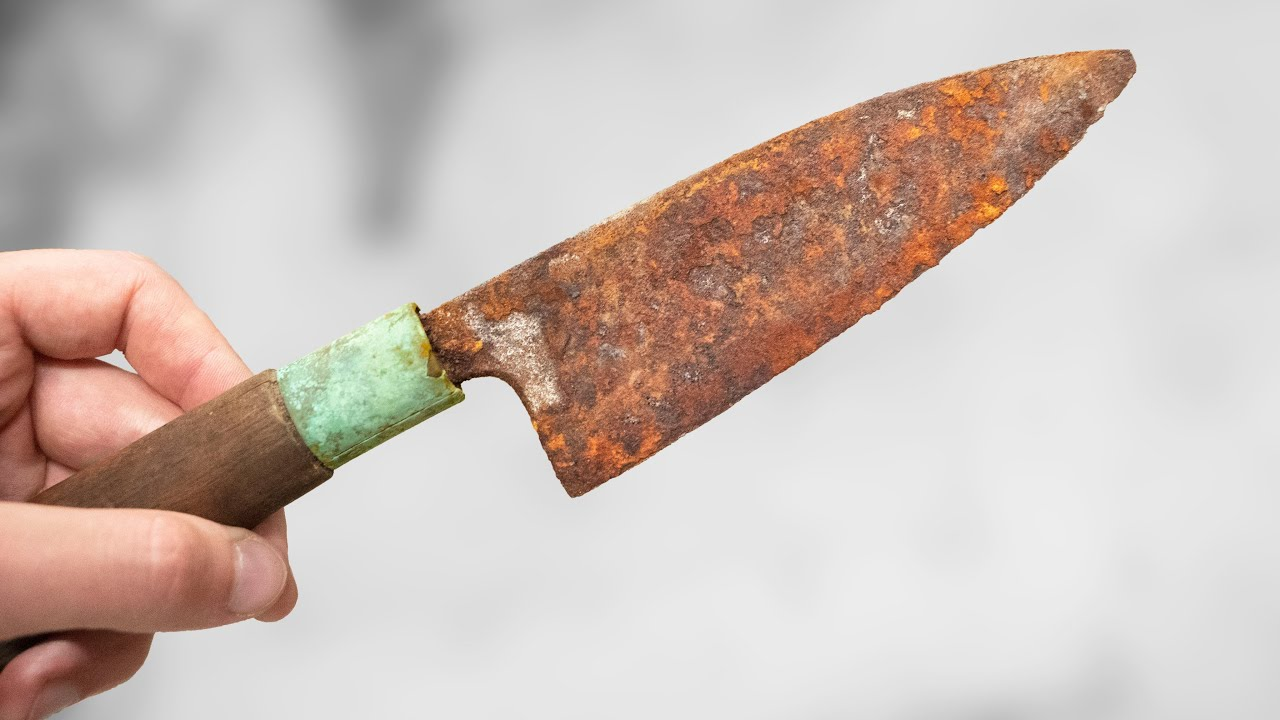
Even high-quality food-grade stainless steel knives with qualified materials and exquisite craftsmanship will rust severely under inappropriate usage habits and harsh storage environments. In daily kitchen scenarios, most stainless steel cutlery corrosion problems are caused by external environmental factors and improper operation, which are also the most avoidable rust triggers.
Kitchen environments are full of corrosive substances that easily damage stainless steel passivation films. Fruits, vegetables, condiments, and daily food ingredients contain a large amount of organic acids, salt (sodium chloride), and alkaline components. After using a paring knife to peel citrus fruits, tomatoes, and pineapples, or using a chef knife to cut pickled vegetables, salty meat, and seasoned ingredients, if the food residue and juice on the knife surface are not cleaned in time, these acidic and saline substances will adhere to the blade for a long time. Chloride ions in salt are extremely destructive to the chromium oxide passivation film; they can penetrate the thin protective layer, destroy the bonding structure of the film, and cause localized film rupture. Once the passivation film is damaged, the humid kitchen environment will quickly trigger electrochemical corrosion on the blade, forming dense tiny rust pits.
Moisture is the necessary condition for all metal oxidation and corrosion. Many users habitually wash stainless steel kitchen knives and place them directly in closed knife blocks, kitchen drawers, or damp dish racks without drying them. The residual water droplets on the blade will form a continuous water film on the metal surface. In a closed and unventilated space, the water film cannot evaporate for a long time, and the oxygen dissolved in the water continuously reacts with the stainless steel matrix. Different from dry air environment, the humid water film will accelerate the failure of the passivation film and greatly shorten the rust induction period of the stainless steel knife. Especially in coastal areas with high air humidity and salt fog, or rainy seasons with continuous humid weather, unventilated storage will significantly increase the rust probability of santoku knives, bread knives, and other daily-use cutlery.
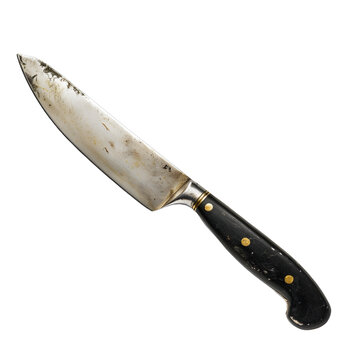
The passivation film of stainless steel is thin and wear-resistant. Daily improper use behaviors will cause irreversible mechanical damage to the blade surface, destroying the complete protective layer. Common wrong operations include: using stainless steel knives to cut hard objects such as bones, metal cans, and hard shells, resulting in blade scratches and micro-cracks; rubbing the blade with rough steel wool and hard cleaning brushes when cleaning cutlery; stacking multiple kitchen tools randomly, causing friction and collision between knife bodies. These mechanical damages will form local blank areas without passivation film protection. These damaged areas become corrosion priority points, and rust will first appear here and gradually spread to the entire blade surface over time.
Many families will store kitchen knives for a long time during travel, holidays, or seasonal replacement. If the stainless steel cutlery is not cleaned, dried, and oiled before storage, the tiny residual stains and invisible moisture on the blade will slowly corrode the metal surface during long-term placement. Different from frequent-use knives that can form new passivation films through regular contact with oxygen, long-term static storage makes it impossible for the damaged passivation film to repair itself. The subtle corrosion continues to accumulate, and finally forms obvious rust spots and oxide layers on the blade. This problem is particularly prominent in high-precision thin-blade cutlery such as paring knives and bread knives, which have finer surfaces and are more sensitive to corrosion.
In the long-term use of kitchen cutlery, many users’ wrong cognition accelerates the rusting of stainless steel knives. Correctly distinguishing these misconceptions can effectively extend the service life of all types of stainless steel kitchen tools. First, many users believe that thicker stainless steel knives are more rust-proof, but in fact, the anti-corrosion performance depends on the alloy material and surface protection state, not the blade thickness. Thick chef knives with inferior materials are still prone to rust, while thin high-grade stainless steel paring knives have stable anti-rust performance. Second, some users think that all stainless steel cutlery is the same, ignoring the grade difference of stainless steel. Food-grade 304, 316 stainless steel has far better corrosion resistance than 201 stainless steel, and high-end customized knives produced by formal OEM/ODM manufacturers adopt standardized food-grade materials to ensure stable anti-rust effect.
Third, a common misconception is that rusty stainless steel knives are unqualified products. In fact, even top-grade stainless steel cutlery will rust under extreme corrosive conditions and improper maintenance. Rust is not only a product quality problem but more a usage and maintenance problem. Mastering correct cleaning, drying, and storage methods can almost completely avoid the rust phenomenon of high-quality stainless steel kitchen knives.
To solve users’ daily doubts about stainless steel knife corrosion and maintenance, we have sorted out 5 high-frequency questions and professional answers based on years of kitchen tool production and after-sales experience:
Answer: A small number of tiny rust spots on new stainless steel knives are mostly caused by surface iron contamination during transportation and packaging, not product quality problems. The iron filings in the packaging environment adhere to the blade surface and oxidize to form superficial rust, which can be completely removed by cleaning with warm water and a soft sponge. If large-area deep rust and pitting corrosion appear on a brand-new knife, it indicates unqualified material or process quality.
Answer: Superficial slight rust can be removed and used normally. After cleaning the rust and drying the blade thoroughly, the stainless steel passivation film will repair itself in the air, restoring anti-corrosion performance. However, knives with deep pitting corrosion and persistent rust cannot be used continuously. The rust gaps will hide bacteria and food residues, which are difficult to clean thoroughly and will affect food safety.
Answer: The core of anti-rust maintenance is to keep the blade clean and dry. Clean food residues and juice immediately after each use, dry the blade with a clean cotton cloth, and store it in a dry and ventilated knife rack. Avoid long-term placement of acidic and salty food on the blade, avoid hard object scratching, and apply a thin layer of edible oil on the blade for long-term storage to form an auxiliary protective layer.
Answer: The rust resistance of different types of kitchen knives depends on their material and usage scenarios, not the knife type. Serrated bread knives have more surface gaps and are easy to hide dirt, so they are more prone to local rust if not cleaned carefully; small paring knives are often used to cut acidic fruits, facing higher corrosion risks; thick chef knives have smoother blade surfaces and are relatively easier to maintain anti-rust performance.
Answer: No. Stainless steel has self-repairing passivation performance. After removing surface rust, cleaning and drying the blade completely, the chromium element on the surface will react with oxygen again to regenerate a dense protective film. As long as correct maintenance is adhered to later, the knife can maintain stable anti-rust performance for a long time without repeated rusting.


