
- Home
- Products
- About Us
- OEM/ODM
- VR
- Resources
- Contacts


Views: 256 Author: Insight Publish Time: 2026-01-22 Origin: Insight


Content Menu
● The Anatomy of a Chef's Knife
>> Blade
>> Handle
>> Bolster
● Common Uses of a Chef's Knife
>> Slicing Meat
● Techniques for Using a Chef's Knife
● Choosing the Right Chef's Knife
● Maintaining Your Chef's Knife
>> Safe Storage
A chef's knife is one of the most essential tools in any kitchen. Its versatility and functionality make it a favorite among both professional chefs and home cooks alike. In this article, we will explore the various uses of a chef's knife, its history, how to choose the right one, and tips for maintaining it.

Before diving into the uses of a chef's knife, it is important to understand its anatomy. A typical chef's knife features a broad blade that tapers to a point, allowing for a variety of cutting techniques.
The blade of a chef's knife is usually between 6 to 12 inches long. The length of the blade can affect the knife's maneuverability and cutting power. A longer blade is ideal for slicing larger items, while a shorter blade offers more control for intricate tasks.
The handle of a chef's knife is designed for comfort and grip. It can be made from various materials, including wood, plastic, or metal. A well-designed handle allows for a secure grip, reducing the risk of accidents while cutting.
The bolster is the thick junction between the blade and the handle. It provides balance and stability, making the knife easier to control. A good bolster also protects the hand from slipping onto the blade.
The chef's knife is a multi-purpose tool that can be used for a wide range of tasks in the kitchen. Here are some of the most common uses:
One of the primary uses of a chef's knife is chopping vegetables. The broad blade allows for efficient cutting through various types of produce, from soft tomatoes to hard carrots. The rocking motion used while chopping enhances speed and efficiency.
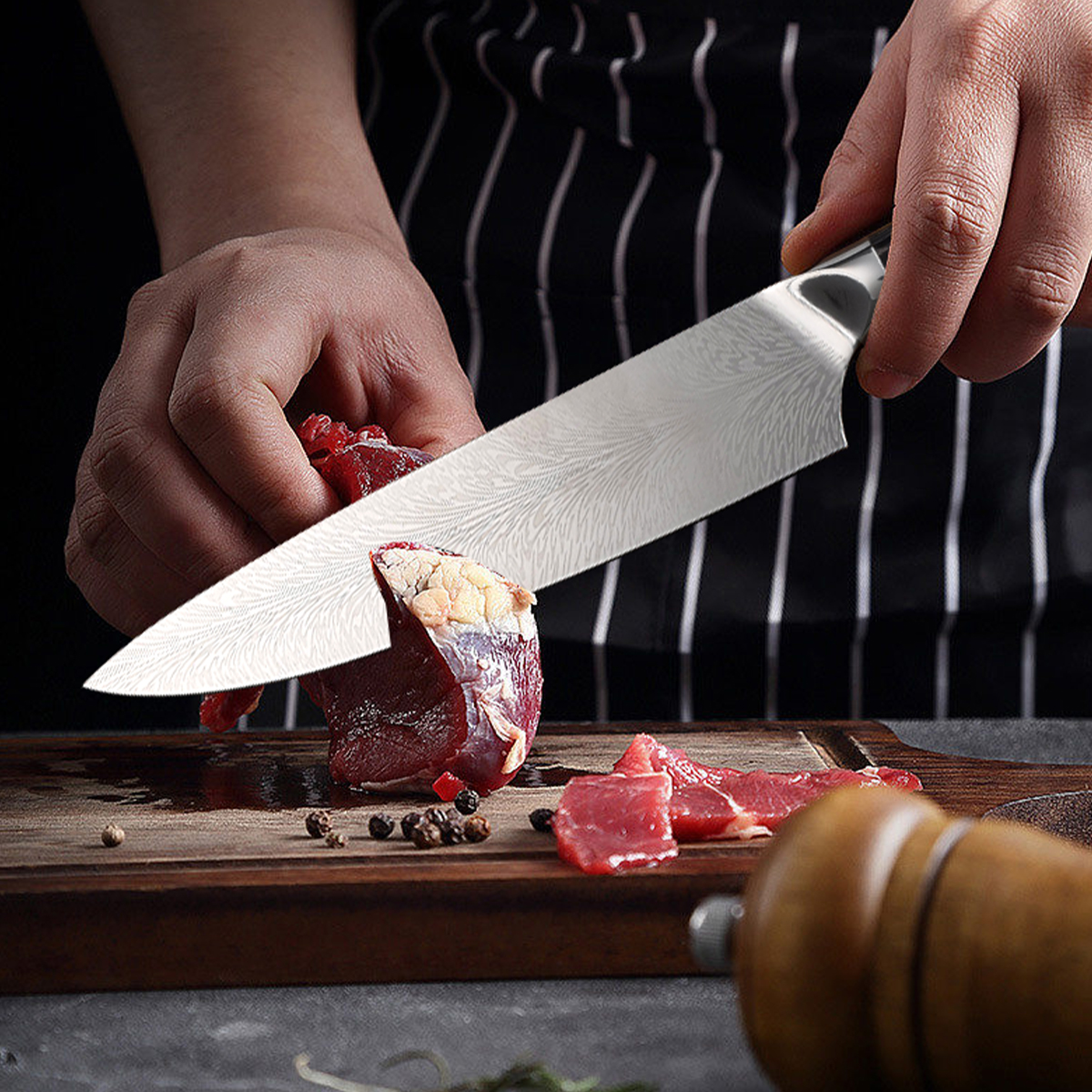
A chef's knife is also excellent for slicing meat. Whether you are preparing chicken, beef, or pork, the sharp edge of the knife allows for clean cuts, ensuring that the meat retains its juices and flavor.
Dicing is another common task that a chef's knife excels at. By using a combination of chopping and slicing techniques, you can create uniform cubes of vegetables or meat, which is essential for even cooking.
Mincing herbs is a delicate task that requires precision. A chef's knife can easily chop herbs like parsley, basil, or cilantro into fine pieces, enhancing the flavor of your dishes.
From slicing apples to dicing pineapples, a chef's knife is perfect for preparing fruits. Its sharp blade allows for clean cuts, making it easier to create fruit salads or garnishes.
To maximize the effectiveness of a chef's knife, it is important to use proper techniques. Here are some essential techniques to master:
The rocking motion is a fundamental technique when using a chef's knife. By keeping the tip of the knife on the cutting board and using the handle to rock the blade up and down, you can chop ingredients quickly and efficiently.
When holding food while cutting, use the claw grip to protect your fingers. Curl your fingertips under and use your knuckles as a guide for the blade. This technique ensures safety while allowing for precise cuts.
For slicing tasks, use a smooth, even motion. Avoid pressing down too hard; instead, let the sharpness of the blade do the work. This technique is especially important when slicing delicate items like tomatoes or bread.
When selecting a chef's knife, there are several factors to consider:
Chef's knives are typically made from stainless steel, carbon steel, or ceramic. Stainless steel is resistant to rust and easy to maintain, while carbon steel holds a sharper edge but requires more care. Ceramic knives are lightweight and maintain their sharpness but can be brittle.

Choose a knife with a handle that feels comfortable in your hand. The grip should be secure, allowing for control during use. Test different handles to find one that suits your grip style.
The weight and balance of a chef's knife can affect its performance. A well-balanced knife feels comfortable and allows for precise control. Some cooks prefer heavier knives for their cutting power, while others prefer lighter knives for agility.
Proper maintenance is crucial for keeping your chef's knife in top condition. Here are some tips for care:
A sharp knife is a safe knife. Regularly sharpen your chef's knife using a whetstone or a honing rod. This will ensure that the blade maintains its edge and performs well.
After each use, wash your chef's knife with warm, soapy water and dry it immediately. Avoid putting it in the dishwasher, as this can damage the blade and handle.
Store your chef's knife in a knife block, magnetic strip, or protective sheath. This will prevent the blade from becoming dull and protect you from accidental cuts.
A chef's knife is an indispensable tool in the kitchen, offering versatility and efficiency for a wide range of cooking tasks. By understanding its uses, mastering techniques, and maintaining it properly, you can enhance your cooking experience and create delicious meals with ease.
1. What is the best way to sharpen a chef's knife?
- The best way to sharpen a chef's knife is to use a whetstone or honing rod. Regular sharpening will keep the blade in optimal condition.
2. Can I use a chef's knife for cutting bread?
- While a chef's knife can be used for cutting bread, a serrated knife is typically better suited for this task as it can slice through crusts without crushing the bread.
3. How do I know if my chef's knife is dull?
- If your knife requires more pressure to cut through food or if it slips on the surface of the item you are cutting, it may be dull and in need of sharpening.
4. Is it necessary to have multiple chef's knives?
- While one high-quality chef's knife is sufficient for most tasks, having different sizes or styles can be beneficial for specific tasks or personal preferences.
5. What should I avoid when using a chef's knife?
- Avoid cutting on hard surfaces like glass or stone, as this can dull the blade. Also, avoid using the knife for tasks it is not designed for, such as prying or opening cans.


