
- Home
- Products
- About Us
- OEM/ODM
- VR
- Resources
- Contacts


Views: 670 Author: Site Editor Publish Time: 2026-09-15 Origin: Site


Content Menu
● 1. Introduction: The Confusion Between Regular Kitchen Knives and Specialty Cheese Knives
● 2. What Makes Cheese Cutting Different From Regular Food Cutting?
>> 2.1 Unique Texture Characteristics of Different Cheeses
>> 2.2 Core Challenges of Cheese Cutting
● 3. Can Regular Knives Replace Cheese Knives? Detailed Comparative Analysis
>> 3.1 Chef Knife for Cheese Cutting
>> 3.2 Santoku Knife for Cheese Cutting
>> 3.3 Paring Knife for Cheese Cutting
>> 3.4 Bread Knife for Cheese Cutting
>> 3.5 Professional Cheese Knife Cutting Advantages (Optimized by INSIGHT KNIFE FACTORY)
● 4. Core Reasons Why Cheese Knives Are Indispensable
>> 4.1 Protect Cheese Texture and Original Taste
>> 4.2 Improve Cutting Efficiency and Avoid Waste
>> 4.3 Optimize Presentation for Scenario Use
>> 4.4 Extend Tool Service Life and Ensure Safety
● 5. When Can You Use Regular Knives for Cheese (and When You Cannot)?
>> 5.1 Scenarios Where Regular Knives Are Sufficient
>> 5.2 Scenarios Where Cheese Knives Are Mandatory
● 6. FAQ: Common Questions About Cheese Knives and Regular Knife Replacement
● 7. Final Verdict: Are Cheese Knives Necessary?
Yangjiang Insight Industry And Trade Co.,Ltd., professionally known as INSIGHT KNIFE FACTORY, is a leading 23-year experienced kitchen knife and kitchen tool manufacturer specializing in the design, production, and global distribution of premium kitchen cutlery. With a 20,000-square-meter standardized production plant and a monthly production capacity of up to 5 million pieces, our factory delivers reliable OEM and ODM services for worldwide kitchenware brands, covering chef knives, santoku knives, bread knives, paring knives, and customized specialty knives including professional cheese cutlery. As a professional kitchen cutlery manufacturer with decades of craftsmanship experience, INSIGHT KNIFE FACTORY deeply understands the functional differences between general kitchen knives and specialized cheese knives, helping global users and brand partners clarify whether professional cheese knives are essential for daily and commercial use, and whether regular kitchen knives can completely replace dedicated cheese cutting tools.
For most home cooks, casual diners, and even some small catering practitioners, kitchen knife sets are usually composed of basic universal cutlery: chef knives for versatile ingredient cutting, santoku knives for precise slicing and dicing, bread knives for crusty food cutting, and paring knives for detailed peeling and trimming. These universal kitchen knives can handle almost all daily food processing tasks, from cutting vegetables, slicing meat, chopping fruits to trimming daily ingredients. In this context, countless users have raised a common question: are professional cheese knives really necessary? Can regular kitchen knives fully replace specialized cheese knives for cutting all types of cheese?
This confusion is completely reasonable. On the surface, cheese is just a kind of edible food that can be cut into blocks or slices with any sharp blade. However, professional catering experience and cutlery manufacturing principles prove that cutting cheese is a highly refined cutting scenario different from cutting meat, vegetables, or fruits. Cheese includes soft, semi-soft, semi-hard, and hard types with huge differences in texture, viscosity, density, and internal structure. Universal regular knives are designed for general ingredient cutting, while professional cheese knives are ergonomically and structurally optimized for the unique physical properties of various cheeses.
As a professional kitchen cutlery supplier with rich customized tool production experience, INSIGHT KNIFE FACTORY has served thousands of global kitchenware brands and customized various specialty cutting tools for different food processing scenarios. Through long-term market research and product iteration, we have summarized the core differences between regular knives and cheese knives, as well as the necessity of investing in professional cheese cutlery for home and commercial use. This article will comprehensively analyze the functional gaps, usage scenarios, cutting effects, and practical value of the two types of knives, solving all user doubts about cheese knife replacement and necessity.
To judge whether cheese knives are necessary and whether regular knives can replace them, we first need to understand why cheese cutting is different from conventional food cutting. Most daily ingredients have stable textures: vegetables are crisp and low-viscosity, meat is fibrous and elastic, and fruits are juicy but not sticky. In contrast, cheese has unique texture characteristics that bring special cutting challenges, which regular knives cannot perfectly adapt to.
Cheese is divided into four main categories, each with completely different cutting requirements. Soft cheeses such as Brie, Camembert, and goat cheese are high in moisture and fat, with extremely soft and sticky textures. They are prone to adhesion, extrusion deformation, and surface smearing during cutting. Semi-soft cheeses like Mozzarella and Havarti have moderate elasticity and viscosity, easy to produce uneven slices and internal tearing when cut with inappropriate tools. Semi-hard cheeses including Cheddar and Gouda have compact textures but certain toughness, requiring balanced cutting force to avoid fragmentation. Hard aged cheeses such as Parmesan and Swiss cheese have dense, crystalline textures, which are hard to slice and easy to crack and collapse under uneven pressure.
The first challenge is blade adhesion. High-fat and high-moisture cheese will closely adhere to the solid blade surface of regular knives, resulting in incomplete slices and messy cheese surfaces. The second challenge is texture damage. Regular knives have thick blade bodies and large cutting contact areas, which will squeeze soft cheese violently, destroying its fluffy and delicate texture, and causing hard cheese to crack and break. The third challenge is inaccurate cutting control. Universal knives focus on cutting speed and versatility, without considering the fine slicing and portioning needs of cheese, making it difficult to obtain uniform and beautiful cheese slices. The fourth challenge is poor hygiene and aesthetics. Smeared and broken cheese cannot meet the presentation needs of cheese platters, family gatherings, and commercial catering services.
All these problems are exactly the pain points that INSIGHT KNIFE FACTORY targets in the design of professional cheese knives. Our customized cheese cutlery series optimizes blade thickness, surface structure, blade shape, and handle force-bearing design according to different cheese textures, fundamentally solving the various problems of regular knives in cheese cutting.
Technically speaking, all sharp regular kitchen knives can "cut" cheese, but they cannot "cut cheese well". There is a huge difference between simple cutting completion and professional, neat, and undamaged cutting effects. Below we will compare the practical effects of several common regular knives and professional cheese knives in different cheese cutting scenarios, combining the manufacturing experience of INSIGHT KNIFE FACTORY to clarify the irreplaceable advantages of professional cheese knives.
A standard chef knife is the most versatile tool in the kitchen, with a wide blade, thick blade body, and long cutting edge, suitable for cutting meat, vegetables, and large ingredients. When used to cut soft cheese, the wide solid blade of the chef knife will produce maximum contact with the cheese. Affected by surface tension and fat viscosity, the cheese will firmly stick to both sides of the blade. When the user pulls out the knife body, the cheese will be dragged and smeared, resulting in irregular slices and damaged complete shapes. For hard cheese, the thick and heavy chef knife requires excessive pressure during cutting. The uneven pressure will cause the hard crystalline cheese to crack randomly, unable to form neat block slices, and even cause blade edge chipping in severe cases.
Santoku knives are famous for precise slicing, with thinner blades than chef knives, and are slightly better than chef knives in cutting soft cheese. However, the conventional santoku knife produced for general ingredients still adopts a fully solid blade design without anti-sticking structures. When cutting high-fat soft cheese, sticking problems still occur frequently. In addition, the blade arc and force-bearing structure of santoku knives are designed for vegetable and meat slicing, lacking targeted optimization for cheese's flexible texture. It is easy to cause internal tearing of semi-soft cheese, resulting in uneven slice thickness and affecting taste and presentation.
Paring knives are small portable knives used for peeling and fine trimming, with short blades and flexible operation. They can only cut small pieces of cheese and are completely unsuitable for slicing large-area cheese. The short blade cannot complete one-time integral slicing of medium and large cheese blocks, requiring multiple cuts, which will cause repeated extrusion and fragmentation of cheese. Moreover, the small handle of the paring knife cannot provide stable force support when cutting hard cheese, easily leading to cutting deviation and safety hazards.
Bread knives adopt serrated blade design, suitable for cutting fluffy bread and crusty foods. Many users try to use bread knives to cut sticky cheese to avoid adhesion, but the serrated edge will produce jagged cuts on the cheese surface, completely destroying the smooth texture of cheese. For soft cheese, the serrations will tear the cheese fiber, resulting in messy crumbs; for hard cheese, the serrated cutting force is scattered, which cannot form a neat fracture surface, seriously affecting the aesthetics and taste experience.
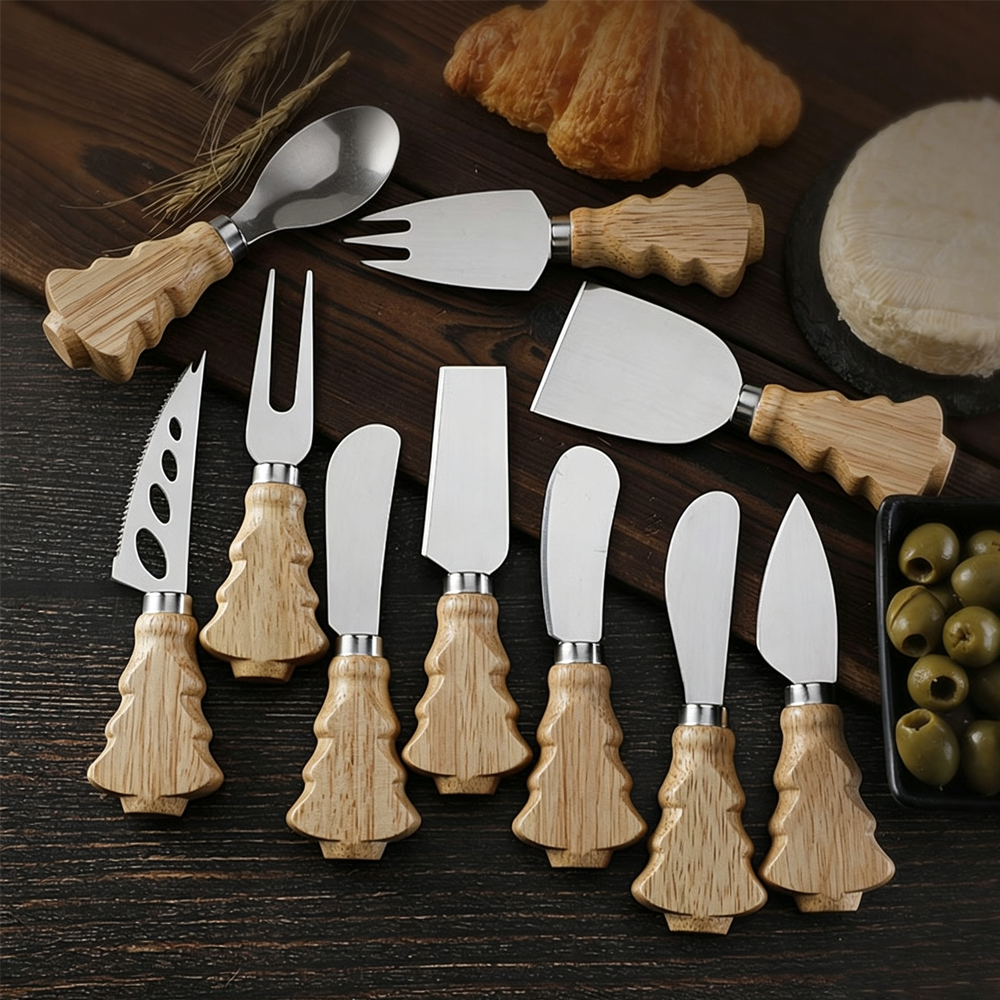
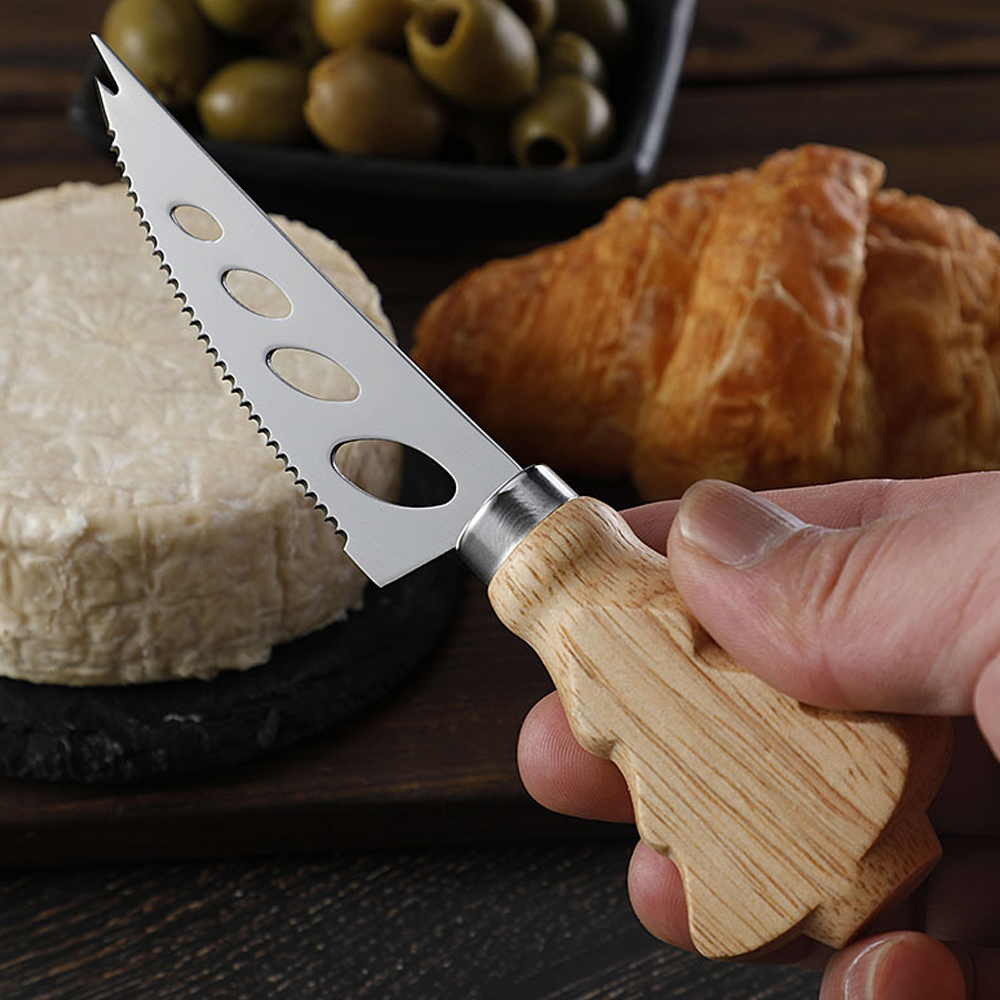
As a professional kitchen cutlery manufacturer focusing on scenario-based tool optimization, INSIGHT KNIFE FACTORY has designed targeted structural features for professional cheese knives to solve all the pain points of regular knives. First, the perforated blade design for soft cheese effectively reduces the contact area between the blade and cheese, breaks the surface tension of adhesion, and ensures zero sticking and smooth slicing. Second, the ultra-thin blade body reduces extrusion pressure, protecting the delicate texture of soft cheese and avoiding deformation. Third, the thickened reinforced blade for hard cheese is matched with a labor-saving handle structure, which can form a neat fracture at one time without cracking or chipping. Fourth, the special tip and fork design of cheese knives integrates cutting and serving functions, realizing one-piece operation of slicing and placing, which regular knives cannot achieve.
After comparing the cutting effects, we can clearly conclude that regular knives can only cut cheese roughly, while professional cheese knives can achieve perfect cutting effects. The following four core values fully prove the necessity of cheese knives, which are also the core design concepts of INSIGHT KNIFE FACTORY’s cheese knife series products.
The biggest advantage of professional cheese knives is protecting the original texture and taste of cheese. Soft cheese is delicate and fluffy, and extrusion and smearing from regular knives will destroy its creamy layered taste. Hard aged cheese has unique crystalline texture, and random cracking will make the taste uneven. The precisely optimized blade thickness and cutting angle of INSIGHT KNIFE FACTORY cheese knives can penetrate the cheese smoothly with minimal pressure, retaining the complete internal structure and original flavor of the cheese, allowing users to experience the purest taste of various cheeses.
Using regular knives to cut cheese often leads to a lot of waste: sticky cheese residues on the blade, broken crumbs, and deformed slices cannot be served or stored, resulting in unnecessary food waste. Meanwhile, repeated cleaning of sticky blades and repeated trimming of broken cheese greatly reduce cutting efficiency. Professional cheese knives can complete neat slicing in one step without adhesion or fragmentation, improving cutting efficiency while maximizing the utilization rate of cheese materials, which is more suitable for family daily use and commercial catering batch operation.
Cheese is often used in high-value scenarios such as family dinner parties, holiday gatherings, charcuterie platters, and restaurant catering. Neat and uniform cheese slices are the key to improving the overall aesthetics of the platter. Irregular, smeared, and broken cheese cut by regular knives will greatly reduce the grade of the food presentation. The professional cheese knife series developed by INSIGHT KNIFE FACTORY can create smooth, flat, and uniform cheese slices, perfectly matching various high-end dining scenarios and meeting the aesthetic and serving needs of formal occasions.
Many users ignore that using inappropriate regular knives to cut cheese will damage the knives themselves. Hard cheese has high density and hardness. Long-term cutting with thin regular chef knives and santoku knives will cause blade deformation, edge passivation, and even local chipping. Sticky cheese residues are easy to breed bacteria if not cleaned thoroughly, affecting kitchen hygiene. Professional cheese knives produced by INSIGHT KNIFE FACTORY adopt targeted material hardness and structural design, which are wear-resistant and impact-resistant, specially adapted to long-term cheese cutting work, with safer operation and longer service life.
Although professional cheese knives have obvious advantages, INSIGHT KNIFE FACTORY also recommends users to choose tools flexibly according to usage scenarios. There are occasional scenarios where regular knives can replace cheese knives, and absolute scenarios where replacement is not recommended.
For daily casual family use, if you only eat simple processed cheese slices, low-viscosity ordinary cheese, and do not pursue perfect presentation and taste, clean sharp regular chef knives or paring knives can meet basic cutting needs. When cutting a small amount of cheese for personal casual tasting and there is no need for platter presentation, regular knives can be used temporarily without purchasing professional cheese knives specially. For primary cheese processing with low precision requirements, universal kitchen knives can fully cope with it.
First, high-end soft cheese and aged hard cheese cutting scenarios: Brie, Camembert, Parmesan, and other high-value specialty cheeses must use professional cheese knives to avoid texture damage and material waste. Second, catering and commercial service scenarios: restaurants, cafes, dessert shops, and party catering need neat and standardized cheese portions, and professional cheese knives are essential to ensure service quality. Third, frequent cheese eating scenarios: users who often eat various types of cheese and pursue taste and dining aesthetics are worthy of equipping professional cheese knife sets. Fourth, gift and high-end platter customization scenarios: exquisite cheese platters require perfect cutting effects, and dedicated cheese cutlery is an indispensable tool.
Based on years of customer consultation and market feedback, INSIGHT KNIFE FACTORY sorts out the 6 most frequently asked questions about cheese knife use and replacement, with professional and detailed answers to solve user doubts comprehensively.
Q1: Is it worth buying a professional cheese knife set for home use?
A1: It is completely worth it for users who love cheese and pursue refined dining. A complete cheese knife set is affordable, occupies little kitchen space, and can significantly improve the cheese cutting effect and dining experience. For users who only eat cheese occasionally, a single universal professional cheese knife is enough to meet daily needs, avoiding the waste of repeated investment. As a professional kitchen tool manufacturer, INSIGHT KNIFE FACTORY provides single cheese knives and combined sets of different specifications to meet diverse home and commercial needs.
Q2: Why do cheese knives have holes on the blade?
A2: The hollow hole design on the blade is the core anti-sticking technology of professional soft cheese knives developed by INSIGHT KNIFE FACTORY. The holes can isolate most of the contact area between the blade and cheese, reduce the adhesion caused by cheese fat and moisture, and ensure that the blade slides smoothly without sticking materials. This structure is uniquely optimized for high-viscosity soft cheese, which no regular solid-blade knife can achieve.
Q3: Can a ceramic knife replace a professional cheese knife?
A3: Ceramic knives have smooth surfaces and slight anti-sticking effects, better than stainless steel regular knives, but they still cannot replace professional cheese knives. Ceramic blades are brittle and easy to crack when cutting hard cheese; meanwhile, the single structural design cannot adapt to the cutting needs of soft, medium, and hard cheeses at the same time. Professional cheese knives from INSIGHT KNIFE FACTORY adopt graded material and structural design for different cheeses, with far more comprehensive performance than ceramic knives.
Q4: Do I need different cheese knives for different types of cheese?
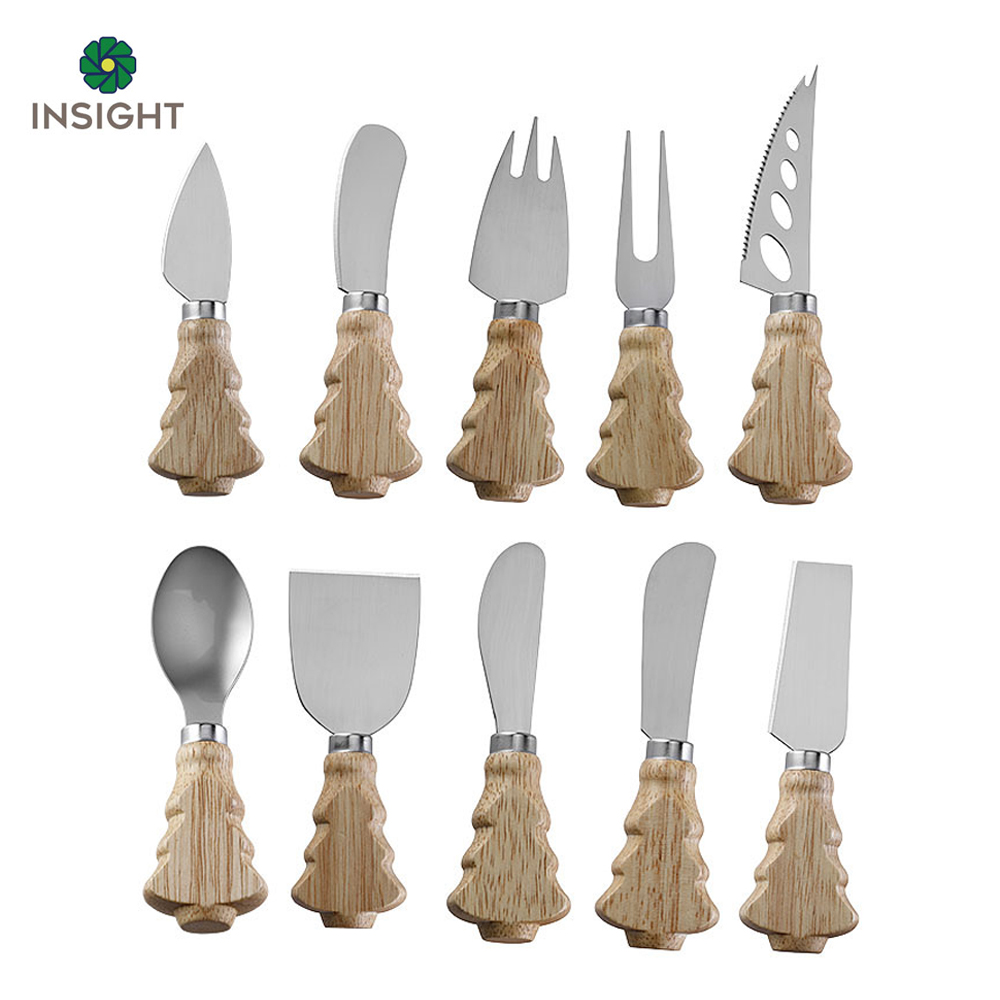
A4: For professional use and refined dining, classified matching is recommended. Perforated thin-blade knives are suitable for soft cheese, thickened chisel knives for hard cheese, and flat slicing knives for semi-soft cheese. For ordinary family use, a multi-functional universal cheese knife can meet the cutting needs of most common cheeses. INSIGHT KNIFE FACTORY supports personalized OEM and ODM customization of multi-functional and classified cheese knives for global customers.
Q5: Will using regular knives to cut cheese damage the cheese itself?
A5: Yes, it will cause invisible damage. The extrusion force of regular knives will destroy the internal layered structure of soft cheese, leading to loss of creamy taste; uneven cutting force will cause internal fracture of hard cheese, affecting the overall taste and storage effect. In addition, cheese residues left by regular knives are easy to deteriorate and affect the freshness of subsequent cheese consumption.
Q6: Are INSIGHT KNIFE FACTORY’s cheese knives suitable for commercial mass use?
A6: Absolutely suitable. As a professional manufacturer with 23 years of kitchen tool production experience, our cheese knives adopt industrial-grade stainless steel materials, integrated forging technology, and ergonomic handle design, with stable quality, wear resistance, and durability. Relying on a 20,000-square-meter factory and 5 million monthly output capacity, we can provide stable batch supply and customized processing services for global commercial brands, catering institutions, and kitchenware distributors, supporting large-scale OEM and ODM orders.
To sum up, regular kitchen knives can temporarily complete simple cheese cutting work, but they cannot replace the professional effects of dedicated cheese knives. Cheese knives are not redundant luxury kitchen tools, but refined functional tools that improve dining quality, protect food texture, and optimize use efficiency. For casual and low-precision daily use, regular knives are acceptable; for refined family dining, high-end ingredient tasting, and commercial catering services, professional cheese knives are absolutely necessary.
As a reliable global kitchen cutlery supplier,INSIGHT KNIFE FACTORY always adheres to scenario-based product research and development, taking user actual use needs as the core, and continuously optimizes the design and production of professional cheese knives and various kitchen tools. We not only provide high-quality standard kitchen knives including chef knives, santoku knives, bread knives, and paring knives, but also support customized production of various specialty kitchen tools, bringing precise, efficient, and high-quality cutting solutions for global users and brand partners.


