
- Home
- Products
- About Us
- OEM/ODM
- VR
- Resources
- Contacts


Views: 245 Author: Insight Publish Time: 2025-12-05 Origin: Insight


Content Menu
● Tools Required for Setting the Bevel
>> Step 1: Choose the Right Whetstone
>> Step 2: Determine the Bevel Angle
>> Step 8: Use a Finer Grit Stone
>> Step 10: Clean and Store the Knife
● Tips for Maintaining Your Knife's Bevel
>> Related Questions and Answers
Setting the bevel on a kitchen knife is an essential skill for anyone who wants to maintain their knives in optimal condition. A properly set bevel ensures that your knife cuts efficiently and remains sharp for longer periods. In this article, we will explore the process of setting the bevel on a kitchen knife, the tools required, and tips for achieving the best results.

The bevel of a knife refers to the angled surface that is ground into the blade to create the cutting edge. This angle is crucial as it determines how sharp the knife will be and how it will perform during cutting tasks. Different types of knives may have different bevel angles, which can affect their cutting performance.
There are primarily two types of bevels found on kitchen knives: single bevel and double bevel.
- Single Bevel: This type of bevel is ground on one side of the blade only. It is commonly found on traditional Japanese knives, which are designed for precision cutting.
- Double Bevel: A double bevel is ground on both sides of the blade, creating a symmetrical edge. This is the most common type of bevel found on Western-style kitchen knives.
Before you begin the process of setting the bevel on your kitchen knife, you will need a few essential tools:
- Whetstone: A whetstone is a sharpening stone used to grind and hone the knife's edge. It comes in various grits, which are used for different stages of sharpening.
- Angle Guide: An angle guide helps maintain the correct bevel angle while sharpening. This is especially useful for beginners.
- Water or Oil: Depending on the type of whetstone you are using, you may need water or oil to lubricate the stone during the sharpening process.
- Cloth: A clean cloth is useful for wiping the blade and removing any metal shavings or debris.

Selecting the appropriate whetstone is crucial for setting the bevel. If your knife is very dull, start with a coarse grit stone to reshape the edge. For regular maintenance, a medium grit stone is usually sufficient.
Most kitchen knives have a bevel angle between 15 to 20 degrees. Japanese knives typically have a narrower angle, while Western knives have a wider angle. Knowing the correct angle for your knife will help you achieve the best results.
If you are using a water stone, soak it in water for about 10 to 15 minutes before use. This will help the stone to work more effectively and prevent the blade from becoming damaged.
Place the knife on the whetstone at the desired bevel angle. If you are using an angle guide, attach it to the blade to help maintain the correct angle throughout the sharpening process.
Begin sharpening the knife by applying light pressure and moving the blade across the stone in a sweeping motion. Start at the heel of the blade and move towards the tip. It is important to maintain consistent pressure and angle throughout the process.
If you are working on a double bevel knife, alternate between sharpening each side of the blade. This will help to create a symmetrical edge. For single bevel knives, focus on the side that requires sharpening.
After several passes on the whetstone, check the edge of the knife. You can do this by carefully running your finger along the edge (be cautious to avoid cuts) or by slicing through a piece of paper. If the knife is not sharp enough, continue sharpening until you achieve the desired sharpness.
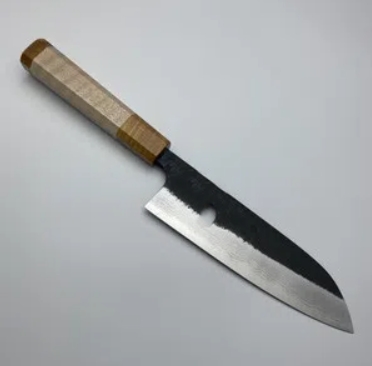
Once you have set the bevel and achieved a sharp edge, switch to a finer grit stone to polish the edge. This will help to remove any burrs and create a smoother cutting surface.
After sharpening, it is beneficial to hone the knife using a honing rod. This will realign the edge and enhance the sharpness. Hold the honing rod vertically and swipe the knife down the rod at the same angle used for sharpening.
After you have finished sharpening and honing, clean the knife with a cloth to remove any metal shavings. Store the knife in a safe place, such as a knife block or magnetic strip, to protect the edge.
- Regular Maintenance: Regularly sharpen your knife to maintain its bevel and cutting performance. This will prevent the need for extensive sharpening sessions.
- Use the Right Cutting Surface: Always use a cutting board made of wood or plastic. Avoid cutting on hard surfaces like glass or stone, as these can damage the knife's edge.
- Avoid Dishwashers: Never place your kitchen knives in the dishwasher, as the heat and moisture can damage the blade and handle.
- Store Properly: Store your knives in a way that protects the edge. Use a knife block, magnetic strip, or blade guards to prevent dulling.
Setting the bevel on a kitchen knife is a vital skill that enhances the knife's performance and longevity. By following the steps outlined in this article, you can ensure that your knives remain sharp and effective for all your culinary needs. Remember to practice regularly and maintain your knives properly to enjoy the benefits of a well-maintained kitchen tool.
---
Q1: How often should I sharpen my kitchen knives?
A1: It depends on usage, but generally, sharpening every few months is sufficient for regular home cooks. Professional chefs may need to sharpen more frequently.
Q2: Can I use a honing rod instead of a whetstone?
A2: A honing rod is used for realigning the edge of a knife, while a whetstone is for sharpening. Both are important for knife maintenance.
Q3: What is the best angle for sharpening a kitchen knife?
A3: Most kitchen knives are sharpened at an angle between 15 to 20 degrees, depending on the type of knife.
Q4: Is it necessary to soak a whetstone before use?
A4: Yes, soaking a water stone helps to lubricate it and prevents damage to the knife during sharpening.
Q5: How can I tell if my knife is sharp enough?
A5: A sharp knife should easily slice through paper or vegetables without much effort. You can also feel the edge with your finger (carefully) to check for sharpness.


