
- Home
- Products
- About Us
- OEM/ODM
- VR
- Resources
- Contacts


Views: 267 Author: Insight Publish Time: 2026-04-24 Origin: Insight


Content Menu
● First day effect of Phase 2 in Canton Fair-Yangjiang Insight kitchen knife
>> Understanding the Industrial Context of Yangjiang
>> The Dynamics of the First Day Effect
>> Strategic Implications for Exhibitors
>> Market Trends Influencing Interaction
>> Navigating Challenges and Future Outlook
>> Abstract
The Canton Fair, officially known as the China Import and Export Fair, stands as an unparalleled global commercial platform, serving as a critical barometer for the health of international trade. When the fair enters its second phase, it traditionally shifts focus toward consumer goods, gifts, and home decor, marking a pivotal moment for regional manufacturing hubs to showcase their capabilities. Among these, the city of Yangjiang—internationally renowned as the capital of knives and scissors—commands a unique position. The opening day of this phase is not merely a start; it is a manifestation of industrial momentum, where market anticipation, strategic positioning, and the intense energy of international buyers converge to create what industry insiders describe as the "First Day Effect."

To comprehend the significance of the first day for Yangjiang, one must first appreciate the city's deep-seated heritage. For decades, Yangjiang has been the epicenter of Chinese cutlery manufacturing, bridging traditional craftsmanship with modern automated production techniques. The city boasts an extensive ecosystem of suppliers ranging from artisanal workshops producing high-end Damascus steel blades to massive industrial complexes specializing in high-volume, cost-effective culinary tools. This infrastructure allows Yangjiang to cater to diverse international markets, from professional culinary outlets in Western nations to mass-market retail chains across the globe.
As the second phase of the Canton Fair arrives, the city's exhibitors prepare with meticulous care. Their participation is not just about occupying a booth; it is a strategic maneuver to align their product development with global consumer trends. During this period, the focus inevitably lands on material innovation, ergonomic design, and sustainability, as these are the core themes resonating within the global culinary sector.
The First Day Effect is a complex phenomenon characterized by a sudden, intense influx of buyer attention that dictates the tone for the remainder of the exhibition. From the moment the doors open, exhibitors from Yangjiang observe a specific pattern of engagement. This is not characterized by casual browsing but by targeted, high-intent interaction. International buyers, who have often pre-arranged meetings or conducted extensive pre-fair research, descend upon the booths with specific objectives.
The initial hours are critical. They are defined by the rapid exchange of information, where established manufacturers attempt to secure long-term contracts, while newer, more agile companies seek to disrupt existing supply chains with innovative pricing or unique designs. The sheer volume of traffic experienced in those first few hours serves as a reliable indicator of the year's market sentiment. High footfall and engagement typically correlate with a positive outlook for the export sector, signaling robust demand for kitchenware.
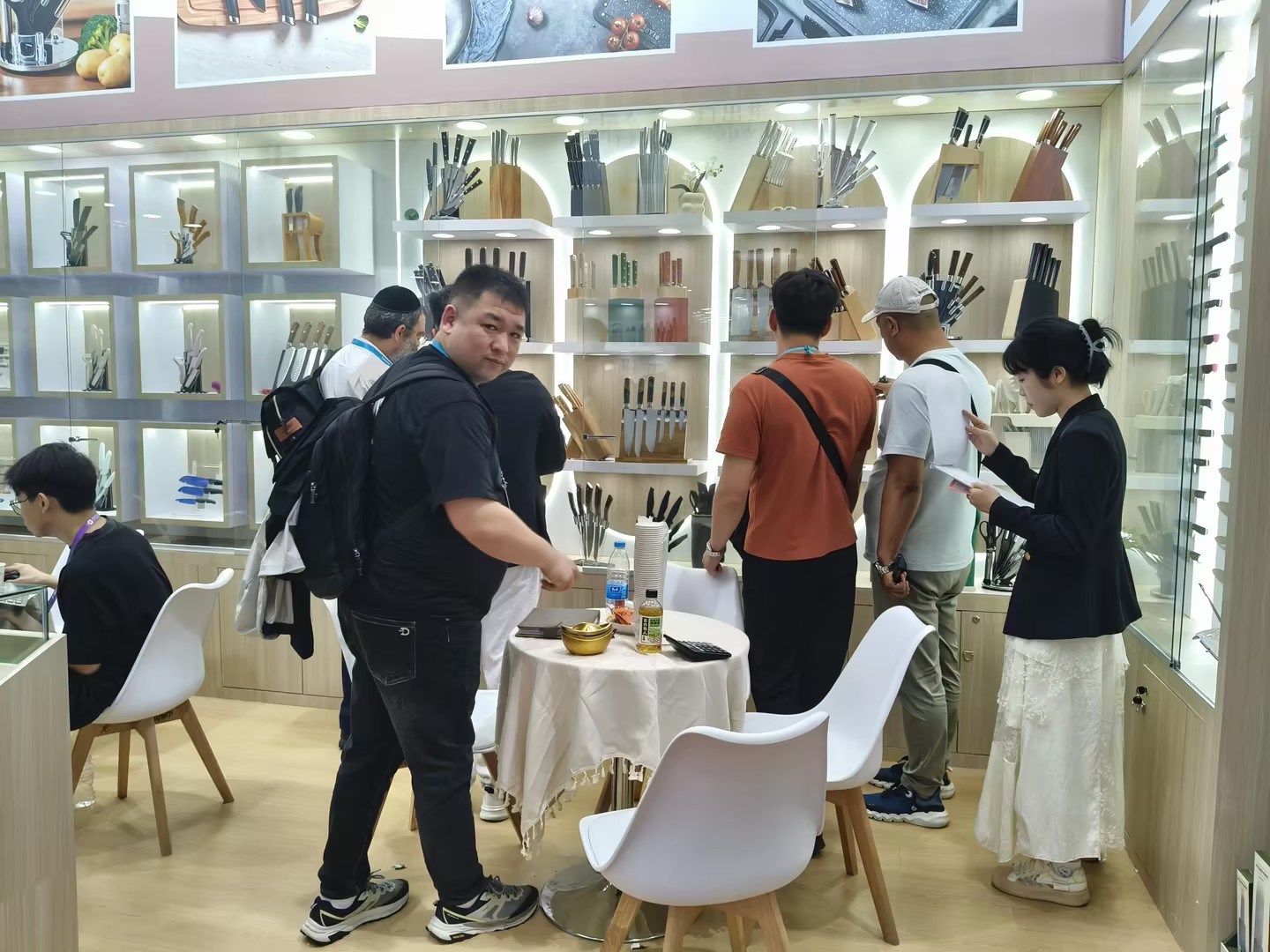
For a Yangjiang kitchen knife manufacturer, the first day is a high-stakes environment. Success hinges on a combination of visual merchandising and technical readiness. The booth must serve as an immersive experience, effectively showcasing the edge retention, balance, and aesthetic appeal of their latest product lines. Exhibitors who understand the First Day Effect recognize that the impressions formed within these initial moments often secure the essential leads required to sustain their business throughout the fiscal year.
Furthermore, the first day reveals shifts in consumer preferences. Buyers are increasingly asking for details regarding the environmental impact of manufacturing processes, the ethical sourcing of materials, and the integration of smart technology in traditional tools. Manufacturers that can articulate clear answers, supported by certifications and evidence, immediately distinguish themselves. This interaction transforms the fair from a simple trading post into a collaborative space where manufacturers and buyers co-create the future of the kitchenware market.
The interactions observed during the first day are deeply influenced by broader global trends. Buyers are looking beyond basic functionality. There is a palpable demand for knives that blend durability with modern lifestyle aesthetics. This has driven the industry toward the use of advanced composite materials that offer superior rust resistance and ease of maintenance, reflecting the needs of the contemporary home cook.
Another critical theme is the demand for comprehensive solutions. Buyers are increasingly moving away from purchasing isolated items, preferring instead to source full culinary sets that include complementary tools such as sharpeners, cutting boards, and storage solutions. Yangjiang manufacturers who have pivoted to offer these integrated packages find themselves at a distinct advantage when dealing with major retailers who seek to maximize efficiency in their procurement processes.
While the first day often brings excitement and optimism, it also highlights the intense competition inherent in the industry. The barrier to entry in the lower-end market is low, leading to price-driven competition that can squeeze margins. To combat this, leading Yangjiang firms are focusing on value-added services. They are providing comprehensive support that includes custom branding, specialized packaging, and logistics solutions.
The evolution of the fair, and by extension the First Day Effect, also reflects the digital transformation of trade. Even as in-person interactions drive the initial surge, there is a clear trend toward hybrid engagement models. The relationships solidified in the booths are increasingly supported by sophisticated online platforms that allow for continuous collaboration long after the fair has concluded. This seamless integration of physical and digital trade is the new benchmark for success.
As we analyze the impact of this opening day, it becomes clear that Yangjiang's role is evolving from a pure manufacturing hub to a central node in the global culinary value chain. The intense engagement witnessed at the start of the fair is not just about the volume of knives sold but about the strength and depth of the partnerships formed. These relationships, tested and nurtured in the high-pressure environment of the Canton Fair, provide the foundation for the region's continued influence in global trade. The ability of these manufacturers to adapt, innovate, and connect with their global partners during this critical first day remains a definitive measure of their long-term resilience and growth potential.
What is the "First Day Effect" in the context of the Canton Fair?
The First Day Effect refers to the intense, targeted influx of buyer interest and high-volume engagement during the opening day of the exhibition, which often sets the tone and provides a reliable indicator of market sentiment and demand for the remainder of the event.
Why is Yangjiang considered the capital of knives and scissors?
Yangjiang has a long historical heritage and a vast industrial ecosystem dedicated to cutlery. It houses a diverse range of manufacturers, from small artisanal workshops to large-scale factories, enabling it to produce a wide array of high-quality kitchen tools that meet global market needs.
How do manufacturers prepare for the opening day of the fair?
Exhibitors prepare by conducting extensive market research to align their products with global trends, refining their visual merchandising to create engaging displays, and ensuring their sales teams are ready to articulate product benefits and provide technical details to high-intent buyers.
What are the current global trends impacting kitchen knife manufacturing?
Key trends include a demand for sustainable and ethically sourced materials, interest in advanced, low-maintenance composite materials, and a preference for comprehensive culinary sets rather than individual knives.
How is the role of Yangjiang manufacturers shifting in the global trade landscape?
Manufacturers are evolving beyond simple production to provide value-added services like custom branding, innovative packaging, and specialized logistics, while increasingly adopting hybrid trade models that blend in-person fair engagement with ongoing digital collaboration.


