


Views: 278 Author: Insight Publish Time: 2026-01-26 Origin: Insight


Content Menu
● Understanding the Knife Production Process
>> Forging
>> Stamping
● Assembly and Quality Control
>> Assembly
>> Packagin
>> Distribution
The production of kitchen knives is a meticulous process that combines traditional craftsmanship with modern technology. Yangjiang, a city in Guangdong Province, China, is renowned for its high-quality knife manufacturing. This article will explore the steps involved in producing kitchen knives at Yangjiang Insight Manufacturer, highlighting the techniques, materials, and quality control measures that ensure the creation of exceptional kitchen tools.
The first step in producing kitchen knives is selecting the right materials. High-quality stainless steel is often chosen for its durability, resistance to rust, and ability to hold a sharp edge. Other materials, such as carbon steel, may also be used for specific types of knives, offering different benefits in terms of sharpness and ease of sharpening. The choice of material significantly impacts the knife's performance and longevity.
Once the materials are selected, the design phase begins. Skilled designers create detailed blueprints of the knife, considering factors such as blade shape, handle design, and balance. Prototyping is an essential part of this phase, where initial models are created to test the design's functionality and ergonomics. Feedback from chefs and culinary experts is often incorporated to refine the design further.
Forging is a traditional method used in knife production that involves heating the steel and shaping it using hammers or presses. This process aligns the steel's grain structure, resulting in a stronger and more durable blade. Forged knives are often preferred by professional chefs for their superior performance and balance.
An alternative to forging is stamping, where blades are cut from a sheet of steel using a die. This method is more efficient for mass production and allows for consistent shapes and sizes. Stamped knives are typically lighter and less expensive than forged knives, making them popular among home cooks.
After the blade is shaped, it undergoes heat treatment to enhance its hardness and durability. This process involves heating the blade to a specific temperature and then rapidly cooling it, a method known as quenching. The heat treatment process is crucial for achieving the desired hardness, which affects the knife's ability to hold an edge.
The handle of a kitchen knife is just as important as the blade. Various materials can be used for knife handles, including wood, plastic, and metal. Each material offers different aesthetics, grip, and durability. For instance, wooden handles provide a classic look and comfortable grip, while synthetic materials can offer better resistance to moisture and bacteria.
Once the handle material is selected, it is shaped to fit comfortably in the hand. This process may involve cutting, sanding, and polishing to achieve the desired finish. Attention to detail is essential, as a well-designed handle enhances the overall user experience and safety during use.
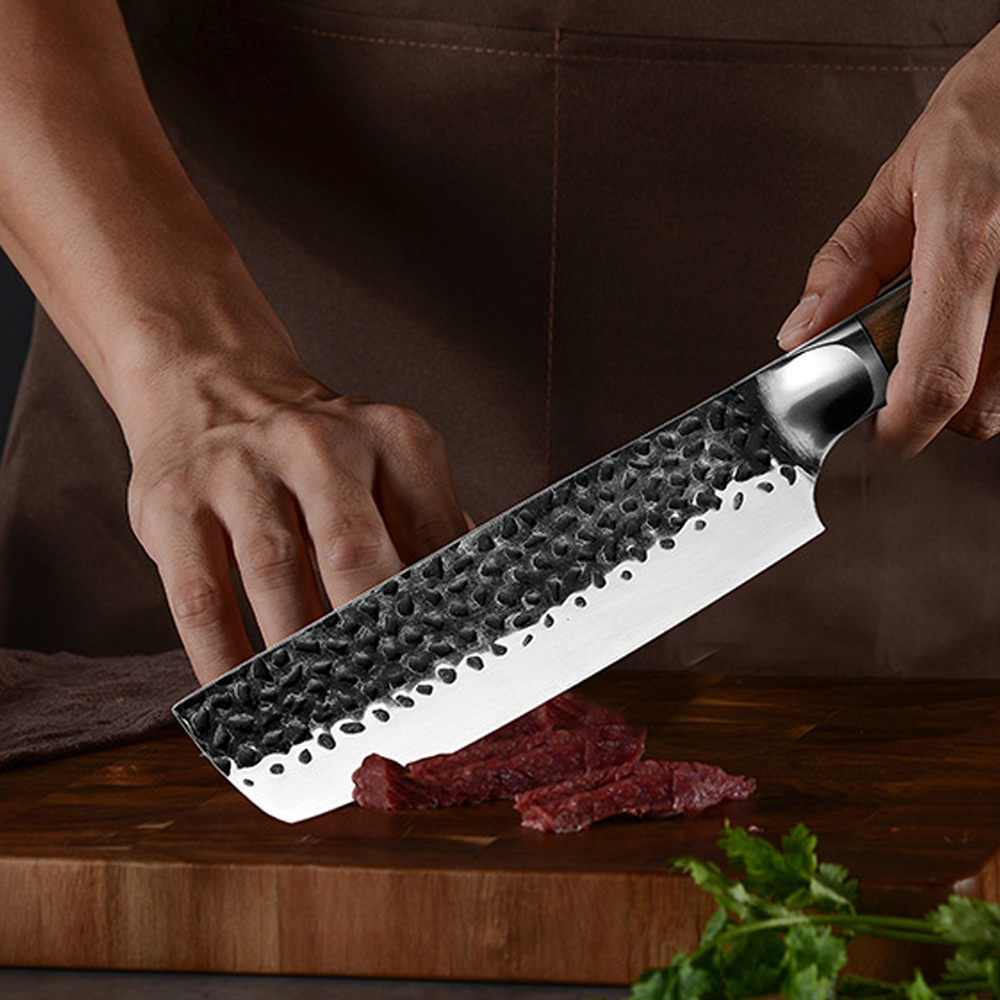
After the blade and handle are prepared, they are assembled together. This process requires precision to ensure that the blade is securely attached to the handle, providing stability and safety during use. Rivets or adhesives may be used to secure the connection, depending on the design.
Quality control is a critical step in the knife production process. Each knife undergoes rigorous testing to ensure it meets the manufacturer's standards. This includes checking for sharpness, balance, and overall finish. Any knives that do not meet the quality standards are discarded or reworked to ensure that only the best products reach the market.
Once the knives pass quality control, they are carefully packaged to prevent damage during transportation. Packaging is designed not only to protect the knives but also to provide information about the product, including care instructions and warranty details. Attractive packaging can also enhance the product's appeal to consumers.
After packaging, the knives are distributed to retailers and customers. Yangjiang Insight Manufacturer has established a robust distribution network, ensuring that their products reach markets both domestically and internationally. This network is essential for maintaining the brand's reputation and ensuring customer satisfaction.
The production of kitchen knives at Yangjiang Insight Manufacturer is a blend of traditional craftsmanship and modern manufacturing techniques. From raw material selection to final packaging, each step is carefully executed to create high-quality kitchen tools that meet the needs of chefs and home cooks alike. The commitment to quality and innovation has established Yangjiang as a leading name in the knife manufacturing industry.
1. What materials are commonly used for kitchen knife blades?
- High-quality stainless steel and carbon steel are commonly used for kitchen knife blades due to their durability and sharpness.
2. What is the difference between forged and stamped knives?
- Forged knives are made from heated steel and shaped by hammers, resulting in a stronger blade, while stamped knives are cut from steel sheets and are typically lighter and less expensive.
3. How is the hardness of a knife blade determined?
- The hardness of a knife blade is determined through heat treatment, which involves heating and rapidly cooling the blade to enhance its durability.
4. What materials are used for knife handles?
- Knife handles can be made from wood, plastic, or metal, each offering different aesthetics and grip qualities.
5. How does Yangjiang Insight ensure the quality of its knives?
- Yangjiang Insight conducts rigorous quality control testing on each knife, checking for sharpness, balance, and overall finish before packaging and distribution.


