
- Home
- Products
- About Us
- OEM/ODM
- VR
- Resources
- Contacts


Views: 200 Author: Insight Publish Time: 2026-01-03 Origin: Insight


Content Menu
● The Origins of the Santoku Knife
● The Versatility of the Santoku Knife
>> Slicing
>> Dicing
>> Mincing
● Advantages of Using a Santoku Knife
● How to Use a Santoku Knife Effectively
>> Proper Grip
● Common Uses of a Santoku Knife in Different Cuisines
The Santoku knife is a versatile kitchen tool that has gained popularity among both professional chefs and home cooks. Originating from Japan, the Santoku knife is known for its unique design and functionality. This article will explore the various uses of a Santoku knife in cooking, its features, and why it has become a staple in many kitchens around the world.

The Santoku knife, which translates to "three virtues" in Japanese, is designed to excel in three primary tasks: slicing, dicing, and mincing. This knife emerged in Japan after World War II, as Western cooking styles began to influence Japanese cuisine. The Santoku knife was created to meet the needs of modern cooking while retaining traditional Japanese craftsmanship.
The Santoku knife typically features a shorter blade than a traditional chef's knife, usually ranging from five to seven inches in length. The blade is wide and has a flat edge, which allows for a more stable cutting surface. The tip of the knife is rounded, making it easier to perform a rocking motion while cutting. Additionally, many Santoku knives have a granton edge, which consists of small indentations along the blade that help prevent food from sticking.
One of the primary uses of a Santoku knife is slicing. The sharp blade allows for clean, precise cuts, making it ideal for slicing vegetables, fruits, and meats. The wide blade provides ample surface area, which is particularly useful when transferring sliced ingredients from the cutting board to a pan or bowl.
Dicing is another essential function of the Santoku knife. The flat edge and sharp blade make it easy to create uniform cubes of vegetables, such as onions, bell peppers, and carrots. The Santoku knife's design allows for a smooth, efficient cutting motion, which is especially beneficial when preparing ingredients for stir-fries, salads, or soups.
Mincing herbs and garlic is a task that the Santoku knife excels at. The wide blade allows for a rocking motion, which is perfect for finely chopping herbs like parsley, cilantro, or basil. The Santoku knife's sharp edge ensures that the herbs are cut cleanly, preserving their flavor and aroma.
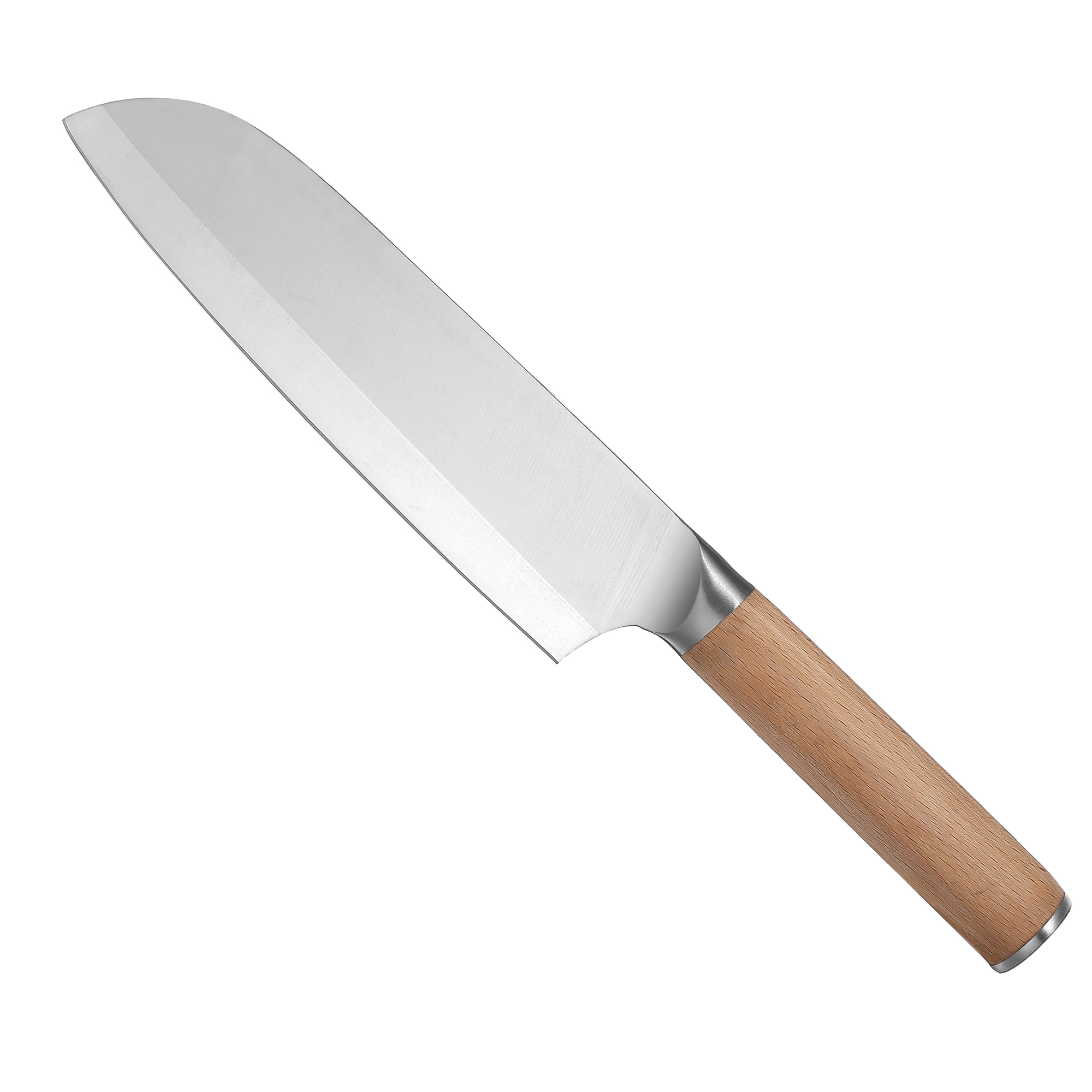
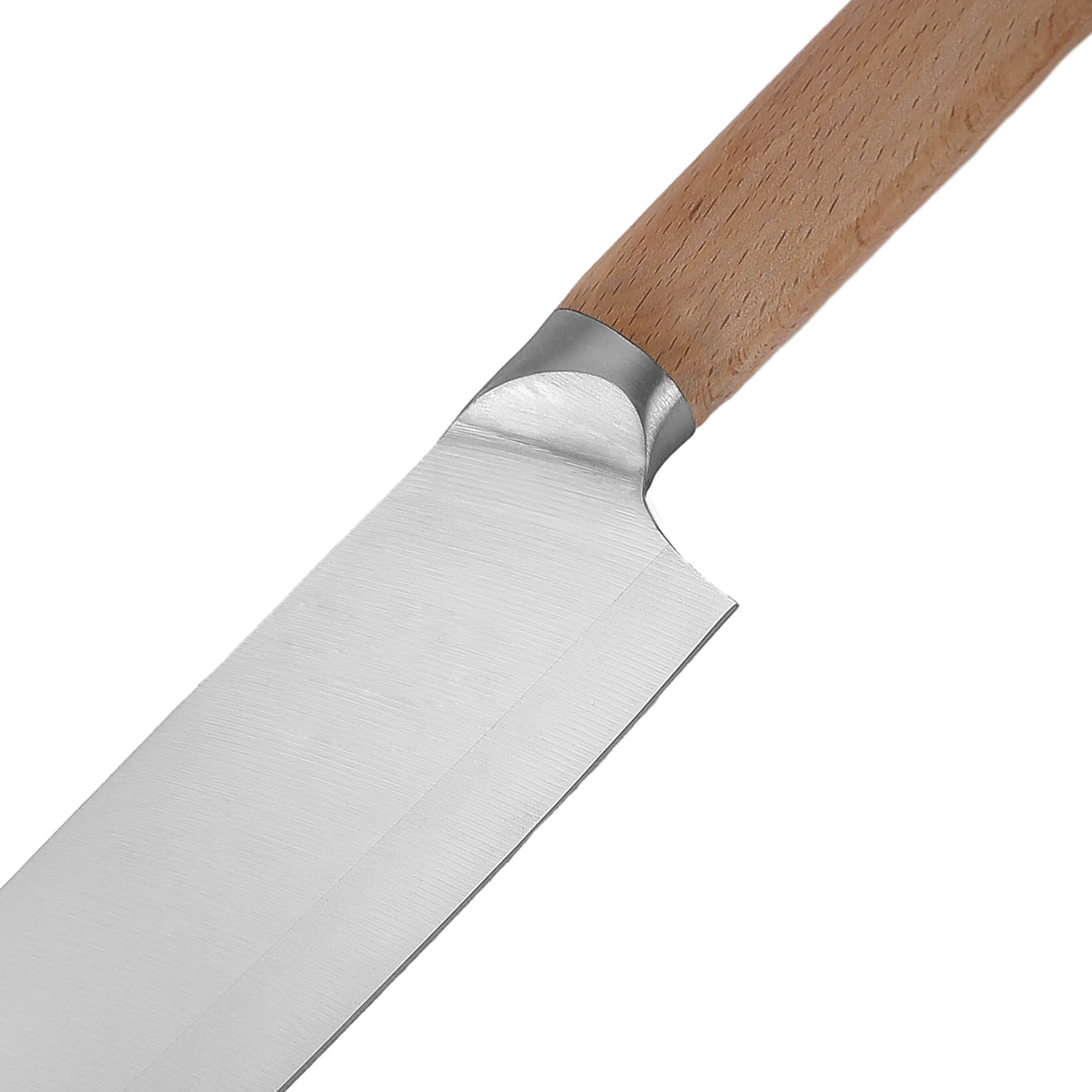
The Santoku knife is designed with comfort in mind. The handle is typically made from materials that provide a secure grip, allowing for better control while cutting. This ergonomic design reduces hand fatigue, making it easier to work with the knife for extended periods.
Compared to traditional chef's knives, Santoku knives are often lighter and better balanced. This makes them easier to maneuver, especially for those who may not have as much strength or experience in the kitchen. The lightweight nature of the Santoku knife allows for quick, precise cuts without excessive effort.
The Santoku knife's versatility makes it a valuable addition to any kitchen. It can be used for a wide range of tasks, from preparing vegetables to slicing meats. This multi-functionality means that home cooks can rely on a single knife for various cooking tasks, reducing the need for multiple specialized knives.
To use a Santoku knife effectively, it is essential to hold it correctly. The pinch grip is a popular method, where the thumb and index finger pinch the blade while the other fingers wrap around the handle. This grip provides better control and stability while cutting.
When using a Santoku knife, employing the right cutting techniques can enhance efficiency. For slicing, a smooth, forward motion is ideal. For dicing, a rocking motion can help create uniform pieces. When mincing, using the wide blade to rock back and forth allows for finely chopped ingredients.
To keep a Santoku knife in optimal condition, proper maintenance is crucial. Regularly honing the blade will help maintain its sharpness, while hand washing and drying the knife will prevent damage. Avoiding the dishwasher is recommended, as the heat and moisture can affect the knife's integrity.
In Japanese cooking, the Santoku knife is often used for preparing ingredients for sushi, sashimi, and other traditional dishes. Its ability to slice fish and vegetables with precision makes it an essential tool in Japanese kitchens.
In Western cooking, the Santoku knife is commonly used for a variety of tasks, including chopping herbs, dicing onions, and slicing meats. Its versatility allows it to adapt to different cooking styles and recipes.
As culinary boundaries continue to blur, the Santoku knife has found its place in fusion cooking. Chefs and home cooks alike use the Santoku knife to prepare dishes that combine elements from various cuisines, showcasing its adaptability.
The Santoku knife is a remarkable kitchen tool that offers a blend of functionality, comfort, and versatility. Its design allows for efficient slicing, dicing, and mincing, making it an essential item for any cook. Whether you are preparing traditional Japanese dishes or experimenting with fusion cuisine, the Santoku knife can enhance your cooking experience and elevate your culinary skills.
1. What is the difference between a Santoku knife and a chef's knife?
A Santoku knife is typically shorter and has a wider blade with a flat edge, while a chef's knife is longer and has a more tapered blade. Both knives are versatile, but the Santoku is often preferred for precision cutting.
2. Can a Santoku knife be used for meat?
Yes, a Santoku knife can be used for slicing and dicing meat, although it may not be as effective for tasks that require a more robust blade, such as cutting through bones.
3. Is a Santoku knife suitable for left-handed cooks?
Many Santoku knives are designed to be ambidextrous, making them suitable for both left-handed and right-handed cooks. However, it is essential to check the specific design of the knife.
4. How do I sharpen a Santoku knife?
A Santoku knife can be sharpened using a whetstone, honing rod, or electric sharpener. Regular honing will help maintain the blade's sharpness, while occasional sharpening will restore its edge.
5. What materials are Santoku knives made from?
Santoku knives can be made from various materials, including stainless steel, high-carbon steel, and ceramic. Each material has its advantages in terms of sharpness, durability, and maintenance.


