
- Home
- Products
- About Us
- OEM/ODM
- VR
- Resources
- Contacts


Views: 221 Author: Insight Publish Time: 2025-12-08 Origin: Insight


Content Menu
● Understanding the Importance of a Good Knife Set
>> The Role of Knives in Cooking
● Key Factors to Consider When Choosing a Knife Set
>>> Chef's Knife
>>> Paring Knife
>>> Bread Knife
>>> Utility Knife
>>> Boning Knife
>> Materials Used in Knife Construction
>>> Blade Material
>>> Handle Material
>>> Handle Comfort
● Where to Buy Kitchen Knife Sets
● Maintaining Your Kitchen Knives
>> Sharpening
>> Storage
Choosing a good kitchen knife set is essential for anyone who enjoys cooking. A well-selected knife set can enhance your cooking experience, improve your efficiency in the kitchen, and ensure that you have the right tools for various tasks. In this article, we will explore the key factors to consider when selecting a kitchen knife set, the different types of knives available, and how to maintain them for longevity.

A kitchen knife set is more than just a collection of blades; it is an investment in your culinary skills. A good knife set can make food preparation easier, safer, and more enjoyable. The right knives can help you achieve precision in your cuts, which is crucial for both presentation and cooking times.
Knives are fundamental tools in the kitchen. They are used for a variety of tasks, including chopping, slicing, dicing, and mincing. Each type of knife serves a specific purpose, and having a well-rounded set allows you to tackle any recipe with confidence.
When selecting a kitchen knife set, there are several important factors to consider. These include the types of knives included, the materials used, the design and ergonomics, and your personal cooking style.
A good knife set typically includes a variety of knives, each designed for specific tasks. Here are some common types of knives you might find in a kitchen knife set:
The chef's knife is the workhorse of the kitchen. It is versatile and can be used for chopping, slicing, and dicing a wide range of ingredients. A good chef's knife should feel comfortable in your hand and have a balanced weight.
A paring knife is a small knife used for intricate tasks such as peeling fruits and vegetables or deveining shrimp. It is essential for tasks that require precision.
A serrated bread knife is designed to cut through crusty loaves without crushing the soft interior. The serrated edge allows for a clean cut, making it a must-have for anyone who enjoys baking.
A utility knife is a mid-sized knife that can be used for a variety of tasks, from slicing sandwiches to cutting cheese. It is a versatile addition to any knife set.
A boning knife is used for deboning meat and fish. It has a thin, flexible blade that allows for precise cuts around bones and joints.
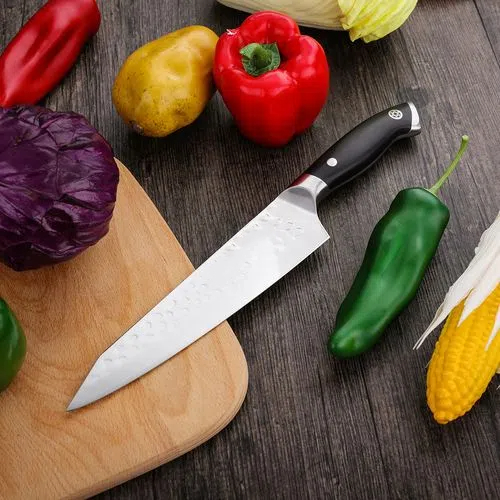
The materials used in the construction of knives can greatly affect their performance and durability. Here are some common materials to consider:
- Stainless Steel: This is the most common material for kitchen knives. It is resistant to rust and corrosion, making it easy to maintain.
- High Carbon Steel: This type of steel holds a sharp edge well but requires more maintenance to prevent rust.
- Ceramic: Ceramic knives are lightweight and maintain their sharpness for a long time, but they can be brittle and prone to chipping.
- Wood: Wooden handles offer a classic look and feel but require more maintenance to keep them in good condition.
- Plastic: Plastic handles are lightweight and easy to clean, but they may not provide the same level of comfort as wood or metal.
- Metal: Metal handles are durable and often provide a modern aesthetic, but they can become slippery when wet.
The design of a knife can significantly impact its usability. When choosing a knife set, consider the following:
A well-balanced knife feels comfortable in your hand and allows for better control during use. Heavier knives can provide more cutting power, while lighter knives may be easier to maneuver.
The handle should fit comfortably in your hand, allowing for a secure grip. Look for knives with ergonomic designs that reduce hand fatigue during extended use.
Your cooking style plays a significant role in determining the best knife set for you. Consider the following questions:
- Do you cook frequently or only occasionally?
- What types of cuisine do you enjoy preparing?
- Are you comfortable with maintaining your knives, or do you prefer low-maintenance options?
If you cook daily, investing in a high-quality knife set is worthwhile. For occasional cooks, a more basic set may suffice.
Different cuisines may require specific types of knives. For example, if you enjoy Asian cooking, you might want to consider a set that includes a Santoku knife.
Some knife materials require more maintenance than others. If you prefer low-maintenance options, stainless steel knives may be the best choice.
Knife sets come in a wide range of prices. It is essential to set a budget before you start shopping. While it can be tempting to go for the cheapest option, remember that quality knives can last a lifetime if properly cared for.

For beginners or occasional cooks, entry-level knife sets can provide good value. Look for sets that include essential knives without breaking the bank.
Mid-range knife sets often offer better quality materials and construction. These sets are suitable for serious home cooks who want reliable tools.
High-end knife sets are typically made from premium materials and offer superior performance. These sets are ideal for professional chefs or passionate home cooks who want the best.
When it comes to purchasing a knife set, you have several options. You can buy knives from kitchen supply stores, department stores, or online retailers. Each option has its advantages and disadvantages.
Shopping at a kitchen supply store allows you to handle the knives before purchasing. You can feel the weight, balance, and grip, which can help you make an informed decision.
Online shopping offers convenience and often a wider selection. However, you won't be able to physically handle the knives before buying. Be sure to read reviews and check return policies.
Department stores may carry a selection of knife sets, but the quality can vary. It's essential to do your research and choose reputable brands.
Once you have selected your knife set, proper maintenance is crucial to ensure longevity and performance. Here are some tips for maintaining your kitchen knives:
Always wash your knives by hand with warm, soapy water. Avoid putting them in the dishwasher, as the heat and moisture can damage the blades and handles.
Regularly sharpen your knives to maintain their cutting performance. You can use a whetstone, honing rod, or an electric sharpener.
Store your knives properly to prevent damage. Consider using a knife block, magnetic strip, or blade guards to protect the edges.
Be mindful of the surfaces you cut on. Use cutting boards made of wood or plastic, as glass or stone surfaces can dull your knives quickly.
Choosing a good kitchen knife set is a vital step for anyone who enjoys cooking. By considering the types of knives, materials, design, and your personal cooking style, you can select a set that meets your needs. Remember to maintain your knives properly to ensure they last for years to come. A well-chosen knife set can enhance your cooking experience and make food preparation a joy.
1. What is the most important knife to have in a kitchen?
- The chef's knife is considered the most important knife as it is versatile and can handle a variety of tasks.
2. How often should I sharpen my kitchen knives?
- It is recommended to sharpen your knives every few months, depending on usage. Regular honing can help maintain the edge between sharpenings.
3. Can I put my kitchen knives in the dishwasher?
- No, it is best to wash kitchen knives by hand to prevent damage to the blades and handles.
4. What is the best material for kitchen knife blades?
- Stainless steel is a popular choice for its durability and resistance to rust, while high carbon steel holds a sharp edge well.
5. How should I store my kitchen knives?
- Store your knives in a knife block, on a magnetic strip, or with blade guards to protect the edges and prevent accidents.


